






From Government Monopoly to Open Marketplace
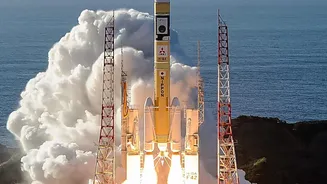
For decades, India's journey into space was almost exclusively charted by the Indian Space Research Organisation (ISRO). From launching satellites to exploring the Moon and Mars, ISRO established India as a major global space power. However, a landmark
policy shift in 2020 unlocked the sector, inviting private companies to participate in everything from building rockets and satellites to planetary exploration. To facilitate this, the government established the Indian National Space Promotion and Authorisation Centre (IN-SPACe) as a single-window agency to promote, regulate, and authorise private space activities. This move was designed to free up ISRO to focus on advanced research and development, while private players handle more routine manufacturing and launch services, fostering a vibrant new ecosystem.
The Trailblazers of the New Space Era
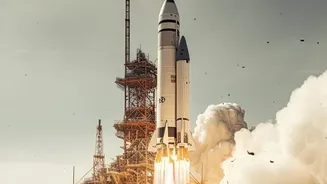
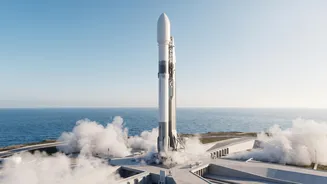
Several startups have quickly emerged as frontrunners in this new landscape. Hyderabad-based Skyroot Aerospace made history in November 2022 with the launch of Vikram-S, India's first privately developed suborbital rocket. They followed this milestone in July 2026 by successfully launching Vikram-1, the first privately built orbital-class rocket, making India only the third country with private orbital launch capability. Just over a month later, the company was already preparing for its second Vikram-1 mission, signalling a move towards a rapid launch cadence. Another key player is Agnikul Cosmos, incubated at IIT Madras. The company is notable for its Agnibaan rocket, powered by a single-piece, 3D-printed semi-cryogenic engine. In May 2024, Agnikul successfully launched a suborbital test flight from its own private launchpad, a first for India.
More Than Just Launch Vehicles
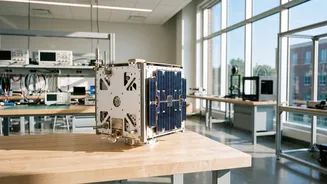
The private space boom isn't limited to rockets. A diverse range of companies is building out the entire space value chain. Pixxel, for instance, is deploying a constellation of the world's highest-resolution hyperspectral imaging satellites. This technology provides incredibly detailed data for applications in agriculture, environmental monitoring, and even defence. With three commercial satellites already in orbit and more planned, Pixxel is attracting global customers from the US and Europe. Meanwhile, Hyderabad's Dhruva Space focuses on full-stack satellite solutions, building small satellites and the critical deployer systems needed to release them in orbit. Having successfully completed multiple missions, Dhruva Space is a key enabler for companies wanting to get their technology into space.
Fueling the Economic Liftoff
The privatisation of space is not just about technological milestones; it's a massive economic opportunity. India's space economy, currently valued at around $8-9 billion, is projected to surge to between $40-45 billion within the next decade. This growth is being driven by a sharp increase in private investment and a boom in the number of space startups, which grew from just one in 2014 to approximately 440 by August 2026. To further boost this ecosystem, the government has liberalised Foreign Direct Investment (FDI) norms and established funds through IN-SPACe to support emerging companies. The goal is to integrate Indian companies into the global space supply chain and generate high-skilled jobs, aligning with the 'Make In India' initiative.