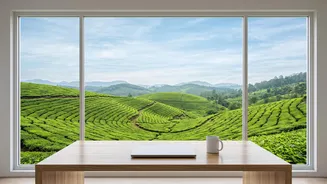









The Post-Pandemic Workplace Revolution
The single biggest catalyst for this change was the global remote work experiment forced by the pandemic. Indian companies, particularly in the tech and IT sectors, pivoted to work-from-home models, shattering the long-held belief that productivity is tied
to physical presence. As we moved into a post-pandemic world, this flexibility didn't disappear; it evolved. A 2026 survey found that nearly 70% of Indian professionals prefer a hybrid model. Companies like Infosys, Wipro, and Accenture have embraced 'Work From Anywhere' and 'Anytime, Anywhere' policies, creating a new reality where the office is no longer a mandatory destination. This has allowed professionals in fields like software development, marketing, and consulting to perform their duties from anywhere with a stable internet connection, opening the door to new lifestyle choices.
Technology as the Great Enabler
This new freedom is fundamentally powered by technology. The widespread availability of high-speed internet, even in once-remote locations like parts of Himachal Pradesh, has made working from a mountain-view cafe a viable option. Collaboration tools like Slack and Zoom, once novelties, are now standard, allowing teams to coordinate seamlessly across different time zones and geographies. Furthermore, the rise of a robust digital economy in India means that many roles are inherently location-independent. This technological foundation has not only enabled remote work within India but also opened up global opportunities, with a recent report finding 61% of Indian professionals are more inclined to seek remote global roles than relocate overseas.
Welcome to the 'Bleisure' Boom
The trend has a name: 'bleisure', a portmanteau of business and leisure. It involves extending business trips for personal travel or scheduling 'workations'—working holidays where professional duties are combined with exploring a new destination. India is a global leader in this trend. Recent data reveals that 77% of Indian business travellers in the Asia-Pacific region extend their work trips for leisure, the highest in the region. On average, Indians take 7.4 bleisure trips per year, surpassing the global average of 6.4. The India bleisure travel market, valued at over USD 38 billion in 2022, is projected to soar to nearly USD 93 billion by 2030, signaling a massive shift in travel habits.
Who Are These New Nomads?
The professionals embracing this lifestyle are typically knowledge workers with significant autonomy. This includes software engineers, digital marketers, content creators, freelancers, and entrepreneurs. Their work is output-based, not tied to hours spent at a desk, giving them the flexibility to manage their schedules. While many are employed by large corporations with remote-friendly policies, a growing number are self-employed or part of India's burgeoning digital nomad community. These professionals are swapping city-center apartments for homestays in Goa, co-working spaces in McLeodganj, or even fully-equipped caravans that serve as mobile offices.
It’s Not Always a Vacation
While the lifestyle appears idyllic, it comes with challenges. The most common hurdles are inconsistent internet connectivity, finding suitable and quiet workspaces, and the risk of burnout from the blurred lines between work and personal time. Professionals must be highly disciplined to balance project deadlines with the temptations of a new location. There are also logistical concerns, such as managing different time zones for calls and ensuring compliance with company policies, which are still catching up to this new way of working. Despite these difficulties, for many, the benefits of a change of scenery and improved work-life balance far outweigh the drawbacks.