



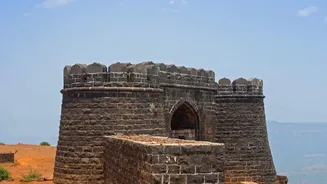
Stretching along the Arabian Sea, Maharashtra's Konkan coast is guarded by silent, formidable sentinels. These are the sea forts, stone testaments to a time when naval power was paramount and the coastline was a frontier of conflict and trade.
Guardians of a Storied Coastline
For centuries,
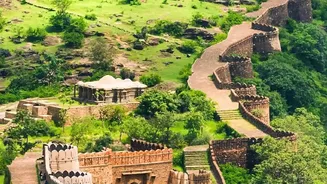
the 720-kilometre-long coastline of Maharashtra was a hub of intense maritime activity. To control this lucrative coast, various powers, most notably the Marathas under Chhatrapati Shivaji Maharaj, established a network of sophisticated naval fortifications. These were not just castles by the sea, but forts built in the sea—on rocky islands and outcroppings, designed to repel European colonial powers like the Portuguese and British, as well as regional rivals like the Siddis of Janjira. Unlike the vast hill forts of the Sahyadris, these coastal defences were masterpieces of marine engineering, built to withstand both cannon fire and the relentless monsoon waves. They served as naval bases, trade monitors, and the front line of coastal defence, securing the sovereignty of the empires that built them.
Sindhudurg: A Symbol of Maratha Naval Vision
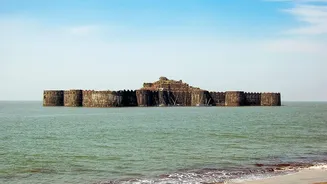
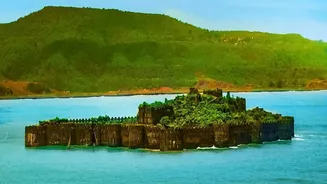
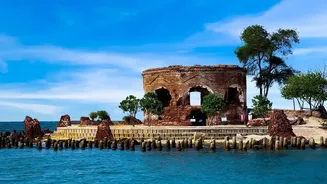
Perhaps no fort better embodies this vision than Sindhudurg. Commissioned by Chhatrapati Shivaji Maharaj himself, construction began in 1664 on a low-lying island known as Kurte, near the town of Malvan. The name translates to 'Fortress of the Ocean', and it was built with a clear strategic purpose: to create an unbreachable naval headquarters. Spanning over 48 acres, its massive walls, which are 30 feet high and 12 feet thick, were designed to deter enemy ships and break the force of the sea. Over 40,000 pounds of lead were used in casting its foundation to provide stability against the constant assault of the tides. Its main entrance is ingeniously concealed, making it nearly impossible for an approaching enemy to locate. The fort even contains a temple dedicated to Shivaji Maharaj, a testament to his personal investment in the project.
Marvels of Military Architecture
The genius of these forts lies in their self-sufficiency and tactical design. Many, like Murud-Janjira and Sindhudurg, contained their own sources of fresh water, a remarkable feature given their location surrounded by the salty sea. Sindhudurg has three such wells, which have not run dry to this day. These forts were designed as self-contained townships, with barracks, palaces, temples, and storerooms capable of withstanding long sieges. Murud-Janjira, built by the Siddis and famously unconquered despite numerous attacks by Marathas, Mughals, and the Portuguese, boasted 19 formidable rounded bastions and multiple cannons, including the legendary 'Kalal Bangadi'. Vijaydurg, the 'Eastern Gibraltar', featured triple lines of concentric walls and an underwater barrier designed to wreck enemy ships before they could even reach the fort.
From Bastions to Tourist Beacons
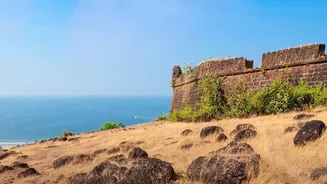
Today, these magnificent structures are transitioning from military assets to pillars of heritage tourism. A visit to a sea fort is an adventure in itself. It often begins with a boat ride from a local jetty, navigating the same waters that once carried warships. Exploring the ruins offers a direct connection to the past—walking along the vast ramparts, touching the cold stone of ancient cannons, and looking out at the endless sea from a watchtower. These sites, like Kolaba Fort near Alibaug which is accessible by foot during low tide, offer breathtaking views and a tangible sense of history. They are no longer just relics; they are living museums that tell the story of Maharashtra's valour, ingenuity, and deep relationship with the sea.
The Challenge of Preservation
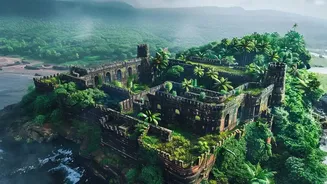
While their historical significance is immense, the future of these forts is not guaranteed. Constant exposure to salty air and powerful waves causes significant erosion. Many forts suffer from neglect, with crumbling walls and overgrown vegetation. Ensuring their survival requires a delicate balance between promoting tourism and implementing serious conservation efforts. Recently, there has been a push to gain UNESCO World Heritage status for several of these sea forts, which would bring much needed attention and resources for their preservation. This recognition would help safeguard these monuments, which are not just historical sites but also inadvertent conservation zones for coastal biodiversity. Protecting them is crucial for preserving a vital chapter of India’s history for future generations to experience and learn from.