




The Science of Green Lungs
The idea that houseplants can purify indoor air gained widespread attention thanks to a 1989 NASA study. The research found that in a sealed chamber, common houseplants were effective at removing volatile organic compounds (VOCs) like formaldehyde, benzene,
and trichloroethylene from the air. These are common indoor pollutants found in everything from paints and furniture to cleaning products and incense sticks. The process, known as phytoremediation, involves plants absorbing these gaseous toxins through their leaves and root-zone microorganisms, effectively filtering the air.
A Realistic Perspective
While the science is sound, it's important to have realistic expectations. The NASA study was conducted in a sealed lab environment, which is very different from a typical home with constant air exchange from windows, doors, and ventilation gaps. More recent analyses have concluded that you would need a very large number of plants—some estimate between 10 to 1000 plants per square metre—to match the air-cleaning rate of simply opening a window or using a mechanical air purifier. Therefore, houseplants should be seen as a beautiful, natural supplement to your air-cleaning strategy, not a standalone solution. They are fantastic for boosting mood and well-being, but they won't single-handedly defeat heavy smog.
The Unkillable Choice: Snake Plant
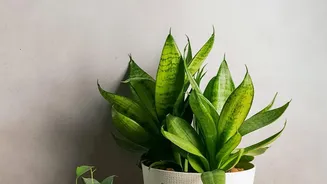
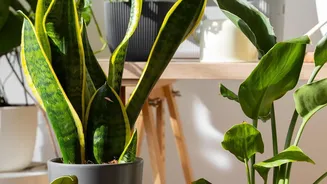
The Snake Plant, or Sansevieria, is a champion for urban Indian homes. It’s famously low-maintenance, tolerating low light and infrequent watering. What makes it special is its ability to perform photosynthesis at night, releasing oxygen while you sleep, which makes it an ideal bedroom companion. It's a powerhouse at filtering out formaldehyde, benzene, and nitrogen oxides, pollutants commonly found in cleaning products and vehicle emissions that seep indoors.
The Elegant Purifier: Peace Lily
With its elegant white blooms and glossy dark leaves, the Peace Lily (Spathiphyllum) is more than just a decorative piece. It thrives in low-light conditions, making it perfect for apartments that don't get direct sun. NASA's research highlighted it as a top performer for removing ammonia, a chemical found in many household cleaners, along with benzene and formaldehyde. An added benefit is its ability to increase indoor humidity, which can be a relief during Delhi's dry winters.
The Cascading Cleaner: Money Plant
The Money Plant, or Golden Pothos, is a familiar sight in many Indian households for good reason. It's incredibly resilient and can thrive in both soil and water, in various light conditions. Its trailing vines are perfect for small spaces, as they can be hung from baskets or placed on top of shelves. This plant is a workhorse, tackling indoor pollutants like formaldehyde, benzene, and carbon monoxide.
The Tropical Touch: Areca Palm
If you want to add a lush, tropical feel to your compact home, the Areca Palm is an excellent choice. Its feathery fronds are not just beautiful; they are also effective at filtering toxins like toluene and xylene, often found in paints and adhesives. As a natural humidifier, it helps make the indoor environment more comfortable. It prefers bright, indirect light, so a spot near a window without harsh sun is ideal.
The First-Aid Plant: Aloe Vera
Known for the soothing gel in its leaves, Aloe Vera is also a proficient air purifier. This sun-loving succulent is great at clearing formaldehyde and benzene, which can be byproducts of chemical-based cleaners, paints, and new furniture. It’s a low-maintenance plant perfect for a sunny windowsill in the kitchen or living room, offering both air-cleaning and first-aid benefits in one pot.