




An Unsavory Finding in Our Salt
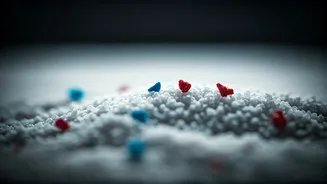
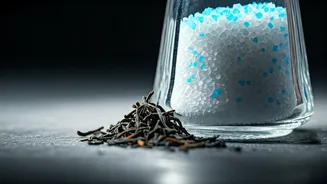
The salt that seasons our food has been found to contain a hidden, unwanted ingredient: plastic. Groundbreaking research, including an early study by IIT-Bombay, first sounded the alarm by discovering microplastic particles in several popular table salt brands
sold across India. The study suggested that the average Indian could be consuming over 100 micrograms of microplastic annually just from salt. More recently, a 2024 study by the environmental research group Toxics Link doubled down on these findings, testing a wide range of salts—from packaged sea salt to local rock salt—and finding microplastics in every single sample. The report noted that common iodised salt had the highest concentrations, while organic rock salt had the lowest, confirming that these tiny plastic invaders have thoroughly permeated our food supply, regardless of the product's price or perceived purity.
Your Daily Chai May Come with Plastic
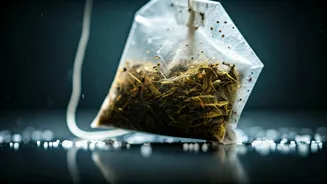
The issue, unfortunately, does not stop at the saltshaker. Tea, another cornerstone of Indian daily life, is also a source of microplastic exposure. The contamination comes from multiple points. Some studies have shown that plastic teabags, often used for their convenient and premium appearance, can release billions of microplastic and even smaller nanoplastic particles when steeped in hot water. But even if you don't use plastic teabags, you may not be safe. Research from IIT Kharagpur found that the thin plastic lining inside disposable paper cups—the kind used by millions at offices and street vendors—degrades in hot liquids like tea, potentially releasing tens of thousands of plastic particles into the beverage. Beyond packaging, the tea leaves themselves can be contaminated by plastic pollution in the soil and environment where they are grown.
What Exactly Are We Swallowing?
Microplastics are tiny plastic fragments, typically smaller than 5 millimeters, that result from the breakdown of larger plastic waste. Think of everything from plastic bags and bottles to industrial waste and synthetic clothing. Over time, sunlight and physical abrasion break these items into smaller and smaller pieces. These particles are now so widespread that they have contaminated our oceans, soil, and even the air we breathe. When we get sea salt by evaporating ocean water, the microplastics that were floating in the sea get concentrated and end up in the final product. Similarly, plastics in the soil can be absorbed by plants or contaminate their surfaces, finding their way into products like tea.
The Big Unanswered Health Question
The discovery of plastics in our food is disturbing, but the critical question is: what does it do to our bodies? Scientists are urgently trying to answer this. While there is no definitive consensus yet on the long-term effects in humans, the initial evidence is concerning. Animal and lab studies have linked microplastic exposure to a range of problems, including inflammation, gut microbiome disruption, and impaired immune responses. Because plastics often contain added chemicals and can absorb toxins from the environment, there's a risk they act as Trojan horses, delivering harmful substances into our bodies. Particles can be small enough to pass from the gut into the bloodstream, and have been detected in numerous human organs, including the liver, brain, and even placentas. A landmark 2024 study published in The New England Journal of Medicine found that patients with microplastics in the plaque lining their arteries had a significantly higher risk of heart attack, stroke, and death.
A Problem Bigger Than Any One Product
While it’s tempting to focus on finding a “plastic-free” brand of salt or tea, the reality is that microplastics are an unavoidable part of modern life. They are in bottled water, seafood, and even falling from the sky in what scientists call 'plastic rainfall'. The contamination of our most basic staples is not a failure of a specific brand, but a symptom of a global plastic pollution crisis. Avoiding exposure entirely on an individual level is nearly impossible. The presence of microplastics in our food chain highlights the far-reaching consequences of our reliance on plastic and the inadequacy of our waste management systems. The solution lies not in individual panic, but in collective and systemic action.