






A New Era Beyond Speed
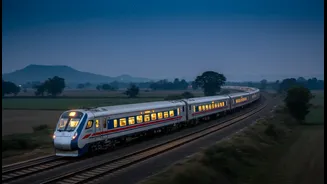
The rollout of the Vande Bharat platform has been a landmark achievement for Indian Railways, modernising daytime travel with its speed and amenities. The first sleeper service, launched between Howrah and Kamakhya in January 2026, and the upcoming second
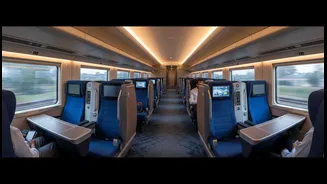
service, the Sant Ravidas Express from Varanasi to Chheharta (Amritsar), promise to extend this revolution to overnight journeys. These trains are engineered for speeds up to 160 kmph, boasting faster acceleration and deceleration that can significantly reduce travel time. They come packed with modern features like bio-vacuum toilets, sensor-based fittings, and improved safety standards. Yet, the success of a sleeper train isn't measured by speed alone. For the millions who rely on overnight services for work, leisure, and family visits, the core value lies in getting a good night's sleep and arriving at their destination rested and on a practical schedule. This is where the discussion needs to move beyond engineering prowess to passenger-centric design.
The Comfort Conundrum
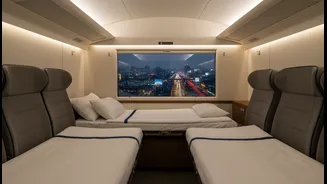
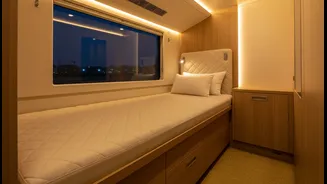
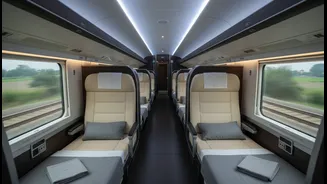
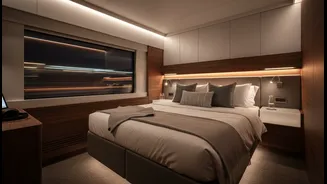
The central promise of a sleeper train is sleep. While the new Vande Bharat coaches are marketed as a premium experience, early feedback and design questions raise concerns. The primary issue revolves around berth space, particularly in the upper berths of 3AC coaches, which some users find cramped with low headroom. This isn't a new problem in Indian trains, but for a service positioned as an upgrade to the venerable Rajdhani Express, it's a critical detail. A comfortable journey is more than just a smooth, jerk-free ride, which the Vande Bharat sets are designed to provide. It's about having enough personal space to rest properly, ergonomically designed berths that support long hours of sleep, and an environment with minimal noise and light disturbance. While amenities like individual charging points and better lighting are welcome, they cannot compensate if the fundamental act of sleeping is compromised. The legendary Rajdhani, for all its age, has set a benchmark for comfort that the new-age Vande Bharat must not just meet, but exceed, to justify its premium tag and fares.
The Tyranny of the Timetable
Perhaps the most critical and often overlooked aspect of a successful overnight service is its schedule. The magic of an overnight train is its efficiency: you board after dinner, sleep through the night, and wake up in a new city, saving on a hotel room and a full day of travel. This requires a departure time late enough to allow for a full day's work and an arrival time that is early but not punishingly so. The upcoming Sant Ravidas Express, for instance, departs Varanasi at 7:05 PM and reaches Amritsar the next afternoon at 4:35 PM. While this connects two major centres, the afternoon arrival time might not be ideal for all travellers, especially those on a short business trip or a weekend city break. The train's high speed becomes a double-edged sword on shorter overnight routes. If a 10-hour journey is compressed into seven hours, it could lead to awkward 4 AM arrivals, disrupting sleep and creating logistical hassles with hotel check-ins. The perfect overnight schedule is a delicate balance, ideally fitting within an 8-10 hour window that aligns with human sleep cycles and city logistics.
The City-Break Litmus Test
The ultimate test for the new Vande Bharat sleepers will be their utility for the burgeoning city-break travel market. Can a professional from Mumbai take the train on a Friday night and arrive in Bengaluru fresh for a Saturday of meetings or sightseeing? Success here depends on the perfect synergy of comfort and timing. An uncomfortable night's sleep means arriving tired, defeating the purpose of saving a day. An inconvenient arrival time, whether too early or too late, eats into the precious hours of a short trip. For the Vande Bharat sleeper to be a true game-changer, it must be planned not just as a mode of transport, but as an integrated part of a travel experience. This means choosing routes where its speed can be optimally deployed to fit the golden 8-10 hour overnight window and ensuring the onboard experience genuinely allows for rest and recuperation. The questions we should be asking are not just about top speed, but about the quality of sleep and the practicality of the schedule for the end-user.