







A Ritual as Old as the Rains
The Indian monsoon is more than just a weather pattern; it's a cultural phenomenon that dictates moods, schedules, and appetites. After the scorching heat of summer, the rains bring relief, nostalgia, and a collective desire to slow down and get cosy.
Central to this experience is a category of beverages that are brewed in kitchens from Kerala to Kashmir, each with its own local twist but a shared purpose: to warm the body and soothe the soul. This isn't just about a hot drink. It's about a ritual — the sound of spices being pounded, the aroma filling the house, and the simple act of cupping a warm mug while watching the rain fall. It's a sensory bookmark that signals the official arrival of the season.
Meet the Golden Healer: Kadha
While masala chai holds a perennial spot in our hearts, the monsoon calls for something with a bit more of a wellness punch. Enter kadha. Not a single drink but a family of Ayurvedic decoctions, kadha is a potent, water-based brew of herbs and spices. It's the go-to home remedy for the sniffles, coughs, and general damp-weather lethargy that often accompany the season. Think of it as India's original superfood shot. Its most famous modern iteration, known globally as a 'turmeric latte', is essentially a milk-based, gentler version of this principle, often called haldi doodh (turmeric milk). Whether it’s a fiery, water-based kadha or a creamy haldi doodh, the philosophy is the same: use nature's pharmacy to build immunity and stay warm from the inside out.
The Power of the Spice Box
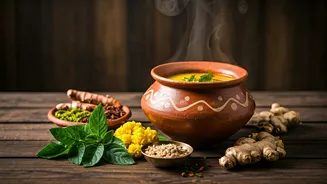
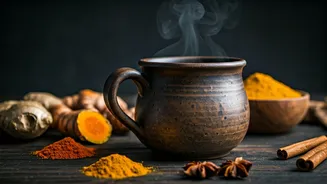
The magic of any good kadha or haldi doodh lies in its ingredients, each chosen for specific properties honed over centuries of traditional use. Turmeric, with its active compound curcumin, is the star, celebrated for its anti-inflammatory and antioxidant properties. Ginger is a trusted ally for digestion and fighting nausea, providing a pungent heat. Black pepper, often paired with turmeric, is believed to enhance the body's absorption of curcumin. Cloves bring their antiseptic and analgesic qualities, while cinnamon is loved for its warming effect and potential to help regulate blood sugar. Holy Basil, or Tulsi, is another common addition, revered in Ayurveda for its ability to help the body adapt to stress and boost respiratory health. Together, they form a powerful, aromatic army against monsoon maladies.
A Classic Rainy-Day Recipe
Ready to brew your own cup of comfort? Here’s a simple, foundational recipe for a classic Haldi Doodh that you can adapt to your taste. Think of it as a starting point for your own rainy-day tradition. Ingredients: - 1 cup of milk (dairy or plant-based like almond or oat milk) - ½ teaspoon of turmeric powder (or freshly grated turmeric) - ¼ teaspoon of freshly grated ginger - A pinch of black pepper powder - 1-2 cloves - A small stick of cinnamon (or a pinch of powder) - Sweetener of choice (jaggery, honey, or maple syrup) to taste Instructions: 1. Pour the milk into a small saucepan and place it on low-medium heat. 2. Add the turmeric, ginger, black pepper, cloves, and cinnamon stick. 3. Whisk everything together and let it gently simmer for 5-7 minutes. Do not let it come to a rolling boil. 4. You'll know it's ready when the milk turns a beautiful golden yellow and the aroma of the spices fills your kitchen. 5. Strain the milk into your favorite mug. Add your preferred sweetener and stir. For a richer brew, you can add a small dollop of ghee before serving.
Make It Your Own
The beauty of this drink lies in its versatility. There is no single 'correct' recipe. If you prefer more heat, add more ginger or pepper. If you like it sweeter, be more generous with the jaggery. Some families add a pinch of cardamom for its fragrance or a few leaves of Tulsi for an extra immunity boost. The global wellness trend may have packaged it into fancy lattes, but at its heart, this remains a deeply personal, intuitive drink. It’s a liquid legacy passed down through generations, a testament to the simple, profound wisdom found in an Indian kitchen.