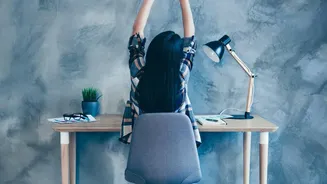


That familiar stiffness when you stand up after hours at your desk isn't just an inconvenience; it's your body signalling a problem. Thankfully, the solution isn't complicated. Let's break down why your hips get so tight.
The Science of 'Desk Hips'
When you sit for long periods,
your body adapts to that position. Your hip flexor muscles, located at the front of your hips, remain in a shortened, contracted state. Over time, these muscles can become chronically tight and lose their flexibility. Simultaneously, the opposing muscles, particularly your glutes (the muscles in your buttocks), become inactive and weak. This combination creates a muscular imbalance around the hip joint. The result is what many people experience as 'desk hips': a feeling of stiffness, reduced range of motion, and sometimes even a deep ache in the hip or groin area when you try to stand or walk. This lack of movement also reduces blood flow, contributing further to the stiffness.
Why Mobility is More Than Just Stretching
While a good stretch feels great, mobility is about more than just flexibility. It's about the ability to actively move a joint through its full range of motion. Unlike passive stretching where you hold a position, mobility exercises are active movements that help lubricate the joint, improve muscle control, and increase blood flow. For stiff hips, mobility work is crucial because it addresses both the tight muscles and the weak ones. By actively moving the hip joint, you encourage the tight hip flexors to lengthen while prompting the underused glutes to activate. This helps restore balance, protect your lower back from taking on extra strain, and makes daily activities like walking or squatting feel easier.
The Move: Seated Hip Rotations
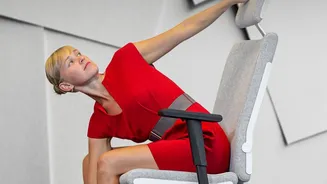
You can do this one without even leaving your chair. Sit upright at the edge of your seat with your feet flat on the floor. Keeping your back straight, lift your right knee toward your chest as far as is comfortable. From here, gently rotate your knee outwards to the side, as if you are opening a gate, and then bring it back to the centre. Then, rotate it inwards. The movement should come from the hip joint. Perform 10-15 rotations (out and in counts as one) on one side before switching to the left leg. This simple exercise helps to gently warm up and lubricate the hip's ball-and-socket joint.
The Move: Standing Hip Circles
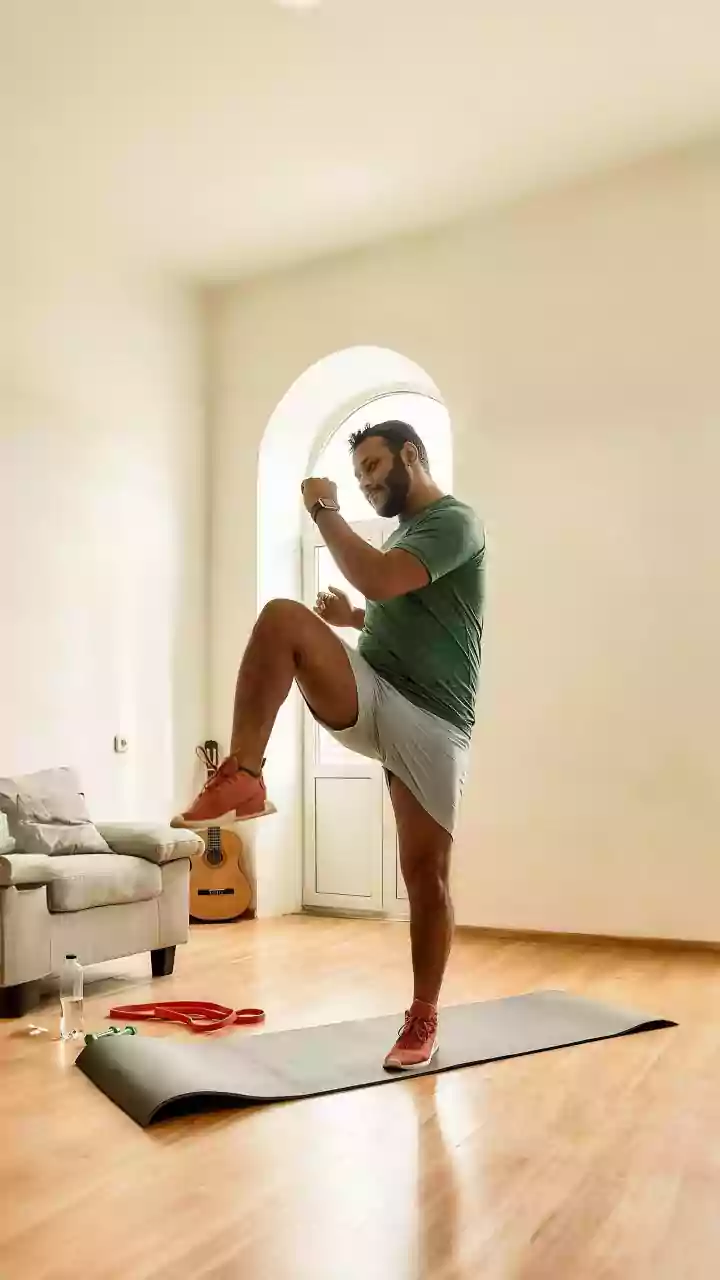
Taking a quick break to stand is key. Stand with your feet hip-width apart and place your hands on your hips for support. You can also hold onto a desk or wall for balance. Lift your right foot slightly off the ground. Keeping your leg relaxed, slowly begin to circle your entire leg from the hip, as if you are drawing a large circle with your knee. Make 10 circles in a clockwise direction, then 10 in a counter-clockwise direction. The goal is smooth, controlled movement. Repeat on your left leg. This dynamic stretch improves range of motion and warms up the muscles surrounding the joint.
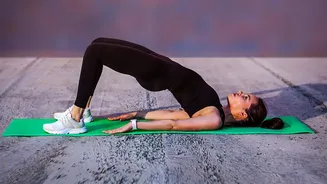
The Move: Glute Bridges
This move is essential for 'waking up' the glute muscles that become inactive from prolonged sitting. Lie on your back on the floor with your knees bent and feet flat, about hip-width apart. Your arms can rest by your sides. Gently squeeze your glutes and lift your hips off the floor until your body forms a straight line from your shoulders to your knees. Be careful not to arch your lower back. Hold at the top for a couple of seconds, keeping your glutes engaged, then slowly lower back down. Aim for 12-15 repetitions.
The Move: Kneeling Hip Flexor Stretch
This classic stretch directly targets the tight hip flexors. Kneel on a soft surface or mat. Step your right foot forward so your right knee is bent at a 90-degree angle and your ankle is directly under your knee. Your left knee should be on the ground. Keeping your back straight, gently tuck your tailbone and shift your hips forward slightly until you feel a gentle stretch in the front of your left hip. Don't lean forward or arch your back. Hold the stretch for 30 seconds, breathing deeply, before switching to the other side.