









The Uncomfortable Truth
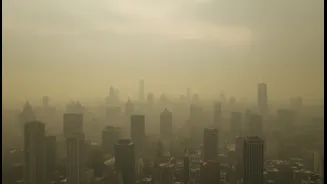
The foremost lesson from the 2026 report is a sobering one: India’s battle for clean air is facing immense challenges. The data confirms that virtually the entire population of 1.4 billion people is exposed to annual average particulate pollution levels
that far exceed the World Health Organization’s safety guidelines. The crisis is quantified by the pervasive presence of PM2.5, microscopic particles that can lodge deep in the lungs and enter the bloodstream, causing severe health problems. According to the analysis, a staggering number of Indian cities, far beyond just the well-known megacities, continue to breach the country's own, more lenient, National Ambient Air Quality Standards (NAAQS). This confirms that unhealthy air is not an exception but the norm for a vast majority of citizens, making it one of the most urgent public health emergencies facing the nation today.
Not Just a Big City Problem
One of the most critical takeaways from the report is the democratization of dirty air. The long-held perception of air pollution as a crisis confined to Delhi, Mumbai, or Kolkata is dangerously outdated. The 2026 findings highlight that many of the country's most polluted districts are now in smaller Tier-2 and Tier-3 cities, as well as semi-rural areas, particularly across the Indo-Gangetic Plain. This vast region has become a consistent pollution hotspot, where a combination of industrial emissions, vehicular traffic, and agricultural burning creates a toxic atmospheric soup. The report shows that even states in the Northeast and parts of the South, previously considered relatively clean, are recording worsening air quality trends. This geographical spread indicates that pollution sources are becoming more diffuse and that national policies must adopt a regional airshed approach, rather than a city-centric one, to be effective.
Paying with Our Health and Lives
The report translates abstract pollution data into the concrete, tragic cost to human health. Air pollution remains the leading environmental risk factor for death in India. The analysis links toxic air to over two million premature deaths in the country annually. Beyond mortality, the report underscores the devastating impact on quality of life. Particulate pollution is estimated to reduce the life expectancy of the average Indian by several years, with the penalty being significantly higher for those living in hotspots like Delhi, where residents could lose nearly eight years of life. The rise in chronic respiratory illnesses, cardiovascular diseases, and the particular vulnerability of children and the elderly are all laid bare by the data, painting a grim picture of a nationwide health crisis fueled by the air we are forced to breathe.
A Report Card on National Efforts
The State of India's Environment report also serves as a crucial audit of the country's flagship National Clean Air Programme (NCAP), which aims for a 40% reduction in particulate matter by 2026. The findings are mixed. On the positive side, the programme has led to a significant expansion of the air quality monitoring network, providing more data than ever before. However, on the metric that matters most—air quality improvement—the progress is faltering. A large number of cities under the NCAP are not on track to meet their pollution reduction targets. The report also highlights systemic issues, such as the underutilisation of allocated funds and a skewed focus, with a majority of spending directed at controlling road dust while major sources like industrial emissions and biomass burning receive comparatively less attention.
New Threats on the Horizon
While particulate matter rightly dominates the conversation, the 2026 report warns of an insidious and growing threat: ground-level ozone. Unlike PM2.5, ozone is not directly emitted but forms when pollutants from vehicles and industries react in the presence of sunlight and heat. This makes it a particularly challenging problem during India's increasingly intense summers. Several cities are now recording ozone levels that breach safe limits, especially during heatwaves. This 'other' air pollution crisis causes severe respiratory distress and can trigger asthma attacks, representing a new and complex front in India's struggle for clean air. Its rise indicates that as we fight one pollutant, we must be prepared for others to emerge from the complex chemical cocktail in our atmosphere.