








The Unignorable Weight of Domestic Runs
For years, Sarfaraz Khan wasn't just knocking on the selectors' door; he was trying to break it down with the sheer weight of his first-class numbers. Playing for Mumbai, he became a run-scoring phenomenon in the Ranji Trophy. His record was staggering:
a 2019-20 season saw him amass 928 runs at an average of 154.66. He followed it up with 982 runs at 122.75 in 2021-22 and 556 runs at 92.66 the next season. These aren't just good numbers; they are historically significant, placing his first-class average among the highest in the game's history for a period. His continued exclusion became a raging debate, with fans and pundits alike questioning what more a player had to do to earn a Test cap. His journey represented the struggle of every domestic performer trying to bridge the gap to the national team.
A Debut That Promised So Much
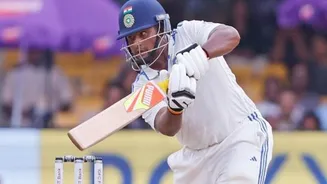
When the call finally came in February 2024 against England, the anticipation was immense. Handed his cap in an emotional ceremony with his father looking on, Sarfaraz walked out to bat in Rajkot and immediately looked the part. He played with an aggressive, fearless intent, dispatching the English spinners with an array of sweeps and powerful drives. He raced to a 48-ball half-century, the joint-fastest by an Indian on debut. His innings of 62 was cut short by an unfortunate run-out, but he had made his mark. In the second innings, he did it again, scoring an unbeaten 68, making him only the fourth Indian to score twin fifties on Test debut. It was a tantalizing glimpse of his potential—a player not just with the skill, but with the confidence to attack the world's best. The debut was a success, but it was just the start.
The Unique Challenge of Sri Lanka
Now comes the next test: Sri Lanka. Touring the island nation presents a unique challenge, distinct from playing at home. The pitches in Galle and Colombo are known to be spin-friendly, but they evolve dramatically over five days. A surface that is good for batting on days one and two can become a treacherous, turning minefield by day four. Success here requires more than just the ability to play spin; it demands adaptability, shot selection, and the temperament to build an innings when conditions are in the bowler's favour. Reports suggest the Indian team is already focused on this adjustment, having reportedly expressed concerns about the grassy practice pitch offered, which may not replicate the spin-friendly surfaces expected in the Tests. For Sarfaraz, who thrives on dominating spinners, this tour will test his ability to adapt his aggressive game to changing conditions and the wiles of experienced Sri Lankan bowlers in their own backyard.
What Does 'Seizing It' Truly Mean?
So, what does seizing this opportunity look like for Sarfaraz? It's more than just one or two flashy fifties. It’s about converting those starts into a definitive, match-influencing century. It's about demonstrating the defensive technique and temperament to survive a difficult session when the ball is turning sharply, not just attacking when the conditions are favourable. Consistency is the currency of Test cricket, and for a middle-order batsman, that means being a reliable pillar for the team. Selectors will be watching not just the runs he scores, but how he scores them. Can he build partnerships? Can he handle pressure in a fourth-innings chase? Can he show that his aggressive, 360-degree style of play is a sustainable asset in the five-day game? Seizing his chance means ending the series not as a promising talent, but as an indispensable member of India's Test middle order.