



The Moon’s Hidden Reservoirs
At the lunar poles lie areas of complete blackness known as Permanently Shadowed Regions (PSRs). These are craters and depressions so deep that the sun's rays have not touched their floors for billions of years. Because of this, they are some of the coldest
places in our solar system, with temperatures plunging to below -240 degrees Celsius. While inhospitable, these extreme conditions make PSRs perfect cold traps for preserving water ice. Recent studies involving ISRO scientists have bolstered this theory, suggesting that the amount of ice buried a few metres beneath the surface could be five to eight times greater than what is found on the surface. Data from the radar instrument on India's Chandrayaan-2 orbiter has been instrumental in identifying specific craters that show strong signs of these significant subsurface ice deposits.
Water: The New Lunar Gold
Finding water on the Moon is not just about quenching an astronaut's thirst. It is the cornerstone of a concept called In-Situ Resource Utilization (ISRU), which means using local materials to live off the land. Water (H₂O) can be filtered for drinking and used to grow plants, but its real value lies in its components. By splitting water molecules, we get breathable oxygen for life support systems. More importantly, we get hydrogen and oxygen, the two primary components of modern rocket propellant. The ability to manufacture fuel on the Moon would revolutionize space travel. It would mean future missions to Mars and beyond could launch from Earth with less fuel, stop at the Moon to top up their tanks, and then continue their journey. This dramatically reduces launch costs and enables more ambitious exploration.
ISRO’s Toolkit for the Deep Freeze
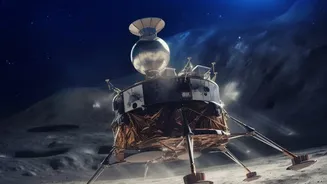
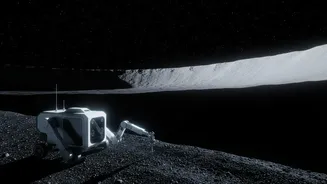
To extract this frozen treasure, ISRO is designing a new generation of robotic payloads. While specific designs are still in development, the task requires a multi-stage toolkit. The first step involves a robotic lander capable of navigating the treacherous, dark terrain of a PSR. This lander would deploy instruments to precisely locate the most promising ice deposits beneath the regolith, or lunar soil. The next piece of the puzzle is a drill or excavator capable of operating in the extreme cold. This tool would dig into the frozen ground to collect the ice-rich soil. This material would then be transferred to an onboard processing unit. Inside this unit, the soil would be heated, causing the ice to turn directly into water vapor in a process called sublimation. This vapor would then be captured and condensed back into liquid water, ready for storage and use. This entire process must be conducted robotically, with extreme precision and resilience.
An Extreme Engineering Challenge
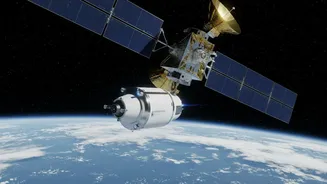
Operating in a Permanently Shadowed Region presents immense technical hurdles. The perpetual darkness means solar panels are useless, forcing any lander or rover to rely on alternative power sources, such as radioisotope heater units or advanced batteries that can survive the mission. The cold is another major enemy; temperatures are so low that they can make metal brittle and freeze lubricants, seizing up mechanical parts like drills and robotic arms. Communication is also an issue, as direct line-of-sight to Earth may be blocked. ISRO will likely need an orbiter, like the existing Chandrayaan-2, to act as a communication relay. Overcoming these challenges is a monumental feat of engineering that tests the limits of what is possible in robotics and materials science.
Paving the Way for a Lunar Future
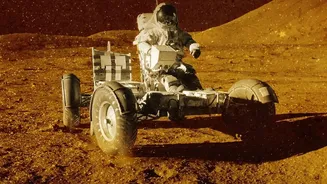
This focus on lunar ice processing is a logical and ambitious next step in India's Chandrayaan programme. The Chandrayaan-4 mission, planned as a sample-return effort, will provide crucial ground truth about the composition of the lunar poles. Following that, the Lunar Polar Exploration Mission (LUPEX), a joint venture between ISRO and Japan's JAXA, is specifically intended to explore the south pole, land a rover, and drill for water ice. The payloads ISRO is currently designing are foundational technologies for these and subsequent missions. By mastering the ability to extract lunar water, India is not just conducting a science experiment; it is positioning itself as a key architect of a future where humanity has a sustainable, long-term presence on the Moon and a launchpad to the rest of the solar system.