


A Discovery from the Shadows
Scientists from the Physical Research Laboratory (PRL) in Ahmedabad have uncovered strong signs of subsurface water ice in the Moon's South Polar Region. The breakthrough comes from analysing data gathered by the Dual-frequency Synthetic Aperture Radar
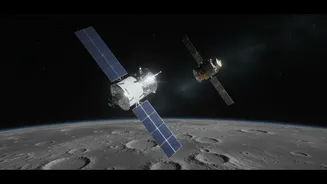
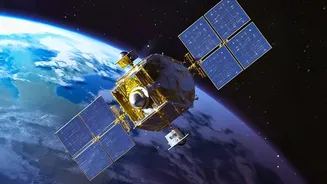
(DFSAR) instrument on the Chandrayaan-2 orbiter, which continues its silent, productive work high above the lunar surface. While the Chandrayaan-2 lander's attempt was unsuccessful in 2019, the orbiter has proven to be an invaluable asset, quietly collecting data that is now leading to major discoveries. The new findings pinpoint ice not on the surface, but buried beneath the lunar soil within permanently shadowed regions (PSRs).
What Are Lunar Volatiles?
The discovery is crucial for understanding 'lunar volatiles'. Volatiles are chemical elements and compounds, like water, carbon dioxide, and hydrogen, that vaporise at relatively low temperatures. On the Moon, which lacks a protective atmosphere, these compounds are typically baked off by the Sun and lost to space. However, in the coldest, darkest parts of the Moon, they can remain trapped and frozen for billions of years. These areas, known as PSRs, are located in deep craters near the poles that never see direct sunlight, making them some of the most frigid places in the entire solar system. Temperatures can plunge to nearly –248°C, creating natural 'cold traps' that preserve a record of the early solar system.
A New Way to See Ice
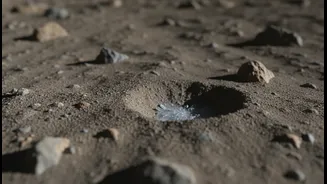
Finding this hidden ice required a clever new technique. The DFSAR instrument is unique; it's the first fully polarimetric radar sent to the Moon, capable of sending signals in two different frequencies (L-band and S-band) to probe beneath the surface. Scientists at PRL developed a method to distinguish the faint, specific radar signature of thick ice from the 'noise' created by rough, rocky surfaces—a problem that had complicated past research. By analysing how the radar signals changed as they bounced back, they found signatures consistent with buried ice in four separate craters. One crater in particular, about 1.1 km wide, showed especially compelling evidence, suggesting an ancient impact may have even exposed some of the ice-rich material underneath.
Why This Ice Matters for Humanity
Confirming accessible water ice on the Moon would be a game-changer for space exploration. This isn't just about finding water; it's about unlocking a treasure chest of resources. Lunar ice can be harvested and melted for drinking water for astronauts. It can be split into hydrogen and oxygen, providing breathable air for a future lunar base. Critically, that same hydrogen and oxygen can be used to create rocket propellant. This would allow the Moon to become a refuelling station for deep-space missions, dramatically reducing the cost and complexity of sending missions to Mars and beyond. The concept, known as in-situ resource utilization (ISRU), is central to every major space agency's long-term plans for lunar settlement.
India’s Enduring Lunar Legacy
This discovery solidifies India's position as a leading force in lunar science. It was India’s Chandrayaan-1 mission that first provided definitive proof of water molecules on the Moon in 2008. Now, its successor, Chandrayaan-2, is providing the detailed maps needed to find where that water is concentrated. As nations like the US and China accelerate their own plans for lunar bases near the South Pole, India’s data becomes strategically vital. This research not only enhances our scientific understanding but also provides crucial intelligence for future missions, including ISRO's own plans to bring lunar samples back to Earth.