


The Art of Traditional Extraction
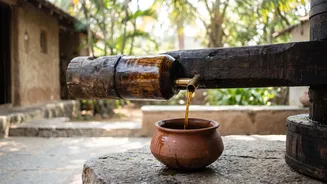
At the heart of heritage sesame oil, known as 'nallennai' or 'gingelly oil', is the traditional extraction method. Unlike industrial refining, which uses high heat and chemical solvents, heritage mills often employ a 'chekku' or 'ghani'. This is a large
mortar and pestle, traditionally made of wood ('mara chekku'), that presses the sesame seeds at a very low speed. This gentle, mechanical process generates minimal heat, typically keeping temperatures below 40°C. This 'cold-pressing' technique is crucial because it avoids damaging the delicate nutrients and natural compounds within the seeds. The result is a pure, unrefined oil that retains its authentic nutty aroma, rich flavour, and a wealth of natural goodness that is often lost during mass production. Some traditional methods even involve adding jaggery during pressing, which contributes to the oil's unique flavour profile.
A Reservoir of Natural Nutrients
The primary advantage of cold-pressing is the preservation of nutrients. Sesame oil is naturally rich in a balanced profile of monounsaturated and polyunsaturated fats, which are beneficial for heart health. More importantly, it contains powerful, unique antioxidants like sesamol, sesamin, and sesamolin. These plant compounds, known as lignans, are largely retained through the low-heat chekku process. Industrial refining, with its high temperatures, can destroy these valuable antioxidants. Cold-pressed sesame oil is also a good source of Vitamin E. These compounds work together to protect the body's cells from oxidative stress, reduce inflammation, and support overall wellness, validating the oil's revered status in Ayurveda for centuries.
Decoding High Thermal Stability
The term 'thermal stability' can be confusing. It is often mistaken for 'smoke point', which is the temperature at which an oil begins to smoke and break down. While some refined oils have a higher smoke point, that isn't the whole story. The true measure of stability is how well an oil resists oxidation when heated. This is where cold-pressed sesame oil excels. The potent antioxidants, sesamol and sesamin, are remarkably stable at cooking temperatures. They actively protect the oil's fatty acids from breaking down and forming harmful compounds. This means that even with a moderate smoke point (around 175°C), cold-pressed sesame oil is more oxidatively stable than many other oils, making it a reliable choice for everyday Indian cooking methods like tempering ('tadka'), sautéing, and shallow frying.
Bringing Heritage to Your Kitchen
The deep, nutty, and earthy flavour of traditionally pressed sesame oil is unmistakable and central to South Indian cuisine. It's the secret behind the authentic taste of dishes like Vatha Kuzhambu (a tangy tamarind curry), Ellu Sadam (sesame rice), and countless pickles, where it also acts as a natural preservative. It is the go-to oil for mixing with 'idli podi' to create a flavourful dip, and a drizzle over hot dosas or idlis adds a layer of aromatic richness. Its robust character shines in tempering spices for sambar and rasam, infusing the entire dish with its signature warmth. Using cold-pressed sesame oil is not just a culinary choice; it's an embrace of a flavour tradition that has been passed down through generations.