






The Monsoon's Gradual Retreat
The Southwest Monsoon, which brings revitalising rain to most of India, doesn't just switch off. Its withdrawal is a gradual process that typically begins in the northwestern parts of the country around mid-September. As the monsoon system weakens, the extensive
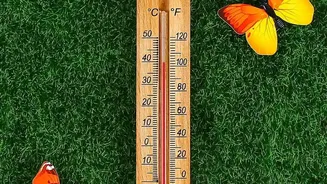
cloud cover that acted as a natural sunshade starts to dissipate. This allows for more direct and intense sunlight to reach the ground, causing the air temperature on the thermometer to rise. While the rains become less frequent, the atmosphere and the ground are still laden with moisture from the preceding wet months. This combination of returning sun and leftover moisture sets the stage for a period of intense, uncomfortable heat often referred to as 'September Heat' or 'October Heat.'
The Humidity Trap: Why It Feels Hotter
The key to understanding September's oppressive warmth lies in the difference between air temperature and the 'feels-like' temperature, also known as the heat index. The heat index combines air temperature with relative humidity to measure how hot it really feels to the human body. Our primary way of cooling down is through sweating; as sweat evaporates from our skin, it takes heat with it. However, when the air is already saturated with moisture—as it is in September due to evaporation from the rain-soaked ground—this process slows down dramatically. Your sweat can't evaporate efficiently, trapping heat and making you feel far hotter than the actual temperature reading. So, even if the thermometer shows 33°C, high humidity can make it feel like 40°C or more.
The Urban Heat Island Effect
This post-monsoon heat is significantly amplified in urban environments. Cities, with their dense concentration of concrete buildings, asphalt roads, and other infrastructure, absorb and retain far more solar radiation than natural landscapes. This phenomenon is called the Urban Heat Island (UHI) effect. During the day, these surfaces get baked by the returning sun. At night, they radiate this stored heat back into the atmosphere, preventing cities from cooling down effectively. The lack of green spaces and water bodies, which provide natural cooling through shade and evaporation, further intensifies the situation. The combination of high humidity and the UHI effect creates a stifling, 24/7 heat trap in major Indian metros, making the transition out of monsoon particularly gruelling for city dwellers.
A Familiar Weather Pattern
This period of uncomfortable heat is a well-documented meteorological event across the subcontinent. The timing and intensity can vary by region. For instance, the monsoon withdraws from the northwest earlier than it does from the southern peninsula. In some parts of North India, this heat surge is prominent in September, while in other areas like Mumbai and the eastern coast, it is more commonly known as 'October Heat' as the monsoon lingers longer. While it can feel like a second summer, it is a transitional phase. This period of high humidity and heat eventually gives way as the monsoon fully retreats, allowing drier, cooler continental air to move in and usher in the more pleasant post-monsoon and early winter weather.