






The New Benchmark of Success
When India's gross GST revenue for July 2026 clocked in at ₹2.11 lakh crore, it marked a significant 15.4% year-on-year growth. This figure is not an anomaly but part of a sustained trend of robust collections that have become a reliable high-frequency
indicator of the nation's economic pulse. For several months, collections have comfortably surpassed previous benchmarks, pointing towards a resilient domestic economy that is holding firm against global headwinds. This consistent performance showcases the sheer scale of the tax regime's success, providing the government with fiscal stability and reinforcing confidence in India's growth story. The numbers suggest that domestic consumption and business activity remain strong.
Breaking Down the Billions
To truly understand the GST story, one must look beyond the total and examine its components. The gross revenue is primarily split into Central GST (CGST), State GST (SGST), and Integrated GST (IGST). For July 2026, the CGST mop-up was ₹39,835 crore, SGST was ₹47,881 crore, and IGST stood at over ₹1.23 lakh crore. In simple terms, CGST and SGST are taxes on goods and services within a state, collected by the Centre and states respectively. IGST is levied on interstate transactions and imports. This breakdown is crucial because it offers clues about the nature of economic activity. A healthy collection in both CGST and SGST, for example, points to vibrant intrastate commerce.
The Tale of Two Trades
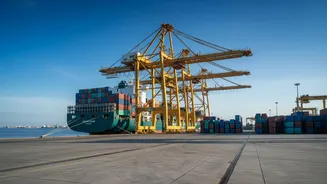
One of the most revealing components in the recent data is the sharp surge in IGST, particularly from imports. While domestic revenues grew by a healthy 10.1%, tax collections from imports jumped by a remarkable 28.8%. This has a dual interpretation. On one hand, it reflects strong demand within the country, powerful enough to pull in a high volume of foreign goods and services. On the other hand, some experts caution that elevated GST collections from imports can be a 'nagging concern', potentially pointing to gaps in domestic manufacturing capabilities that are being filled by foreign products. This makes the IGST figure a critical barometer for tracking the progress of national initiatives like 'Make in India'.
A Story of Widening Compliance
The growth in GST revenue isn't just about more people buying more things. It is also a powerful narrative about the increasing formalisation of the Indian economy. Since its inception in 2017, the number of registered GST taxpayers has expanded dramatically, from 66.5 lakh to 1.65 crore as of May 2026. This expanding tax base means more businesses are operating within the formal system, improving transparency and compliance. Experts attribute the steady rise in collections not just to economic activity but also to these continued improvements in tax compliance. Every transaction logged in the GST Network (GSTN) creates a digital trail, making tax evasion more difficult and ensuring a more level playing field for all businesses.
Fueling the Nation's Engine
Ultimately, the scale and composition of GST revenue have profound implications for the country's fiscal health. Strong and predictable tax inflows empower both central and state governments to manage their budgets more effectively, reduce deficits, and increase spending on crucial areas like infrastructure and social welfare programs. After accounting for refunds, the net GST revenue for July 2026 stood at a formidable ₹1.81 lakh crore, a nearly 16% increase over the previous year. This financial buoyancy allows for greater public investment, which in turn fuels further economic growth, creating a virtuous cycle. The health of GST collections is, therefore, directly linked to the government's ability to fund the nation's development ambitions.