



A New Frontier for Collaboration
The most significant shift in India's space story is the move from a government-led model to a collaborative public-private ecosystem. Historic reforms, culminating in the Indian Space Policy 2023, have opened the doors for non-government entities—startups,
private companies, and academic institutions—to participate in the entire space value chain. The creation of the Indian National Space Promotion and Authorisation Centre (IN-SPACe) in 2020 has been pivotal. It acts as a single-window agency, helping private players and universities get involved in space activities, from building satellites to conducting their own research. This has unleashed a wave of innovation, with the number of space startups in India growing from just one in 2014 to over 400 in 2026. ISRO is actively fostering this by providing financial and technical support through initiatives like the RESPOND program and by establishing Space Technology Incubation Centres across the country to mentor young talent.
The Ultimate Laboratory: Microgravity
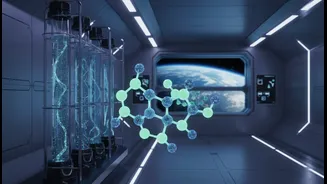
The unique environment of space, particularly microgravity, offers a research platform that is impossible to replicate on Earth. When the constant pull of gravity is removed, the underlying behaviour of cells, chemicals, and materials is revealed. This has profound implications for multiple scientific fields. For instance, in medicine, studying how human cells and tissues behave in weightlessness can unlock new understandings of muscle atrophy, bone density loss, and cellular aging processes. These insights could lead to breakthroughs in treating age-related diseases on Earth. Similarly, in materials science, crystals grow with near-perfect structures in microgravity, which could pave the way for developing advanced semiconductors and alloys with unique properties.
Pioneering Research in Biology and Medicine
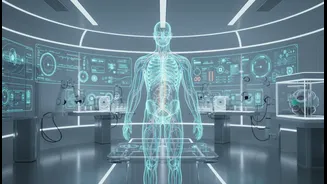
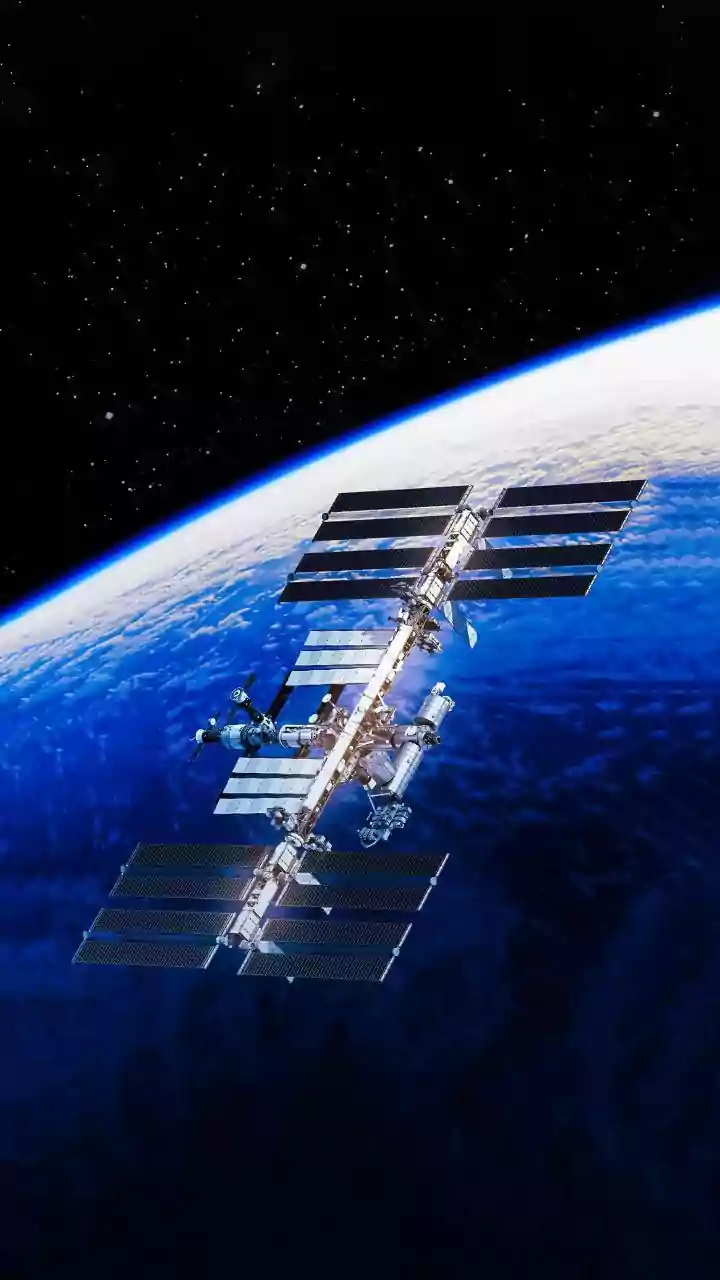
India is already conducting cutting-edge biological experiments in space. As part of preparations for the Gaganyaan human spaceflight programme, an Indian astronaut flew to the International Space Station (ISS) in 2025 to carry out several Indian-led experiments. These included studying muscle regeneration to counter deterioration common in astronauts, research that also holds promise for treating muscular diseases on Earth. Other experiments are focused on creating sustainable life-support systems for long-duration missions. Scientists are investigating the growth of edible microalgae and cyanobacteria in space as a potential food source for astronauts. The viability of sprouting staple Indian foods like moong and methi in microgravity is also being tested. To bolster this growing field, ISRO has collaborated with Sree Chitra Tirunal Institute for Medical Sciences and Technology (SCTIMST) to launch the country's first postdoctoral fellowship in Bioastronautics, preparing a new generation of scientists for the medical challenges of space travel.
Building a Future in Space and on Earth
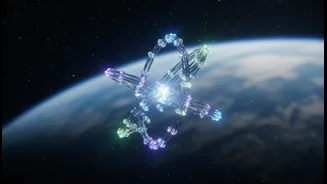
The push for space-based experiments is not just about abstract scientific knowledge; it's a strategic investment in India's future. These activities are foundational for ambitious long-term goals, including establishing the Bharatiya Antariksh Station (Indian Space Station) by 2035 and sending an Indian astronaut to the Moon by 2040. Every experiment, from testing how astronauts interact with touchscreens in space to studying the survival of extremophile organisms like tardigrades, builds critical capabilities. The knowledge gained drives technological innovation in areas like life support, communications, and robotics. This, in turn, fuels the broader space economy, which is projected to grow five-fold to over $40 billion by 2030. By creating a vibrant ecosystem for research and development, India is not just exploring space but is also creating high-value jobs, inspiring students, and securing its place as a global leader in science and technology.