


More Than Just a Camera
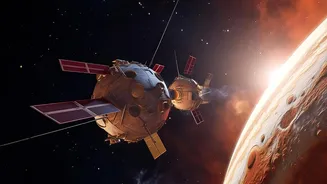
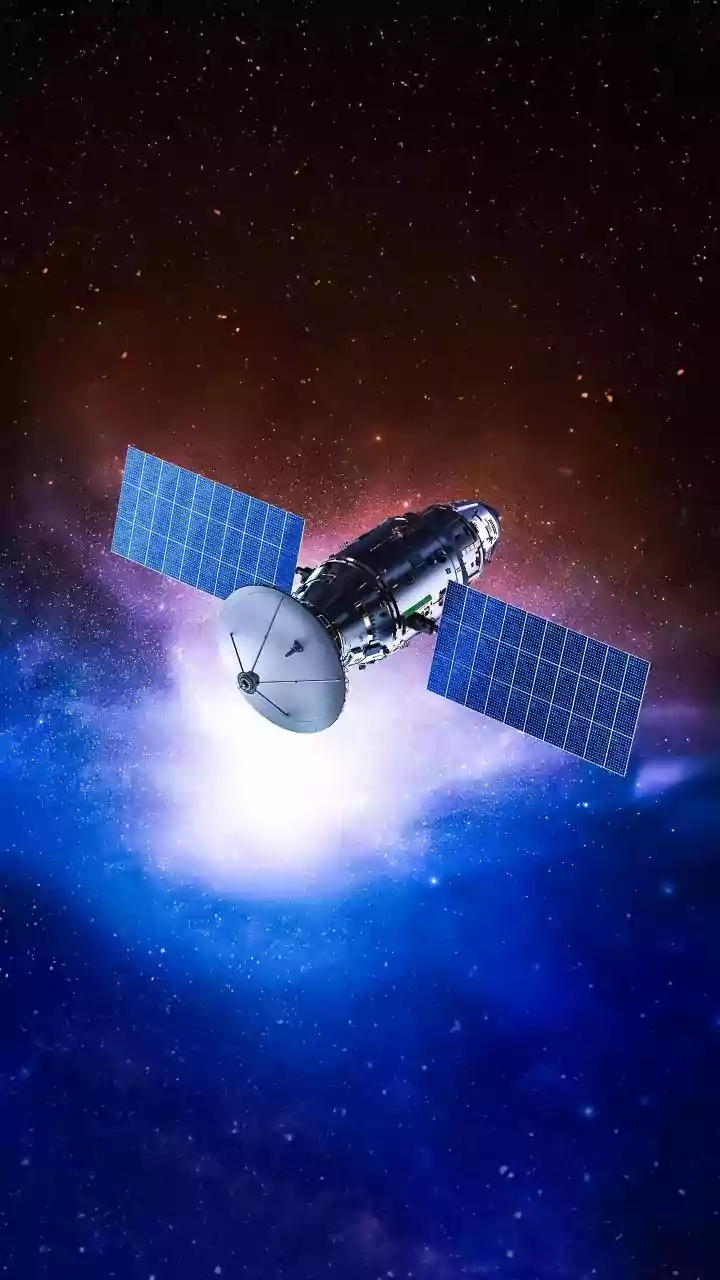
When we think of a space probe, we often picture a flying camera taking stunning photos of distant worlds. While images are a huge part of exploration, they are just the beginning. A modern orbiter is a sophisticated laboratory packed with instruments
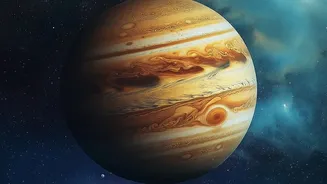
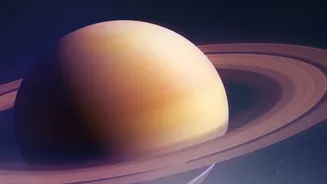
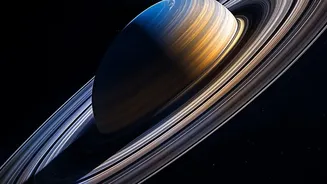
designed for remote sensing—the science of gathering information from a distance. These tools allow scientists to investigate everything from the composition of the atmosphere to the structure of a planet’s core. Missions like NASA's Cassini at Saturn or Juno at Jupiter have completely revolutionized our understanding of these gas giants, primarily from orbit. They work by analyzing different forms of energy, such as light, gravity, and magnetic fields, to build a comprehensive picture of a world that is impossible to get from a single landing spot.
Decoding a Planet's 'Barcode'
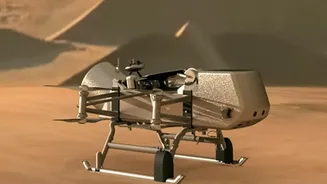
One of the most powerful tools on a probe is a spectrometer. This instrument analyses light by splitting it into its component colours, much like a prism creating a rainbow. Every chemical element and compound absorbs and reflects light in a unique way, creating a specific pattern of bright and dark lines called a spectrum—a sort of chemical 'barcode'. By studying the light from a planet, a spectrometer can identify the gases in its atmosphere, such as methane or water vapour, and even determine the minerals on its surface, like rock or ice. This technique is so precise it can tell us about a planet's temperature and pressure from millions of kilometres away. It's how we know about the sulphuric acid clouds of Venus and the hydrocarbon lakes on Saturn's moon, Titan, all without sending a single sample back to Earth.
Mapping the Unseen with Gravity
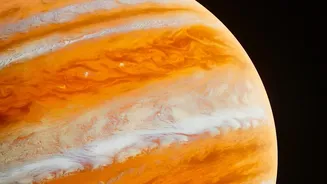
How do you map the inside of a planet? You weigh it, piece by piece, using gravity. As a probe orbits a planet, it is pulled by the gravity of the mass below it. If it flies over a massive mountain, the gravitational pull increases slightly, altering its orbit by an infinitesimal amount. If it passes over a less dense region, like a vast underground ocean, the pull weakens. By precisely tracking these tiny changes in the probe's trajectory using radio signals, scientists can create a gravity map. This reveals the planet's internal structure. NASA's Juno mission used this very technique to probe Jupiter’s deep interior, discovering that its famous atmospheric bands extend far deeper than anyone expected and that its core is more 'fuzzy' and spread out than previously thought.
Seeing Through Clouds with Radar
Some worlds, like Venus and Titan, are permanently shrouded in thick, opaque clouds, making it impossible to see their surfaces with a regular camera. This is where radar comes in. An orbiting probe can send radio waves down to the surface and listen for the echoes that bounce back. The time it takes for the signal to return reveals the altitude of the surface directly below the spacecraft. By repeating this process over and over, the probe can create a detailed 3D map of mountains, valleys, and plains hidden beneath the clouds. NASA's Magellan spacecraft used radar to pierce Venus's dense atmosphere and map 98% of its surface, revealing a dramatic landscape of volcanoes and crushed terrain that would have otherwise remained a complete mystery.
Feeling a Planet's Magnetic Shield
Many planets, including Earth, have a global magnetic field that acts like a protective shield against the harsh solar wind. This shield, known as the magnetosphere, is generated by the movement of molten metal in the planet's core. A magnetometer is an instrument designed to measure the strength and direction of these magnetic fields. By studying a planet’s magnetosphere, scientists can learn a great deal about its interior—for example, whether it has a liquid core like Earth. Magnetometers can also study the beautiful auroras that appear in a planet's atmosphere when charged particles from the sun interact with its magnetic field. These instruments were crucial in discovering the weak, fossilized magnetic fields on Mars, which told scientists that the Red Planet once had a protective global field but lost it billions of years ago.