


A Sweet Discovery in Deep Space
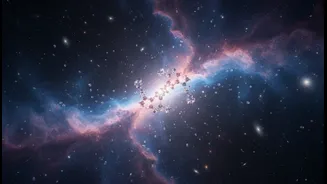
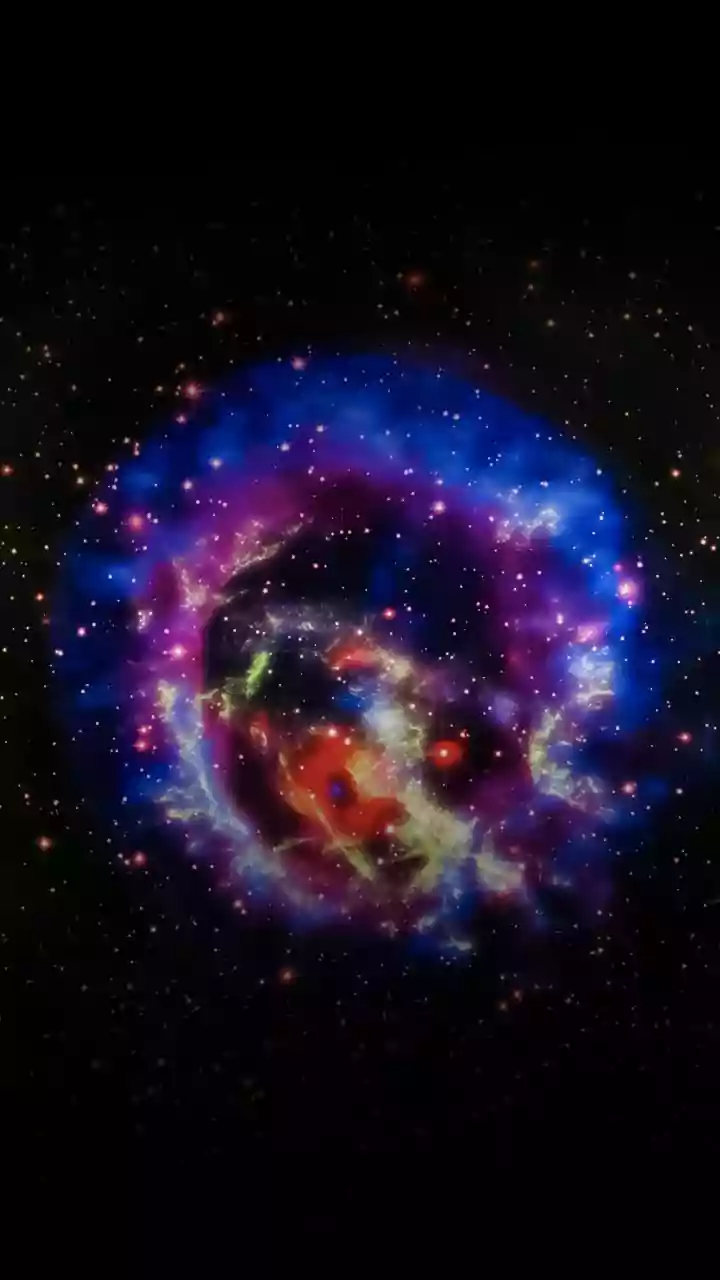
An international team of researchers has identified a four-carbon sugar called erythrulose floating in a giant molecular cloud known as G+0.693−0.027, located near the heart of the Milky Way. This isn't the first time a sugar-like molecule has been found
in space, but erythrulose is the first 'true' sugar, a more complex structure, detected in the interstellar medium—the vast, cold space between stars. The find was made using highly sensitive radio telescopes in Spain, which can detect the faint radio signals that different molecules emit. By matching the signals from the cloud to the known 'fingerprint' of erythrulose in a lab, the team confirmed its presence thousands of light-years away.
What Exactly is a 'Space Sugar'?
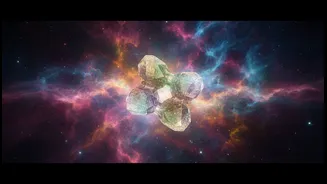
When we hear 'sugar,' we think of the sweet crystals in our kitchen. But in chemistry, sugars are a vital class of organic molecules essential for life. Erythrulose, for instance, is found on Earth in raspberries. While this specific sugar isn't directly a part of our DNA, its discovery is significant because it's a complex precursor. Sugars form the backbone of RNA and DNA, the molecules that carry the genetic code for all known life. Simpler molecules like glycolaldehyde, a two-carbon precursor, had been found before. But finding a more complex four-carbon sugar suggests that the chemical processes in these interstellar clouds are more advanced than previously thought, capable of building the larger molecules necessary for biology.
From Cosmic Cloud to Comet Delivery
The discovery supports a fascinating theory about the origins of life on Earth, known as panspermia. The idea is that life didn't have to start from scratch on our planet. Instead, the essential building blocks could have been formed in space and delivered to a young, sterile Earth by comets and asteroids. These giant molecular clouds are stellar nurseries, regions where new stars and planetary systems are born. The molecules within them, including sugars like erythrulose, can get frozen into icy dust grains. These grains then clump together to form the asteroids and comets that eventually make up a new solar system. Billions of years ago, a constant barrage of these objects impacting Earth could have seeded our world with a rich cocktail of prebiotic chemicals, including the sugars and amino acids needed to kickstart life.
Challenging Theories of Chemical Formation
One of the most intriguing aspects of this find is how the erythrulose may have formed. For a long time, scientists believed that complex molecules in space were built incrementally, one carbon atom at a time. However, the new research suggests a different pathway. The team proposes that erythrulose likely formed on the surface of interstellar ice grains from the combination of simpler, two-carbon molecules. This is a more efficient way to build complexity and could explain why this four-carbon sugar appears to be more abundant in the cloud than some simpler sugars. This finding refines our understanding of astrochemistry, showing that the universe has multiple, efficient pathways for creating the molecules of life.
Are the Ingredients for Life Everywhere?
This discovery does not mean scientists have found alien life. What it does mean is that the chemical conditions necessary for life as we know it might not be unique to Earth. If complex sugars, amino acids, and other organic compounds are forming naturally in interstellar clouds across the galaxy, it dramatically increases the odds that other planets could have been seeded in the same way our own was. The presence of these key ingredients suggests that the universe is an 'organic chemist,' constantly running experiments in countless stellar nurseries. Finding them in one spot implies they are likely hiding in distant corners of the galaxy, waiting for a young planet to call home.