


You Can Walk Across Living Bridges
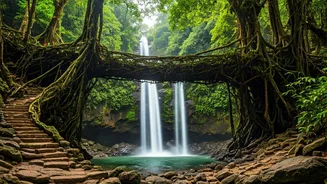
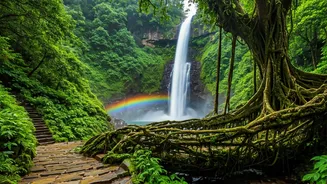
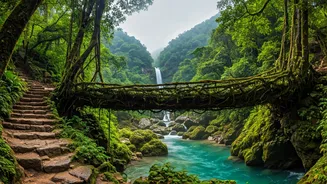
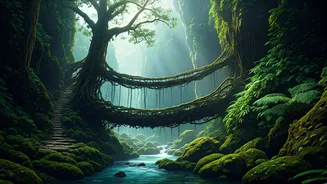
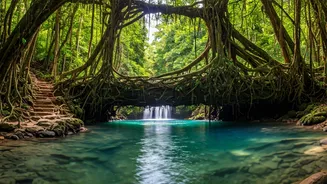
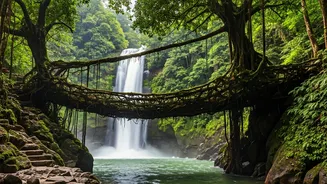
This is not a metaphor. For centuries, the Khasi and Jaintia people have guided the aerial roots of rubber fig trees across rivers and streams, weaving them into functional, sturdy bridges that grow stronger with time. The most famous of these, the Jingkieng
Nongriat or Double-Decker Living Root Bridge near Cherrapunji, is a marvel of bio-engineering. The trek to reach it is a journey in itself, a descent through lush forests, past small villages, and across turquoise pools. Crossing a bridge that is alive, feeling the texture of the interwoven roots under your feet, is an experience that connects you directly to the ingenuity and patience of the local culture.
Boats Appear to Float in Mid-Air
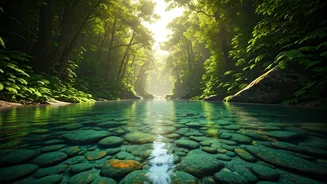
The Umngot River in Dawki, a small town on the border with Bangladesh, possesses a magic that defies belief. During the winter months, the river’s water becomes so astonishingly clear that the riverbed, with its smooth stones and pebbles, is perfectly visible from the surface. When you take a boat ride, the lack of turbidity creates a stunning optical illusion: the boats appear to be suspended in the air, casting sharp shadows on the river floor below. It's a surreal, photographic moment that feels like you’ve found a glitch in the matrix of the natural world. This is one of those 'see it to believe it' phenomena that makes Meghalaya truly unique.
Explore the Earth's Veins
Meghalaya is home to one of the most extensive networks of caves in Asia, offering adventures for both casual tourists and serious spelunkers. The Mawsmai Cave, near Cherrapunji, is a great introduction. It’s well-lit and allows you to walk through a fascinating labyrinth of stalactites and stalagmites without needing special gear. For a slightly more adventurous feel, the Arwah Cave near Sohra reveals ancient crustacean and fish fossils embedded in its limestone walls. Exploring these subterranean worlds feels like a journey to the centre of the Earth, a cool, dark, and mysterious counterpoint to the vibrant green world above.
Witness Waterfalls with Epic Stories
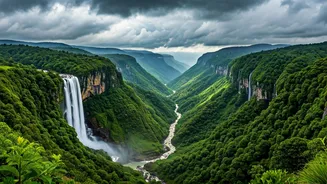
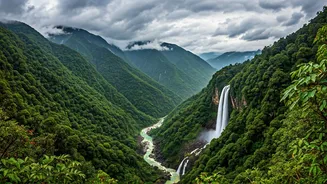
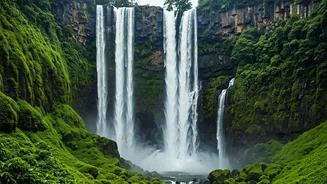
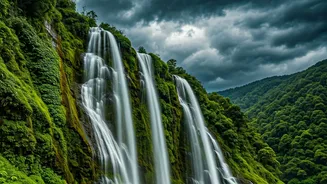
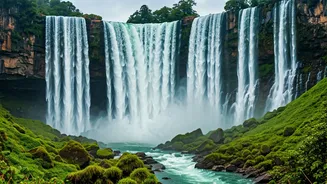
Given its reputation as one of the wettest places on Earth, it’s no surprise that Meghalaya is overflowing with spectacular waterfalls. But these aren’t just pretty cascades; they are dramatic, powerful forces of nature often tied to poignant local legends. Nohkalikai Falls, India's tallest plunge waterfall, is a prime example. It drops from a verdant cliff into a deep, turquoise-green pool. Its name, however, comes from a tragic Khasi legend about a woman named Likai, lending a layer of somber beauty to its immense power. From the multi-tiered Elephant Falls to the serene Krang Suri Falls, each cascade offers a different personality and a reason to pause in awe.
Experience a World Shaped by Rain
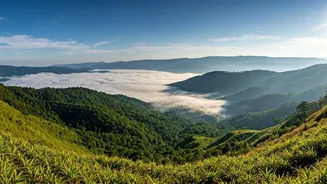
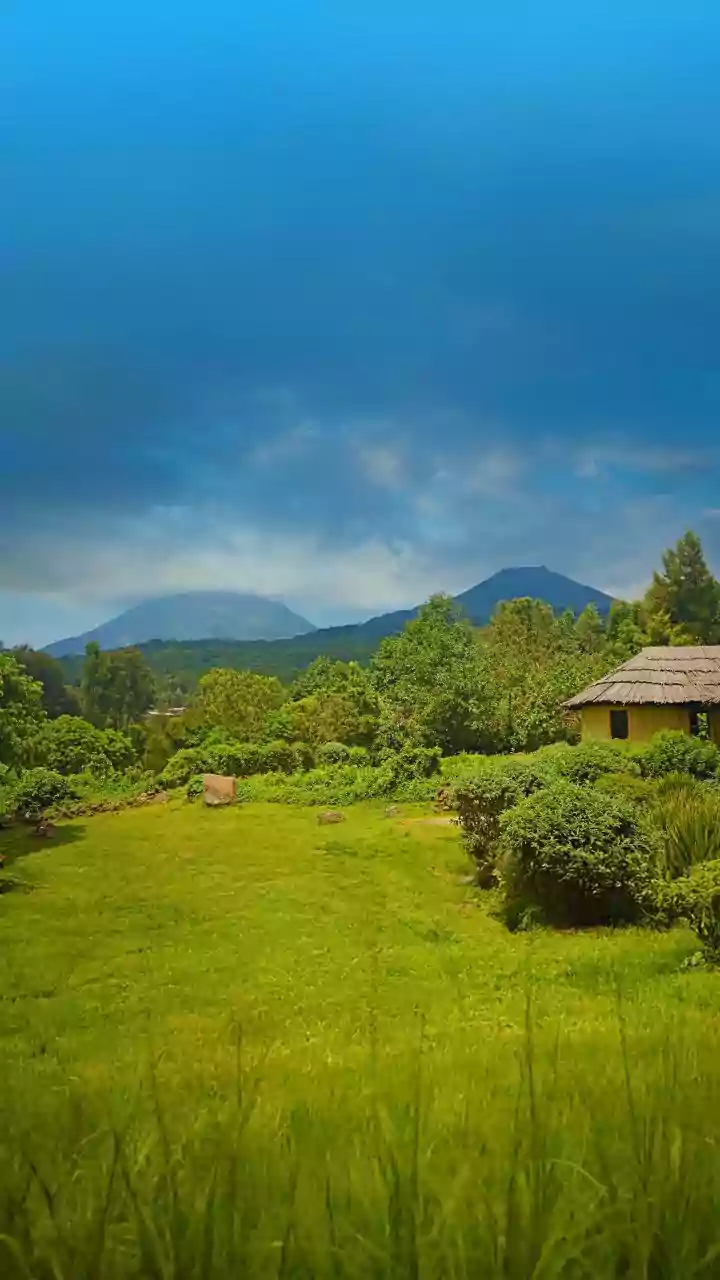
The towns of Mawsynram and Cherrapunji (Sohra) vie for the title of the wettest place on the planet. This constant rainfall has shaped not just the landscape but the entire way of life. You'll see locals using 'knups'—turtle-shell-shaped umbrellas made of bamboo and leaves—to work in the fields. The monsoons transform the region into an impossibly lush, misty wonderland where clouds drift into your hotel room and every shade of green imaginable comes to life. This unique climate, combined with the region’s distinct matrilineal societies and warm hospitality, makes a trip to Meghalaya more than just a sightseeing tour; it's an immersion into a culture and ecosystem found nowhere else.