







A New Galaxy of Opportunity
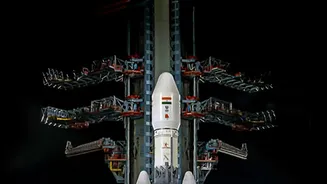
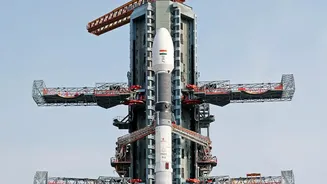
For decades, India's space ambitions were synonymous with one name: ISRO. From launching satellites to exploring the moon, the government-run agency did it all. Private companies were involved, but mostly as vendors supplying components. That picture
has fundamentally changed. A quiet revolution, backed by landmark policy reforms, is encouraging private firms to not just supply parts, but to build, launch, and operate their own space-based services. This has unlocked the sector, moving it from a 'supply-based' model to a 'demand-based' one where innovation can flourish. The goal is ambitious: to grow India’s share of the global space economy from its current 2-3% to a much larger slice, with projections seeing the domestic market swell to $44 billion by 2033.
The Policy That Launched a Thousand Startups
The primary engine for this transformation is the Indian Space Policy 2023. This policy formally ended ISRO's monopoly on space activities and created clear lanes for Non-Governmental Entities (NGEs) to participate across the entire spectrum—from satellite manufacturing to launching their own rockets. To facilitate this, the government established two key bodies. The Indian National Space Promotion and Authorisation Centre (IN-SPACe) acts as a single-window agency to promote, authorise, and supervise private space activities, essentially hand-holding startups and corporations. Meanwhile, NewSpace India Limited (NSIL), ISRO's commercial arm, is tasked with commercialising ISRO's existing technologies and managing operational missions, freeing up ISRO to focus on what it does best: advanced research and development for deep space exploration.
Meet the Trailblazers
This new environment has fostered a boom in space-tech startups, with the number growing from just a handful to over 400 in recent years. Companies like Skyroot Aerospace, Agnikul Cosmos, and Pixxel are becoming household names. Skyroot made history by becoming India's first private company to complete an orbital launch in July 2026 and is now a space-tech unicorn. Agnikul Cosmos is pioneering 3D-printed rocket engines, successfully testing them in clusters. Pixxel is building a constellation of hyperspectral imaging satellites and has secured contracts from the US. These companies are not just building for India; they are building for the world, attracting hundreds of millions of dollars in investment from global giants like GIC, BlackRock, and Alphabet.
From Vendor to Strategic Partner
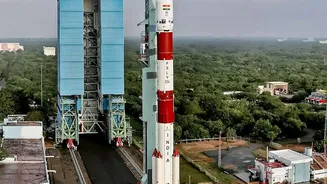
The relationship between ISRO and the private sector has matured significantly. ISRO is no longer just a customer but a mentor and a partner. It provides access to its world-class testing facilities, launchpads, and technical expertise, significantly lowering the entry barriers for new players. This collaborative approach was showcased when ISRO provided extensive ground support for Agnikul's suborbital mission, helping with everything from site selection to safety planning. This symbiotic relationship allows startups to innovate faster and cheaper, while ISRO benefits from a robust, diversified domestic supply chain and the ability to focus its own resources on more challenging scientific missions. The shift is clear: private firms are now seen as integral partners in achieving India's national space objectives.