





A New Space Race at Home
For decades, space exploration in India was synonymous with the Indian Space Research Organisation (ISRO). But a monumental shift is underway. The government's landmark Indian Space Policy 2023 has officially opened the final frontier to private enterprise,
transforming a state-led monopoly into a collaborative ecosystem. This policy allows private companies to build and operate everything from rockets and satellites to ground stations. To guide this transition, the government established the Indian National Space Promotion and Authorisation Centre (IN-SPACe) as a single-window agency to promote, authorise, and supervise private space activities. The goal is to let ISRO focus on pioneering research and deep space exploration, while private firms drive the commercial launch and satellite manufacturing business. This strategic pivot has ignited a domestic space race, with over 400 startups now part of India's space economy.
Meet the Trailblazers
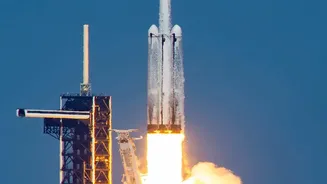
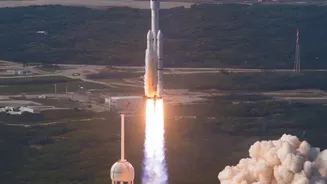
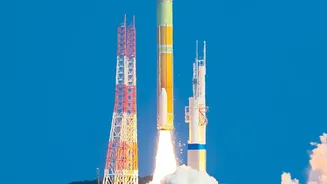
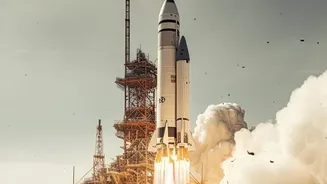
At the forefront of this new wave are ambitious startups founded by former ISRO engineers and tech entrepreneurs. Hyderabad-based Skyroot Aerospace made history by becoming the first Indian private company to reach orbit with its Vikram-1 rocket in July 2026. The company, now India's first space-tech unicorn, develops a series of rockets designed to launch small satellites. Another key player is Chennai-based Agnikul Cosmos, which has distinguished itself by developing a 3D-printed, semi-cryogenic engine and building India's first privately operated launchpad. While these two focus on launch vehicles, a whole ecosystem is building around them. Companies like Pixxel are developing constellations of hyperspectral imaging satellites, while Dhruva Space focuses on full-stack satellite manufacturing. This diversification shows the sector is moving beyond just launch capabilities to become a full-service space economy.
The Economics of Ambition
The core promise of these private firms is to drastically lower the cost of accessing space. By developing smaller, agile launch vehicles, they aim to serve the booming global market for small satellites, a niche that ISRO's powerful workhorse rockets are not always best suited for. The global space economy is projected to exceed a trillion dollars in the coming decade, and India aims to significantly increase its current 2-3% share. Projections suggest India's space economy could grow from around $8.4 billion today to over $40 billion by 2033. Private companies are key to this growth, as their profit-driven model encourages innovation in cost-reduction, such as developing reusable systems that can fundamentally change launch economics.
Challenges on the Launchpad
Despite the immense potential, the path to sustained commercial success is steep. Building and launching rockets requires immense capital, and startups face a long, expensive journey from prototype to reliable, repeatable commercial deployment. While government reforms and bodies like IN-SPACe provide crucial support, securing long-term funding remains a significant hurdle. Furthermore, Indian companies face stiff competition from established international players like SpaceX and Blue Origin. There are also regulatory challenges, including rules around Foreign Direct Investment (FDI) that can hamper a startup's ability to scale and the need for a robust intellectual property framework to protect innovation. Finding and retaining specialised technical talent is another major challenge for the industry.