






The Golden Rule: Wear Your Heaviest Items
This is the most critical space-saving hack for any weight-restricted packing. Your bulkiest items should never go inside your trolley; they should be on your body. This means wearing your winter coat, your heaviest sweater or fleece, and your sturdiest
boots onto the plane. While you might feel a bit warm in the terminal, you can easily remove the coat once you're on board and use it as a blanket during the often-chilly long-haul flight. Denim is another surprisingly heavy fabric that doesn't compress well, so make your travel day outfit include your chosen pair of jeans. This strategy alone frees up an enormous amount of volume and weight in your bag for other essentials.
Master the Art of Layering
The key to warmth without bulk is a smart layering system. Instead of one chunky sweater, think in terms of three distinct layers that work together. Your first is the base layer, which sits against your skin to wick away moisture and trap heat. Next comes the mid-layer, which is your primary insulator—think a fleece jacket, a thin down vest, or a cashmere sweater. Finally, your outer layer (which you'll be wearing on the plane) should be a windproof and water-resistant shell to protect you from the elements. This approach allows you to adapt to changing temperatures by adding or removing layers as needed, giving you more outfit versatility from fewer items.
Choose Your Fabrics Wisely
The right materials are crucial for lightweight warmth. Cotton should be avoided for base and mid-layers, as it traps moisture and can leave you feeling cold and damp. Instead, prioritise high-performance fabrics. Merino wool is a travel superstar; it's lightweight, incredibly warm, breathable, and naturally odour-resistant, meaning you can wear it multiple times before it needs washing. For insulation, packable down jackets and vests offer the best warmth-to-weight ratio and can be compressed into a tiny pouch. Modern synthetics like polyester and nylon are also excellent choices for both base and mid-layers as they are quick-drying and durable.
The Power of Packing Cubes
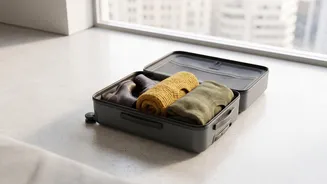
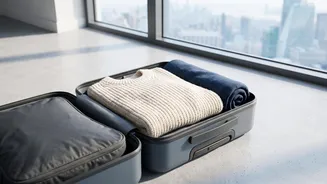
To conquer the 7kg challenge, organisation is as important as what you pack. Packing cubes are non-negotiable. These small fabric organisers allow you to compartmentalise your clothing, making it easy to find what you need without destroying your carefully packed bag. More importantly, they help compress your clothes. By rolling your garments tightly before placing them in the cubes, you can squeeze out excess air and maximise every inch of space. For particularly bulky items like sweaters or a packable down jacket, consider using compression bags, which use a one-way valve or vacuum to remove even more air, shrinking items down to a fraction of their original size.
A Minimalist Footwear and Accessories Strategy
Shoes are often the heaviest and most awkward items to pack. A strict two-pair rule is your best bet. Wear your heaviest, most weather-appropriate boots on the flight. The second pair, packed in your trolley, should be lightweight and versatile—perhaps a pair of comfortable flats or stylish sneakers that can be dressed up or down. To save space, stuff your packed shoes with socks or other small items. When it comes to accessories, choose multi-use items. A large wool scarf can double as a blanket on the plane and is a key warmth accessory at your destination. Opt for thin, fingerless gloves that allow you to use your phone, and a warm beanie that can be easily stuffed into a coat pocket.
Downsize Your Toiletries and Tech
Liquids are heavy and restricted on flights. Decant everything into travel-sized (under 100ml) reusable bottles. Better yet, switch to solid toiletries wherever possible. Solid shampoo bars, conditioner bars, toothpaste tabs, and solid perfumes save space, weight, and eliminate the risk of leaks. For electronics, think small. Bring a power bank instead of multiple chargers, use a single universal adapter, and load books onto your phone or a slim e-reader instead of carrying physical copies. Every gram counts towards that 7kg limit, and these small swaps can make a significant difference.