
From Dust to Breathable Air
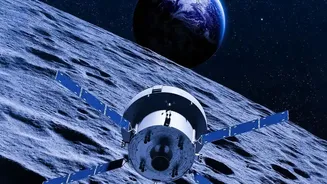
For humanity to establish a long-term presence on the Moon under the Artemis program, it must learn to live off the land. This concept, known as in-situ resource utilization (ISRU), is the key to making deep space exploration sustainable. Instead of shipping
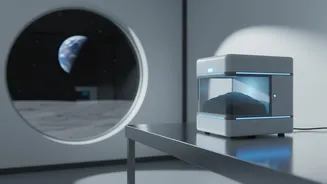
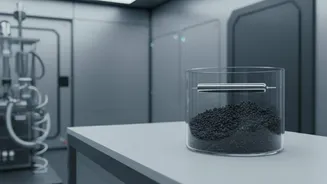
every last drop of water, ounce of food, and breath of air from Earth—a logistical and financial nightmare—astronauts could harvest resources directly from their environment. The most vital resource is oxygen, not just for breathing but also as a component of rocket propellant. The lunar surface, while seemingly barren, is a massive, untapped oxygen reservoir. The fine dust and rock, known as regolith, is about 45% oxygen by mass, but it's chemically locked away inside silicate minerals. The challenge for NASA has been to find an efficient way to break those bonds and set the oxygen free.
How the Oxygen 'Baking' Works
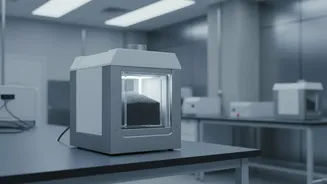
The successful experiment is called the Carbothermal Reduction Demonstration, or CaRD. It works by using a powerful solar concentrator—essentially a sophisticated set of mirrors—to focus sunlight and generate intense heat. This heat is directed into a reactor containing simulated lunar regolith. By heating the regolith to very high temperatures (over 3,000 degrees Fahrenheit in some electrolysis concepts), the oxygen-bearing minerals melt. This process, known as carbothermal reduction, breaks the chemical bonds holding the oxygen. The immediate result isn't pure oxygen but carbon monoxide, which was detected by sensitive instruments during the test, confirming the reaction worked as planned. This carbon monoxide can then be relatively easily converted into breathable oxygen and fuel. The test was a crucial proof-of-concept, demonstrating that the process can work using only sunlight and lunar materials.
A Collaborative Breakthrough
The CaRD project is a multi-center effort, showcasing a powerful collaboration between NASA and private industry. The integrated prototype involved a solar concentrator designed by NASA's Glenn Research Center, a carbothermal reactor from commercial partner Sierra Space, and avionics and gas analysis systems from Kennedy Space Center, with Johnson Space Center managing the project. By successfully proving the technology in a simulated lunar environment, including in a vacuum, the team has significantly advanced its readiness for an actual mission. This success is a key milestone for NASA's Game Changing Development program, which funds technologies that can revolutionize space exploration.
The Artemis Connection and Beyond
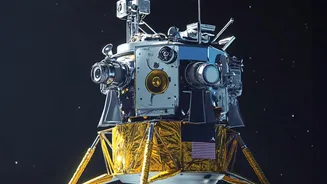
This breakthrough is directly aimed at supporting NASA's Artemis program, which seeks to establish a permanent human presence on the Moon. The ability to generate oxygen on-site would dramatically reduce the cost and complexity of lunar missions. It means future moon bases could be more self-sufficient, enabling longer stays and more ambitious scientific work. Beyond breathing, the extracted oxygen can be used as an oxidizer for rockets, potentially turning the Moon into a refueling station for missions venturing farther into the solar system, including to Mars. In fact, the same technology could be adapted to extract oxygen from the Martian atmosphere and soil, making it a foundational capability for future human exploration of the Red Planet.
What Comes Next?
While the recent tests were a major success, the system was a prototype that used simulated lunar soil. The next steps involve refining the technology and eventually sending a demonstration mission to the Moon to test it with actual regolith in the true lunar environment. Engineers will need to scale up the system to produce oxygen in quantities large enough to support a crew and their operations. There are also plans to develop infrastructure like pipelines to transport the gaseous oxygen from extraction sites to habitats or storage tanks at the Moon's South Pole. Overcoming these engineering challenges is the final hurdle before this groundbreaking technology can be used to support the first generation of long-term lunar inhabitants.