


The 'Goldilocks' Promise
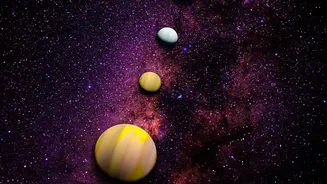
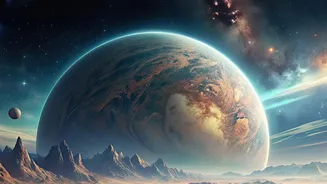
The habitable zone is defined as the orbital region around a star where a planet's surface temperature could potentially allow liquid water to exist. Since all life on Earth depends on water, this seems like a logical place to start our search. If a planet is too
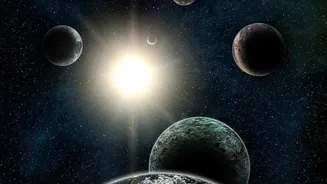
close to its star, its water would boil away; if it’s too far, it would freeze solid. The habitable zone is this temperate middle ground. This simple, appealing idea has made it a key tool for astronomers, helping them narrow down which of the thousands of known exoplanets are the most promising candidates for a closer look. The size and location of this zone depend on the star—hotter, brighter stars have wider habitable zones that are farther out, while cooler, dimmer stars like red dwarfs have much tighter zones close in.
A Cautionary Tale from Our Neighbours
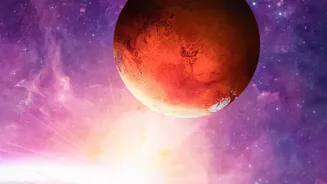
We don’t need to look light-years away to see the limits of the habitable zone concept. Our own solar system provides the perfect examples: Venus and Mars. Both are on the edges of our Sun's habitable zone, but neither has the lakeside retreats we might hope for. Venus, though similar in size to Earth, has a runaway greenhouse effect that makes its surface hot enough to melt lead. Any oceans it may have once had boiled away long ago. Mars, the cold, red planet, is now a desert with an extremely thin atmosphere, though evidence suggests it once had flowing liquid water. These two worlds are a stark reminder that a planet’s address in the habitable zone doesn't guarantee a pleasant environment. It proves that planetary habitability is far more complicated than just distance from a star.
The Atmosphere Is (Almost) Everything
The single most important factor that the habitable zone overlooks is the planet's atmosphere. An atmosphere is critical for life as we know it. It regulates temperature, shields the surface from harmful cosmic radiation, and creates the pressure needed for liquid water to remain stable on the surface. The composition of an atmosphere determines whether a planet becomes a scorching greenhouse like Venus or a frozen wasteland. The presence of gases like carbon dioxide and water vapor can trap heat, warming a planet that might otherwise be too cold. However, actually detecting and analyzing the atmosphere of a rocky, Earth-sized exoplanet is an enormous technological challenge, though recent breakthroughs are starting to make it possible.
Beyond the Zone: Other Crucial Factors
True habitability depends on a whole host of other factors. A planet needs to be rocky, not a gas giant like Jupiter. Its size and mass matter; a planet that's too small can't hold onto its atmosphere. Its geology is also key. Volcanic activity can replenish an atmosphere and a magnetic field, generated by a planet's core, is vital for shielding that atmosphere from being stripped away by its star's solar wind. Even the type of star is important. Many potentially habitable planets orbit red dwarf stars, which are prone to violent flares that could blast a nearby planet with lethal radiation, making it a challenging environment for life to arise. Some planets are also 'tidally locked', with one side permanently facing the star in perpetual daylight and the other in endless night, creating extreme temperature differences.
The Future of the Hunt for Life
So, is the habitable zone useless? Not at all. It remains a crucial first step, helping scientists prioritize which of the thousands of distant worlds deserve a follow-up look with powerful instruments like the James Webb Space Telescope. The focus is shifting from simply finding planets in the zone to studying them in detail. Scientists are now hunting for 'biosignatures'—gases in a planet's atmosphere, like oxygen or methane, that could indicate the presence of life. A recent major breakthrough was the first confirmed detection of an atmosphere on a rocky planet within the habitable zone, LHS 1140 b, proving that such worlds can retain their gaseous envelopes and giving researchers a prime target for future study. The ultimate goal is to move beyond the simple 'Goldilocks' label and build a complete picture of an exoplanet's environment.