
The Universe's Dusty Veil
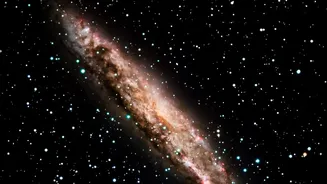
When we look up at the night sky, we see the brilliant light of stars. But much of the universe is hidden from our view. Between the stars lie enormous clouds of cosmic dust, tiny particles of solid material similar to smoke. For astronomers, this dust has
long been a source of frustration, as it absorbs and scatters visible light, effectively drawing a curtain over huge regions of space, including the bustling hearts of galaxies where stars are born. This obscuring effect means that for a long time, our picture of the cosmos was incomplete. We could see the stars, but not the raw material from which they, and their planets, are made. This cosmic dust, however, is more than just an obstacle; it's a crucial ingredient in the universe's life cycle.
A New Window to the Cosmos
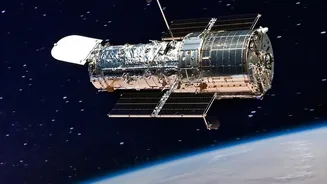
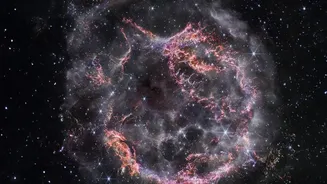
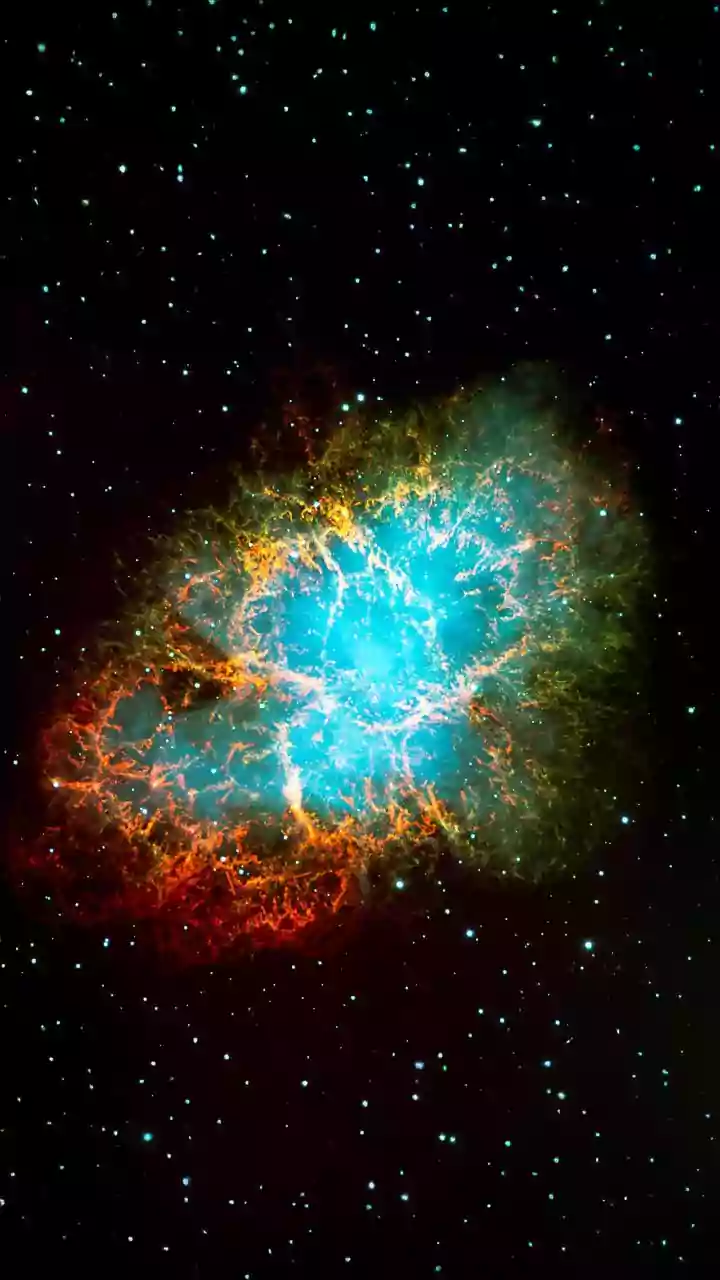
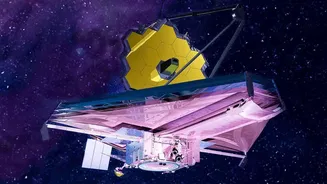
The game has changed with the advent of a new generation of powerful telescopes, most notably the James Webb Space Telescope (JWST). Unlike telescopes that see in visible light, like our eyes do, instruments like JWST are designed to detect infrared light. This longer wavelength of light can pass through dense clouds of cosmic dust, much like how radio waves can pass through walls. This ability allows astronomers to finally peer into the previously hidden nurseries of stars and the chaotic cores of galaxies. The clarity and detail provided by these infrared observations have been described by scientists as astounding, revealing a fine structure that caught even seasoned astronomers by surprise. Areas that once appeared as dark patches in images taken by the Hubble Space Telescope now light up with exquisite detail, showcasing a complex web of gas and dust.
What Lies Beneath the Dust?
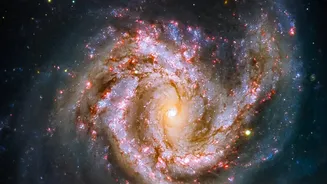
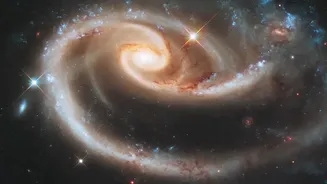
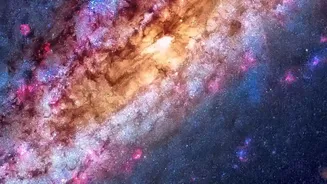
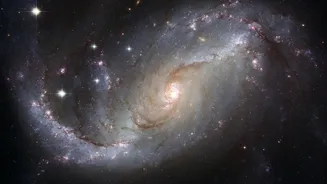
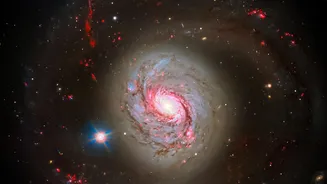
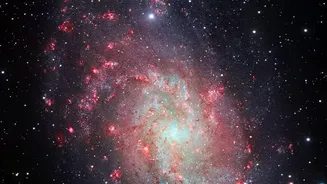
So, what have we found behind the curtain? The latest observations reveal intricate networks of gas and cavernous bubbles lining the spiral arms of nearby galaxies. These structures are created by the energy released from young, massive stars. In some cases, astronomers have found that different types of dust form unique and complex patterns, with clouds of larger grains creating chaotic structures, while carbon-based molecules are distributed more evenly. In one of the most exciting recent discoveries, observations of a nearby galaxy revealed a treasure trove of organic molecules, including compounds like methane and benzene, hidden deep within a dusty galactic nucleus. These findings suggest that the hearts of dusty galaxies might act as cosmic factories for the chemical building blocks of life.
Rewriting the Story of Galaxies
These new details are not just pretty pictures; they are fundamentally changing our understanding of how galaxies work. By mapping the dust, astronomers can see how the raw materials for stars and planets are organized and distributed. They can directly observe how the energy from star formation shapes the galaxy around it, a process that was previously only understood through theoretical models. Furthermore, studying dust in the very early universe helps solve the "dust budget crisis"—the mystery of why ancient galaxies seem to have more dust than astronomers could account for. By identifying dust sources like specific types of stars, scientists are piecing together the complete life cycle of matter in the cosmos, from the first stars to the formation of planets like our own. These insights are crucial for building a complete timeline of cosmic evolution.