








A Hug in a Bowl
There's a scientific reason we reach for certain foods when the weather turns gloomy. Rainy days can lead to a dip in serotonin, the body's 'happiness hormone'. Our brains naturally seek a boost, and warm, carbohydrate-rich foods trigger the release of
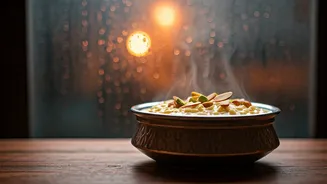
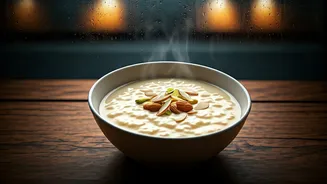
these feel-good chemicals. Kheer, a slow-cooked pudding of rice and milk, fits this description perfectly. The physical warmth of the bowl is instantly soothing, while the creamy texture and gentle sweetness provide a deep sense of contentment and security, making it a classic comfort food. It’s more than just a dessert; it’s an emotional experience, a culinary hug that feels tailor-made for a day spent indoors.
The Power of Scent and Memory
Much of kheer's magic lies in its aroma, a heady blend of cardamom, saffron, and simmering milk. Scent is powerfully linked to memory, and for many Indians, the fragrance of kheer evokes feelings of safety, family, and celebration. It’s the dessert of festivals like Diwali and Eid, a symbol of joy at weddings, and a sacred offering in temples. But it's also the simple, everyday sweet made by mothers and grandmothers, served to soothe a cold or just because. This deep-seated nostalgia is amplified by the rain, which often encourages a reflective, inward-looking mood. Eating kheer on a rainy day, therefore, becomes a way of reconnecting with cherished memories and the comfort of home.
A Dish with Ancient Roots
Kheer is not just a passing craving; it's a dish with a history stretching back over two millennia. Its name is derived from the Sanskrit word 'Kshirika,' meaning a food cooked with milk. Early versions of the pudding, known as 'payasam' in South India, are mentioned in ancient texts like the Ramayana and Mahabharata. It was considered a dish fit for royalty and a sacred offering, or 'prasad', in temples, a tradition that continues today. The core ingredients—rice for prosperity, milk for purity, and sugar for joy—are deeply symbolic. This rich cultural and historical significance adds a layer of depth to every spoonful, connecting the simple act of eating to a long and cherished heritage.
Your Own Pot of Monsoon Magic
The beauty of kheer lies in its simplicity. While there are countless regional variations using everything from vermicelli to tapioca pearls, the classic rice kheer is the easiest to master. To make your own, start by rinsing and soaking a quarter cup of Basmati rice for about 20-30 minutes. In a heavy-bottomed pan, bring one litre of full-fat milk to a boil, then lower the heat and add the drained rice. Let it simmer on low heat, stirring every few minutes to prevent it from sticking. After about 25-30 minutes, the rice will be completely cooked and the milk will have thickened. Stir in sugar to taste, a pinch of crushed green cardamom, and a few strands of saffron for that classic aroma and golden hue. Garnish with sliced almonds and pistachios. Serve it warm for the ultimate rainy-day treat.