



1. Swap Fried Snacks for Makhana
Instead of reaching for a bag of potato chips, consider roasted makhana (fox nuts). This traditional snack is making a huge comeback. Makhana is significantly lower in fat and calories compared to most fried snacks. It's also rich in protein, fibre, and essential
minerals like magnesium and potassium, which help you feel full for longer without the guilt. A simple roast with a pinch of salt and spices turns it into a crunchy, satisfying, and heart-healthy alternative.
2. Swap White Rice for Millets
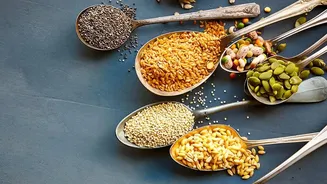
For generations, millets like ragi, jowar, and bajra were staples across India before polished white rice took over. Now, they are returning to the mainstream. Millets are nutritional powerhouses, containing significantly more fibre and protein than white rice. They have a lower glycemic index, which helps in managing blood sugar levels, making them an excellent choice for diabetics and those watching their weight. They are also packed with minerals like iron and calcium.
3. Swap Refined Sugar for Jaggery
The switch from refined white sugar to traditional gur, or jaggery, is one of the easiest and most impactful swaps. Unlike white sugar, which is stripped of all nutrients, jaggery is unrefined and retains trace minerals like iron, magnesium, and potassium. It's considered a complex carbohydrate, meaning it releases energy more slowly than the instant rush from sugar. While it is still a form of sugar and should be used in moderation, its nutritional profile makes it a superior choice for sweetening tea, coffee, and desserts.
4. Swap Refined Oils for Ghee
After decades of being unfairly criticized, desi ghee is being celebrated once again for its health benefits. Ghee has a high smoke point (around 250°C), which means it doesn’t break down into harmful compounds during high-heat cooking like tadkas and frying. Most refined vegetable oils, on the other hand, can oxidize at high temperatures. Ghee is also a source of fat-soluble vitamins like A, D, E, and K, which are absent in most processed oils.
5. Swap Table Salt for Sendha Namak
Sendha namak, or rock salt, is the purest form of salt available. Unlike processed table salt, it is minimally refined and contains no chemical additives. This allows it to retain dozens of trace minerals, including potassium and magnesium. In Ayurveda, it is prized for its digestive properties, helping to soothe bloating and heartburn. While iodized table salt is important for thyroid function, rotating it with sendha namak can provide a broader spectrum of minerals.
6. Swap Refined Flour for Ragi Flour
Ragi, or finger millet, is a gluten-free grain that is staging a remarkable comeback. Ragi flour is an excellent substitute for refined wheat flour in rotis, dosas, and even baked goods. Its standout feature is its incredibly high calcium content—over ten times that of wheat—making it fantastic for bone health. It is also rich in fibre and has a lower glycemic index, which aids in weight management and blood sugar control.
7. Swap Meat with Raw Jackfruit
For those looking to reduce their meat consumption, unripe or raw jackfruit is a revelation. When cooked, its fibrous texture mimics that of pulled pork or shredded chicken, making it an incredible plant-based substitute in curries, biryanis, and tacos. It's low in fat and calories and readily absorbs the flavours of spices and marinades. This traditional vegetable is now being embraced by a new generation for its versatility and meaty texture.
8. Swap Regular Grains for Sprouted Grains
Sprouting is the simple, ancient process of germinating grains and legumes like moong, chana, or ragi. This process dramatically enhances their nutritional profile. Sprouting increases the bioavailability of vitamins and minerals like Vitamin C and iron, making them easier for the body to absorb. It also breaks down complex starches and proteins, which improves digestibility and reduces issues like bloating and gas. You can easily sprout grains at home and add them to salads and curries.
9. Swap Sugary Drinks for Buttermilk (Chaas)
Instead of reaching for a sugary soda or packaged juice, a glass of traditional chaas is a far healthier choice. Buttermilk is a natural probiotic, promoting good gut health and aiding digestion. It's a fantastic source of hydration, packed with electrolytes like potassium, and is naturally cooling for the body. Being low in calories and fat, it's also excellent for weight management and makes for a refreshing, nutritious drink any time of day.
10. Swap Breakfast Cereals for Amaranth (Rajgira)
Many commercial breakfast cereals are loaded with sugar and refined carbs. Amaranth, known as rajgira, offers a much healthier start to the day. This ancient pseudo-grain is a complete protein, meaning it contains all essential amino acids. It is naturally gluten-free and rich in fibre, iron, and calcium. It can be cooked into a porridge similar to dalia or popped like corn to create a light, nutritious base for a homemade cereal bowl.