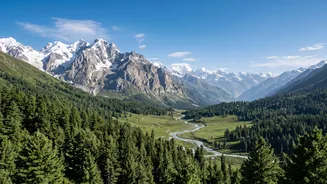







Aizawl, Mizoram: The Hilltop Haven
Aizawl often tops the charts for the cleanest air in India. Nestled in the hills of Mizoram, its advantage comes from a high forest cover, a lack of large polluting industries, and a unique urban layout that helps disperse pollutants. The city's disciplined
traffic and community-driven cleanliness add to its pristine reputation, making it feel like a different world compared to congested metros. However, experts warn that this is not a permanent state. A Mizoram Pollution Control Board scientist noted that air quality is slowly deteriorating year on year due to increasing vehicle numbers. The privilege of clean air here depends heavily on continued environmental vigilance and sustainable practices.
Madikeri, Karnataka: Coorg’s Green Heart
Located in the heart of Coorg, Madikeri is a verdant paradise where the air is often as fresh as its famous coffee. Surrounded by the dense forests and rolling hills of the Western Ghats, the town benefits from natural air purifiers. Its economy is based on agriculture and tourism rather than heavy industry, keeping emissions low. On many days, its AQI stays comfortably in the 'Good' or 'Satisfactory' range. But this is not guaranteed. A surge in tourism, with the accompanying increase in traffic and construction, can lead to spikes in pollution, pushing the AQI into the 'Poor' category on some days. The delicate balance between nature and development is key to Madikeri's future air quality.
Shillong, Meghalaya: Scotland of the East
Known for its pine-covered hills, misty weather, and beautiful waterfalls, Shillong's elevation and green cover have historically blessed it with cleaner air. Umiam Lake and the surrounding sacred groves contribute to a healthier ecosystem. For years, it has been a go-to destination for those seeking a break from city pollution. However, the 'Scotland of the East' is not immune to modern pressures. Recent data shows that Shillong's AQI can fluctuate significantly, sometimes entering the 'Poor' or 'Unhealthy for Sensitive Groups' categories due to rising urbanisation and traffic. It serves as a stark reminder that even idyllic hill stations are vulnerable.
Ooty, Tamil Nadu: Queen of the Nilgiris
Ooty, the celebrated 'Queen of Hill Stations', is nestled in the Nilgiri Biosphere Reserve, a UNESCO-recognised biodiversity hotspot. Its eucalyptus forests, vast tea estates, and cool climate contribute to air quality that is often rated as 'Good' or 'Satisfactory'. The iconic Nilgiri Mountain Railway is a charming way to experience the clean environment. Yet, Ooty’s popularity is a double-edged sword. Peak tourist seasons bring traffic congestion and an increased carbon footprint. On some days, particularly when tourism is high, the AQI can spike into the 'Poor' range, proving that popularity can threaten the very peace and purity visitors seek.
Kinnaur, Himachal Pradesh: The High-Altitude Escape
For truly pristine air, few places compare to the remote, high-altitude district of Kinnaur. A study by IIT-Delhi once identified it as having the cleanest air in the country, with extremely low levels of particulate matter. Its sparse population, minimal industrial activity, and rugged, windswept landscapes create an environment where pollution struggles to take hold. This is an adventurer's paradise, offering crisp air and stunning views. The primary threat here is less from local industry and more from external factors like climate change impacting the fragile Himalayan ecosystem and the slow creep of pollution from tourism-related construction and vehicles. Maintaining this purity requires careful, sustainable management.
Alappuzha, Kerala: Coastal Breezes
Unlike the hill stations, Alappuzha offers a coastal alternative for cleaner air. Famous for its backwaters, the sea breeze plays a significant role in dispersing pollutants, often keeping the AQI at 'Good' or 'Moderate' levels. A trip on a houseboat offers an immersive experience in this relatively clean environment. But even here, the air isn't perfect. It is susceptible to pollutants from boat traffic on the backwaters and regional pollution drift. Some reports have noted that for certain pollutants, there can be a moderate health concern for sensitive individuals, and other sources have even pointed to it being a district with notable pollution within Kerala.