





The AI Power-Up Problem
Not all data centres are created equal. The facilities needed to power artificial intelligence are fundamentally different from their traditional counterparts. Training and running complex AI models require thousands of high-performance graphics processing
units (GPUs) clustered together. These GPUs consume significantly more electricity and, as a result, generate far more heat. A single server rack in a traditional data centre might require 10-15 kilowatts of power; an AI server rack can demand anywhere from 50 to 150 kilowatts. This high-density computing is the engine of the AI revolution, but it also means AI data centres consume three to five times more power than conventional facilities.
India’s Data Centre Gold Rush
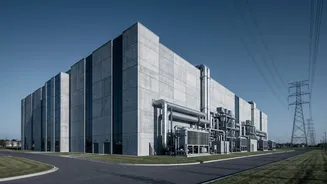
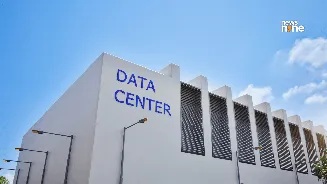
India is in the midst of an unprecedented data centre expansion. Driven by data localisation laws, explosive growth in digital services, and massive investments from global tech giants, the country's capacity is set to skyrocket. Projections show India's data centre capacity could triple from 1.6 GW in mid-2026 to 6 GW by 2029, making it Asia's fastest-growing market. Recent reports indicate India is on track to reach 2 GW of operational capacity by the end of 2026 alone, with Mumbai and Chennai leading the charge. With over 15% of recent investment commitments linked to AI, it's clear that this new, power-hungry infrastructure is a major part of India's digital future.
An Unquenchable Thirst for Energy
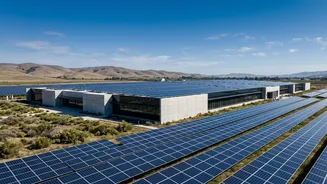
This expansion places immense pressure on India's energy grid. The electricity consumption from data centres is projected to climb from around 13 TWh in 2024 to as much as 45 TWh by 2030. To put that in perspective, the projected demand for Delhi in 2030 could be quadrupled by the country's data centres. While the government has pledged to support this growth with green energy, the 24/7 reliability required by data centres poses a challenge for intermittent renewables like solar. Storing solar power in batteries for overnight use is a solution, but the required scale is not yet available, putting India's net-zero 2070 goals under strain.
The Cooling Conundrum in a Water-Stressed Nation
Every watt of power consumed by a server becomes heat that must be removed. Traditionally, large data centres have relied on evaporative cooling towers, which consume enormous amounts of water. A single 1 MW facility can use up to 25 million litres annually. In a water-stressed country like India, where more than half of data centres are already in water-scarce regions, this is a critical vulnerability. India's data centres consumed an estimated 150 billion litres of water in 2024, a figure that could more than double by 2030. The pressure on local water resources, especially near hubs like Bengaluru, Chennai, and Mumbai, is becoming a serious environmental and social concern.
A Path Towards Sustainable Growth
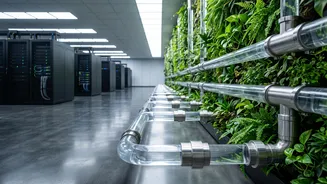
The challenge is formidable, but solutions are emerging. The focus is shifting towards sustainable practices, driven by both industry innovation and government policy. Several states are now offering incentives for green-certified facilities and encouraging the use of renewable energy. Technologically, operators are exploring advanced solutions like direct-to-chip liquid cooling and closed-loop systems that recirculate coolant, dramatically reducing water consumption. The government is also encouraging new data centres to be built near power generation sites and to use treated wastewater or desalinated water instead of fresh sources. The success of India's AI ambitions will depend not just on building more data centres, but on building them smarter and more sustainably.