


The Balcony Gardener’s Dilemma
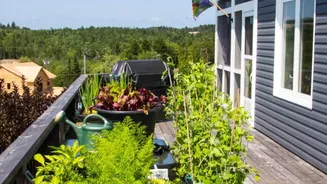
Gardening in containers on a balcony presents unique challenges. Unlike garden beds, pots have a limited soil volume and are exposed to sun, wind, and reflected heat from building surfaces. This causes them to dry out much faster. The classic “finger
test,” while a good starting point, can be misleading; the top inch of soil might feel dry while the bottom is still saturated. Conversely, the surface can feel damp when the root ball is parched. This guesswork is a primary reason why container gardens fail. Overwatering is just as dangerous as underwatering, creating a low-oxygen environment where roots can't breathe and diseases can flourish. Proper drainage is crucial, but it also means water and nutrients are flushed out more regularly, requiring a delicate balance that is difficult to maintain manually.
Beyond Guesswork: A New Generation of Sensors
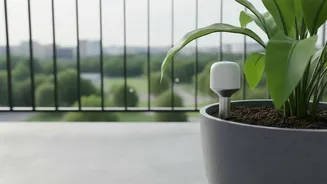
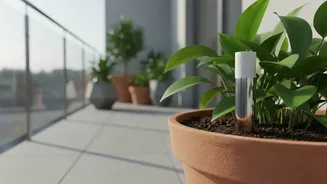
Enter the world of modern soil moisture sensors. While basic moisture meters have been around for years, many are notoriously inaccurate, often reacting to salts in the soil rather than just water content and corroding over time. The latest evolution involves micro-engineered probes, often built using Micro-Electro-Mechanical Systems (MEMS) technology. These are not your average garden-store gadgets. They are robust, highly accurate devices designed to give you a precise reading of what’s happening inside the pot. These sensors measure the volumetric water content (VWC), which is the volume of water per volume of soil. This data-driven approach removes emotion and guesswork from the equation, allowing gardeners to water only when necessary and with the right amount.
What Makes Them 'Micro-Engineered'?
The term “micro-engineered” refers to the manufacturing process, which is similar to how computer chips are made. This allows for the creation of tiny, highly sophisticated, and durable sensors. Many of these advanced probes use capacitive sensing. Instead of measuring electrical resistance between two prongs (a method prone to errors from soil salinity), they measure the dielectric constant of the soil. Since water has a much higher dielectric constant than soil minerals and air, the sensor can calculate the water content with remarkable precision. This method is more stable over time and less affected by fertilizer salts. Some of these smart sensors connect via Bluetooth or Wi-Fi to an app on your phone, providing not just real-time moisture levels but also tracking data for light, temperature, and even fertilizer concentration.
The Tangible Benefits of Precision Watering
Adopting this technology offers several key advantages for the balcony gardener. The most obvious is healthier plants. By eliminating the cycle of drought stress and waterlogging, plants can develop stronger root systems and are less susceptible to pests and diseases. It also conserves water, a significant benefit in urban environments. Instead of watering on a rigid schedule, you water only when the sensor indicates it's needed, ensuring every drop is used effectively. This can also save money by reducing fertilizer waste, as nutrients are not flushed out of the pot by unnecessary watering. For those with a large collection of plants, a sensor system can be a huge time-saver, providing a quick, at-a-glance overview of which plants need attention, removing the need to check each one manually.
Choosing the Right Probe for Your Urban Oasis
When shopping for a soil probe, consider your specific needs. For a few prized plants, a single, high-quality handheld probe might suffice. If you have numerous pots, a system with multiple stationary sensors that communicate with a central hub or app may be more efficient, though the cost can add up. Look for sensors that use capacitive technology for better accuracy and durability. Check the connectivity options—do you prefer Bluetooth for close-range checks or Wi-Fi for remote monitoring? Also, consider the accompanying app. Is it user-friendly? Does it provide historical data, which can help you understand your plants' watering needs across different seasons? While professional-grade systems can be expensive, many consumer-focused options now offer a great balance of accuracy and affordability, making smart gardening accessible to hobbyists.