
The Sodium Solution: What's the Big Deal?
For years, the electric vehicle revolution has run on lithium-ion batteries. They're in our phones, laptops, and the EVs currently on the road. But lithium has a few problems: it's relatively rare, expensive, and its supply chain is controlled by just
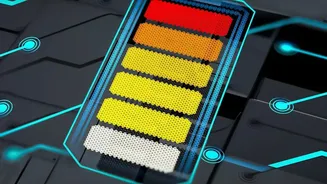
a handful of countries, leaving India dependent on imports. Enter sodium-ion batteries. As the name suggests, these use sodium ions, the same element found in common salt. The core advantage is abundance. Sodium is one of the most plentiful elements on Earth, widely available and significantly cheaper than lithium. This shift in raw materials could fundamentally change the cost structure of EV batteries, which are currently the most expensive component of an electric car, often accounting for 30-40% of the total price. Furthermore, these batteries can be made using much of the same manufacturing equipment as their lithium-ion counterparts, simplifying the transition for producers.
Unpacking the Cost Advantage
The primary driver of affordability is the dramatic difference in raw material costs. While lithium prices can be volatile and high, sodium is inexpensive and its price is stable. This chemistry also avoids other costly and controversial metals like cobalt and nickel, which are mainstays in many lithium-ion formulations. Beyond the materials themselves, sodium-ion batteries have other cost-saving benefits. They are generally considered safer, with a lower risk of thermal runaway (catching fire), and can be safely transported at zero charge, reducing logistical complexities and costs. Indian technology firm KPIT, which has developed its own sodium-ion technology, estimates a potential cost reduction of 25-30% compared to equivalent lithium-ion batteries. As production scales up, experts believe these savings could become even more significant, making them a game-changer for budget-focused vehicle segments.
India's Strategic Opportunity
For India, the appeal of sodium-ion technology goes far beyond just cheaper cars. It aligns perfectly with national strategic goals of 'Aatmanirbhar Bharat' (self-reliant India). With virtually no domestic lithium reserves, India is heavily reliant on imports, particularly from China, for its battery needs. Sodium, however, is abundant. This creates a massive opportunity to build a domestic supply chain from the ground up, securing the nation's energy future. Several Indian companies and research institutions are already making significant strides. Firms like KPIT Technologies, Reliance New Energy (through its acquisition of Faradion), IndiEnergy, and Naxion Energy are pioneering this space. Some are even developing innovative methods like using agricultural waste to produce the hard carbon needed for the battery's anode, turning a pollution problem into a resource.
Roadblocks to Widespread Adoption
Despite the immense potential, sodium-ion batteries are not a silver bullet just yet. The biggest challenge has historically been lower energy density. In simple terms, a sodium-ion battery of the same size and weight as a lithium-ion one typically stores less energy, resulting in a shorter driving range. This makes them less suitable for long-range, high-performance luxury EVs. However, this gap is closing, with newer designs showing significant improvement. Another hurdle is that the global supply chain, while promising, is still immature compared to the well-established lithium-ion ecosystem. While researchers have made great strides, moving from laboratory prototypes to mass commercial production will take time and significant investment. According to government officials, the technology is reaching a maturity level where commercial production could be just two to three years away.
The Road Ahead for Indian EVs
The most immediate and impactful application for sodium-ion batteries in India will likely be in smaller, cost-sensitive vehicles. Electric two-wheelers, three-wheelers, and budget-friendly city commuter cars are ideal candidates, as their use case doesn't demand extremely long range. The technology's excellent performance in a wide range of temperatures is another major plus for the varied and often extreme Indian climate. Several Indian players are positioning themselves to lead this charge. Reliance is planning to use sodium-ion tech at its giga-factory in Jamnagar for stationary storage and mobility. KPIT has partnered with Trentar to commercialise its technology for manufacturing. These batteries are also perfectly suited for stationary energy storage, such as for solar power grids and UPS backups, which is another massive market in India.