
The Reigning King: Lithium-Ion Batteries
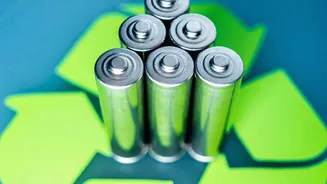
For the last decade, lithium-ion (Li-ion) batteries have been the undisputed champion of the electric vehicle world. They pack a lot of power into a relatively small and light package, a quality known as high energy density. This is crucial for an electric scooter,
where every kilogram affects range and handling. Thanks to massive global production, their costs have fallen dramatically. However, they have significant drawbacks. The key materials, lithium and cobalt, are scarce, geographically concentrated, and have volatile pricing. India is heavily dependent on imports for these materials and finished battery cells, creating supply chain vulnerabilities and keeping costs higher than they could be.
The Challenger: What Are Sodium-Ion Batteries?
A sodium-ion (Na-ion) battery works on a very similar principle to its lithium-ion cousin, moving ions between electrodes to charge and discharge. The key difference is the star player: it uses sodium instead of lithium. Sodium is the sixth most abundant element on Earth, easily sourced from common salt. This fundamental advantage means the raw materials are dramatically cheaper and more widely available, including in India. This technology avoids the need for scarce minerals like cobalt and copper, which not only lowers cost but also creates a more stable and ethical supply chain.
The Big Question: Are They Actually Cheaper?
In theory, yes. The raw material costs are significantly lower. Experts project that at mass scale, sodium-ion battery packs could be 20-40% cheaper than their lithium-ion phosphate (LFP) counterparts, which are already the more affordable type of Li-ion battery. However, the technology is still new to the market. While major manufacturers in China have started commercial production, the scale is not yet large enough to achieve these rock-bottom prices. For now, some of the first available sodium-ion packs can cost more than equivalent Li-ion batteries, but this is expected to change as production ramps up.
The Performance Trade-Off: Range vs. Cost
Herein lies the main challenge for sodium-ion in vehicles. Currently, they have a lower energy density than Li-ion batteries. This means for a battery of the same weight and size, a sodium-ion pack will offer less range. To get the same range as a Li-ion scooter, the battery would need to be bigger and heavier, which is not ideal for a two-wheeler. However, recent advancements are closing this gap, with newer sodium-ion cells approaching the energy density of LFP batteries. For many Indian consumers who use their scooters for daily city commutes of under 60 km, a slightly lower maximum range in exchange for a significantly lower purchase price could be a very attractive trade-off.
The Hidden Strengths: Safety and Durability
Sodium-ion batteries have several key advantages beyond cost. They are generally safer and have better thermal stability, meaning they are less prone to catching fire under stress. They perform exceptionally well in a wider range of temperatures, both hot and cold, which is a massive plus for the diverse Indian climate. They can also be safely discharged to zero volts for transport and storage, a feature that simplifies logistics. Furthermore, they promise faster charging capabilities and potentially a longer overall lifespan with more charge cycles than many Li-ion variants. Researchers in India have even developed a sodium-ion battery that can charge to 80% in just six minutes.
The Indian Angle: An 'Atmanirbhar Bharat' Opportunity
This technology is not just a scientific curiosity; it's a strategic opportunity for India. With abundant domestic sodium resources, developing a sodium-ion battery ecosystem aligns perfectly with the 'Make in India' and 'Atmanirbhar Bharat' missions. It would reduce the nation's heavy reliance on Chinese imports for lithium-ion cells and critical minerals. Recognizing this, Indian companies are moving fast. Reliance New Energy has acquired the UK-based sodium-ion pioneer Faradion and is planning to use the technology in its giga-factory in Jamnagar. Other domestic players like KPIT Technologies and Indi Energy are also in the race, signalling a strong local push.