



The Cosmic Searchlight
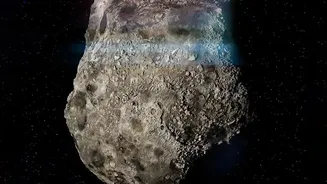
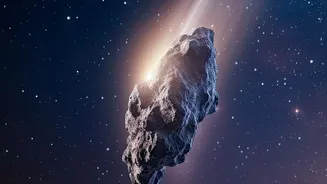
The effort to find potentially hazardous asteroids is a critical component of planetary defense. Coordinated by bodies like NASA's Planetary Defense Coordination Office (PDCO), the goal is to discover, track, and characterize near-Earth objects (NEOs)
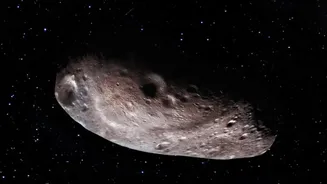
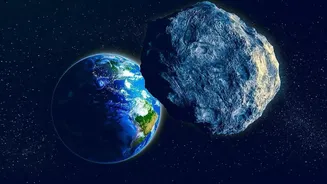
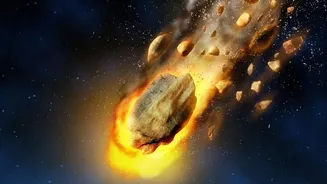
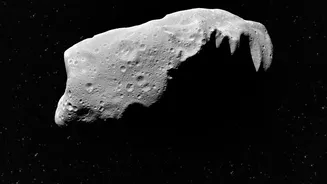
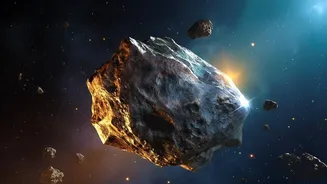
to provide advance warning of any potential impact. An NEO is an asteroid or comet whose orbit brings it into Earth's neighborhood. A 'potentially hazardous asteroid' (PHA) is a subset of these, specifically objects larger than about 140 meters that can come within 8 million kilometers of Earth's orbit. While a car-sized object enters our atmosphere about once a year and burns up harmlessly, a 140-meter asteroid could cause significant regional devastation. The mission of survey telescopes is to find these before they find us.
Painting the Night Sky, Pixel by Pixel
The fundamental method for discovering asteroids is surprisingly straightforward, though technologically immense. Survey telescopes take a series of pictures of the same patch of sky, typically minutes apart. They then use sophisticated software to compare these images. While the distant stars and galaxies remain fixed, a much closer object like an asteroid will appear to move against the static background. This celestial version of a 'spot the difference' puzzle reveals the moving targets. Computers flag these potential movers for human astronomers to verify. This process is repeated night after night, methodically covering vast swathes of the sky.
Key Players in the Global Hunt
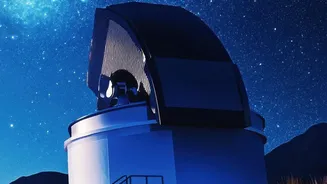
A handful of powerful surveys are responsible for the vast majority of asteroid discoveries. The Catalina Sky Survey (CSS) in Arizona and the Pan-STARRS observatory in Hawaii are two of the most prolific, funded by NASA to fulfill a congressional mandate to find and catalogue NEOs. For years, CSS has been a leader in finding NEOs, responsible for discovering a significant percentage of the known population. Pan-STARRS, with its massive 1.4-billion-pixel digital camera, surveys the entire sky visible from Hawaii multiple times each month. The future of the search is even more powerful. The Vera C. Rubin Observatory in Chile, once fully operational, is expected to revolutionize the field. With its huge mirror and camera, it will survey the southern sky with unprecedented sensitivity, discovering thousands of new asteroids every few nights and creating the most detailed census of our solar system ever.
From Detection to a Calculated Threat
Spotting a moving dot is just the first step. Once a potential new asteroid is identified, the clock starts ticking to get more observations. Astronomers from around the world coordinate to get what are called 'follow-up' observations. These additional data points allow scientists to precisely calculate the object's orbit around the Sun. All this observational data is sent to a central global clearinghouse: the Minor Planet Center (MPC). The MPC, sanctioned by the International Astronomical Union, collects the data, confirms the discoveries, and computes preliminary orbits. From there, centers like NASA's Center for Near-Earth Object Studies (CNEOS) take over, refining the orbits and projecting them far into the future to determine if, and when, an asteroid might pose an impact risk to Earth.
Eyes on the Future
Even with powerful ground-based telescopes, there are blind spots. It's difficult to see asteroids that approach from the direction of the Sun, as they are lost in the glare. To address this, NASA is developing the NEO Surveyor, a space-based infrared telescope. By operating from a point in space between the Earth and Sun, and by detecting the heat glow of asteroids in the infrared, Surveyor will be able to spot objects that are currently hidden from view. This next generation of technology, combined with the ever-improving ground-based network, represents a comprehensive global strategy. While no known asteroid currently poses a significant threat, the continuous scanning of the sky ensures that if one is found, we will have the one thing that matters most: time.