







Secure Your Home First
Before you even think about your journey, secure your home to prevent accidents and damage. The most critical step is to address electrical safety. Unplug all non-essential appliances like televisions, computers, and chargers to protect them from power
surges, which are common during storms. If you notice any signs of water seepage near electrical outlets or on walls with wiring, it's best to turn off the main power supply for that area to prevent short circuits or electric shocks. Also, ensure all windows and balcony doors are shut securely to prevent rainwater from entering. A quick check of your gas supply is also a good practice; if you're leaving for an extended period, it might be wise to turn off the main gas valve as a precaution.
Assess Your Route and Inform Others
Never leave home without a plan. Check reliable weather forecasts and traffic updates for your intended route. Many municipal corporations and traffic police departments now provide real-time information on waterlogged areas and traffic diversions on social media or dedicated apps. Use these resources to plan the safest possible path, avoiding low-lying areas, underpasses, and roads known for severe waterlogging. Once you've decided on your route, inform a family member or a friend about your travel plans, including your destination and estimated time of arrival. This is a simple but vital step that ensures someone knows where you are and can check in on you, especially if you become unreachable.
Prepare Your Vehicle for the Challenge
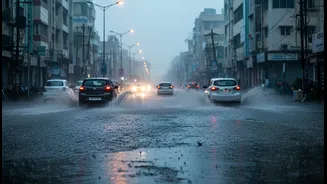
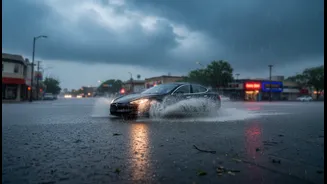
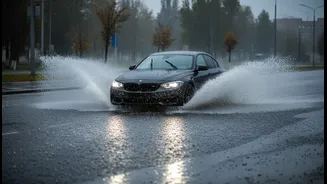
If you are travelling by car or a two-wheeler, a pre-travel check is essential. Ensure your vehicle's brakes, tyres, and headlights are in good working condition. Good tyre tread is crucial to prevent aquaplaning on wet roads. When driving through waterlogged streets, maintain a slow and steady speed. Driving fast can create a bow wave that allows water to enter your engine bay, potentially causing it to stall. It is recommended to stay in a lower gear to keep the engine revs high, which helps prevent water from entering the exhaust pipe. If possible, drive towards the centre of the road, as water levels are often shallower there. Crucially, never attempt to drive through water that is higher than the bottom of your vehicle's doors or if you cannot gauge its depth.
Pack an Emergency Go-Bag
Getting stranded is a real possibility during severe waterlogging. A compact emergency 'go-bag' can be a lifesaver. This should contain a fully charged power bank, as power cuts can be frequent and your phone is your primary connection to help. Pack a small first-aid kit with essentials like antiseptic liquid, bandages, and any personal prescription medications. Include some non-perishable snacks like energy bars or biscuits and a bottle of clean drinking water. It's also wise to carry a small torch, an umbrella or raincoat, and a waterproof pouch to protect your phone, wallet, and important documents from water damage.
Personal Safety for Pedestrians
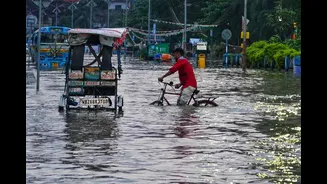
If you are walking, be extremely cautious. Waterlogged streets can hide open manholes, deep potholes, and other hazards. Avoid walking through pooled water whenever possible. If you must, use a sturdy stick or umbrella to probe the ground in front of you. Stay away from electrical poles, lampposts, and dangling wires, as they pose a serious risk of electrocution. Water is an excellent conductor of electricity, and damaged or submerged wiring can energize the surrounding water. Also, be mindful of your health. Wading through dirty floodwater can expose you to various waterborne diseases. Wear waterproof footwear with good grip to protect your feet and prevent fungal infections.