






The Brain's 'Little Brain' Gets a Big Update
For over a century, the cerebellum—a densely packed structure at the back of the brain—was typecast in a single role: the master coordinator of movement. Neuroscientists praised it for allowing a dancer to leap gracefully or a musician to play a flawless
concerto. If it was damaged, the most obvious symptoms were problems with balance, coordination, and fine motor skills. This view was so established that the cerebellum, despite containing nearly three-quarters of all our brain's neurons, was often overlooked in discussions about higher-level functions like emotion and thought. But a wave of recent research is forcing a major rewrite of the textbooks. Scientists are now discovering that the cerebellum's job isn't just to help us move gracefully, but to help us feel gracefully, too.
Uncovering the Emotion-Movement Network
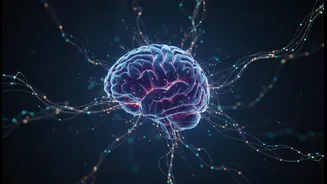
The big breakthrough comes from new techniques that trace the brain's complex wiring. Researchers have found that the cerebellum isn't an isolated motor control unit; it's a major hub connected to key emotional centers in the brain, including the limbic system, amygdala, and prefrontal cortex. Think of it less like a standalone department and more like a central station with lines running to every part of the city. These connections, or 'network nodes', allow the cerebellum to receive and send signals related to feelings, threats, and social cues. For instance, fMRI studies show the cerebellum lighting up when people process emotional faces, manage anger, or recall powerful memories. This network explains how the structure that fine-tunes muscle activity can also fine-tune our emotional state.
The Body's Emergency Brake
So, how does this connection work in real life? The cerebellum acts as a powerful prediction machine. Just as it predicts the trajectory of a ball to help you catch it, it also predicts emotional and social outcomes. When you encounter a sudden threat, like a car swerving towards you, the cerebellum communicates with emotional centers like the amygdala and brainstem. This network can trigger classic physical fear responses, like a racing heart, shallow breathing, or the famous 'fight, flight, or freeze' instinct. The 'freeze' response, in particular, is a perfect example of the emotion-movement link. The emotional signal of fear is translated, via cerebellar networks, into a direct motor command: stop moving. This suggests that some of our deepest emotional reactions are fundamentally tied to movement—or a lack thereof.
From the Lab to Your Life
This updated understanding of the cerebellum has profound implications. It provides a biological basis for the 'gut feelings' and physical sensations that accompany strong emotions. It also opens new doors for understanding and potentially treating mental health conditions. Researchers have noted that changes in cerebellar activity and connectivity are associated with anxiety disorders, PTSD, and even autism. If the cerebellum's ability to regulate emotional timing and intensity is disrupted, feelings might become unstable—rising too fast, lasting too long, or feeling disconnected from reality. This link between motor coordination and emotional regulation is already influencing therapies. Movement-based practices, from yoga to rhythmic drumming, are being explored not just for physical benefit, but as ways to engage these cerebellar networks and promote emotional stability.
What's Next for Cerebellar Research?
The discovery of these emotion-regulating networks is just the beginning. Scientists are now working to map these circuits with even greater precision. Key questions remain: Which specific parts of the cerebellum are linked to which emotions? How do these networks develop in childhood? And could we develop therapies that directly target these cerebellar nodes to help people with emotional dysregulation? For example, some studies suggest that challenging physical activities might be particularly effective at activating a 'hypothalamo-cerebello-amygdalar' circuit, providing a powerful anxiety-reducing effect. As research continues, we are likely to see the cerebellum move even further into the spotlight, recognized not just as the 'little brain' for movement, but as a core component of our emotional lives.