

1. Makhan Mishri
Perhaps the most beloved and simplest offering for Lord Krishna is Makhan Mishri. This bhog is a direct nod to his childhood Leela, earning him the affectionate name ‘Makhan Chor’ or butter thief. According to belief, his mother Yashoda would lovingly
churn fresh white butter, and little Krishna would delight in stealing and eating it. Preparing it at home is straightforward: fresh, unsalted white butter is gently mixed with mishri (rock sugar crystals). This offering symbolises pure, unconditional love and the simple joys associated with Krishna's early years in Vrindavan. For it to be considered a complete offering, a fresh Tulsi leaf is traditionally placed on top.
2. Dhaniya Panjiri
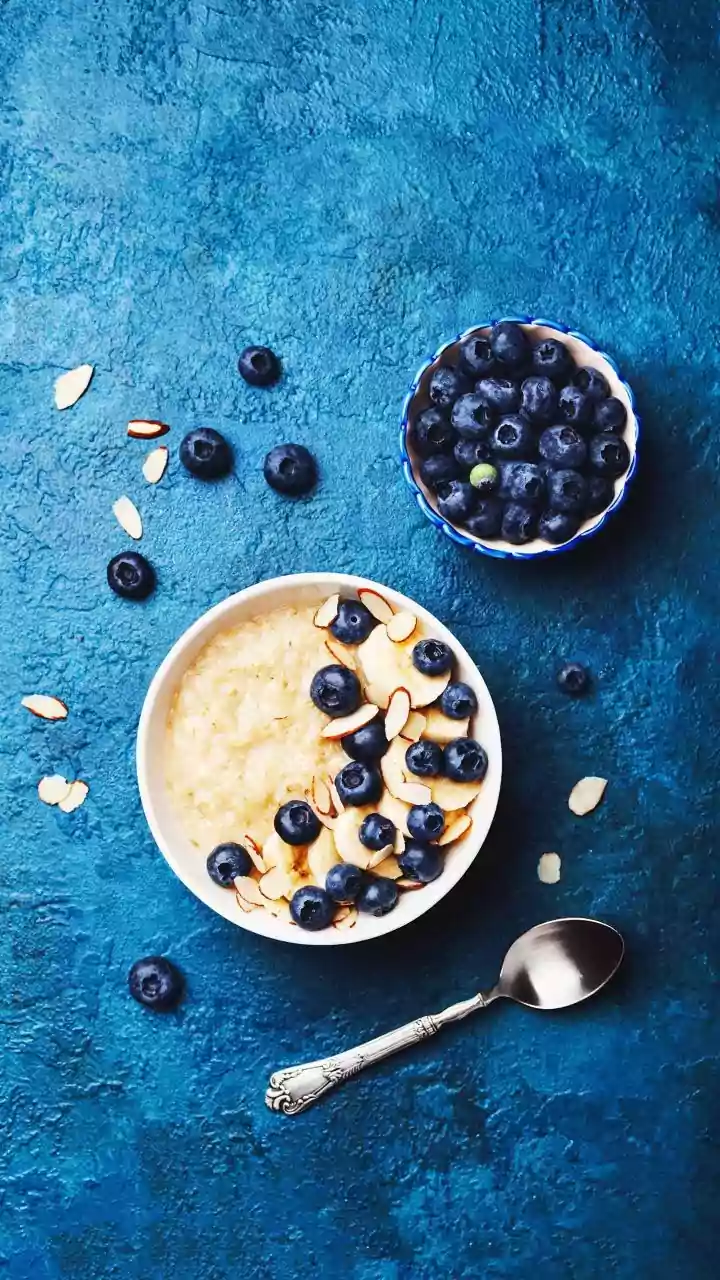
Dhaniya Panjiri holds a special place in Janmashtami celebrations and is considered a Maha Prasad. Unlike regular panjiri made from wheat flour, this version uses roasted coriander seed powder, making it suitable for those observing a fast (vrat) where grains are avoided. The preparation involves roasting coriander powder in ghee until aromatic, then mixing it with powdered sugar, grated coconut, and a variety of chopped nuts like almonds and cashews. Beyond its spiritual significance as one of Lord Krishna's favourites, Dhaniya Panjiri is also valued for its health benefits. Coriander is known for its digestive properties, which is especially helpful for devotees who are fasting.
3. Mathura ke Pede
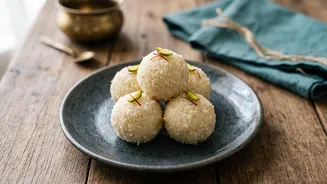
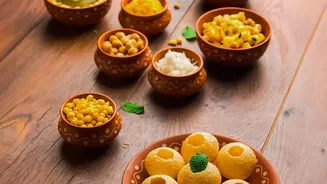
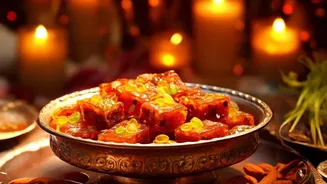
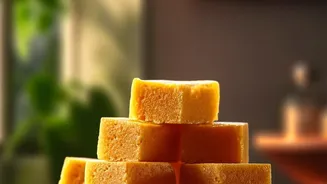
Originating from Lord Krishna's birthplace, Mathura, these pedas are an essential part of the Janmashtami bhog. Traditionally made by slow-roasting khoya (milk solids) until it caramelises and turns a rich brown, the process can be time-consuming. A quicker, more accessible version can be made at home using milk powder roasted in ghee until it achieves a similar brown hue. Once the base is prepared and cooled, it's mixed with powdered sugar and cardamom powder before being shaped into its characteristic round, slightly flattened form. Often, the finished pedas are rolled in a little more powdered sugar for a final coating.
4. Makhana Kheer
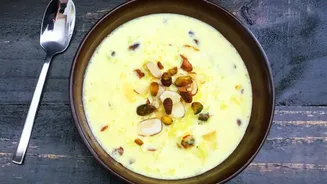
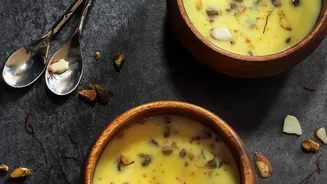
This creamy and luscious dessert is another festive staple, perfectly suited for bhog as it is both delicious and satvik (pure). Makhana, or fox nuts, are roasted in ghee until crisp, then simmered in milk until it thickens and the makhana softens. The kheer is sweetened with sugar and delicately flavoured with cardamom powder and saffron strands, which also impart a beautiful golden hue. A generous addition of chopped nuts like almonds and pistachios adds a delightful crunch. Some recipes suggest coarsely grinding some of the roasted makhana to achieve a thicker, more uniform consistency. It can be offered warm or chilled.
5. Panchamrit
Panchamrit, which translates to 'five nectars', is a sacred concoction used in virtually all Hindu pujas, including Janmashtami. It is made by mixing five key ingredients: raw cow's milk, curd (yogurt), honey, sugar, and ghee. Each ingredient holds symbolic meaning: milk for purity, curd for prosperity, honey for sweet speech, sugar for bliss, and ghee for knowledge and victory. Sometimes, Ganga jal and Tulsi leaves are also added. This uncooked offering is used for the ritual bathing (abhishek) of the deity's idol and is then distributed to devotees as a holy prasad. Its preparation is simple, requiring only the gentle mixing of these five pure elements.
6. Gopalkala
Gopalkala is a savoury preparation especially popular in Maharashtra and is closely associated with the Dahi Handi festival that follows Janmashtami. This dish is a simple, no-cook mix that represents the food Lord Krishna would share with his cowherd friends. It is made with poha (flattened rice), which is lightly washed and then mixed with yogurt, chopped cucumber, fresh coconut, and mild spices. A tempering of ghee, cumin seeds, and sometimes green chillies and ginger is added to enhance the flavour. It's a refreshing and easy-to-prepare dish that embodies a spirit of community and sharing.