




The Glow That Robs the Sky
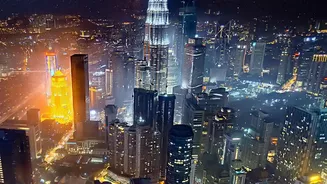
Light pollution is the excessive or misdirected use of artificial light at night. While crucial for safety and activity in a modern society, this light doesn't just illuminate our streets; it floods the sky. The main culprit for stargazers is 'skyglow',
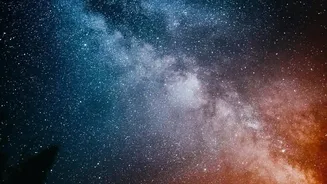
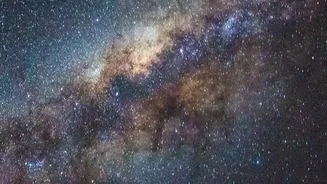
a luminous blanket that covers the night sky above and around cities. This happens when light from streetlamps, buildings, and advertising signs shines directly upwards or scatters off particles in the atmosphere. This artificial brightness dramatically reduces the contrast between the dark sky and the faint objects within it, effectively rendering them invisible. For a majority of the world's population, this means the grand, sprawling river of stars that is our home galaxy is completely washed out.
How a Bright Sky Hides a Galaxy
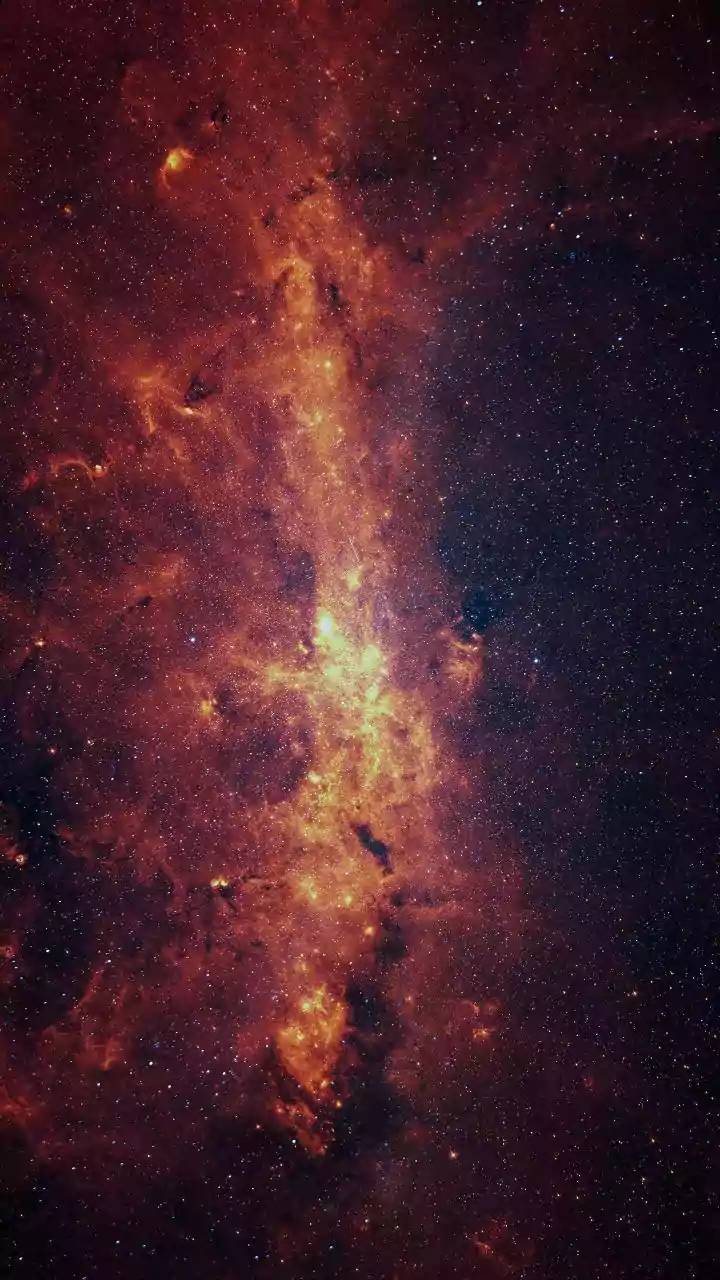
Imagine trying to hear a faint whisper in the middle of a loud concert; this is what the Milky Way faces against urban skyglow. The Milky Way isn't a single bright point but a diffuse band of light from billions of distant stars and dust lanes. Its beauty is in its delicate, hazy structure. Light pollution acts like noise, raising the 'floor' of the sky's brightness. When the background sky becomes brighter than the faint light of the galaxy, the Milky Way simply vanishes from our sight. Our eyes can no longer distinguish it from the artificially illuminated atmosphere. In major Indian cities like Mumbai and Delhi, the effect is so severe that only the Moon, planets, and a few of the very brightest stars can penetrate the orange-grey veil.
Measuring Darkness: The Bortle Scale
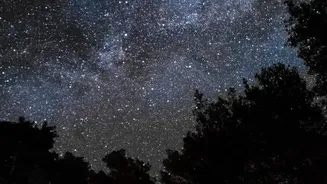
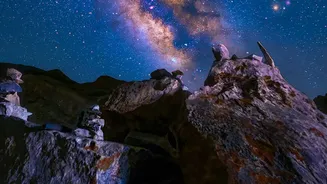
To understand and compare the quality of night skies, astronomers use the Bortle Scale. Created by John E. Bortle, this nine-level scale classifies sky darkness based on what's observable. A 'Class 9' sky is what you'd find in an inner-city core, where the sky is brightly lit and the Milky Way is completely invisible. A 'Class 1' sky, found only in the most remote, pristine locations, is so dark that the Milky Way can be bright enough to cast a faint shadow. Most suburban areas in India fall between Class 5 and 7, where the galaxy might be faintly visible overhead on a clear night but is mostly lost to the haze near the horizon. To truly witness its splendour, you need to find a location that is at least a Class 4 or lower.
Chasing the Stars in India
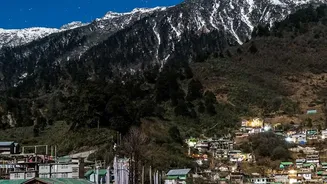
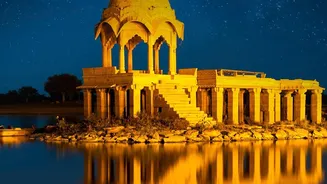
Despite rapid urbanisation, India still possesses some of the most spectacular dark-sky destinations in the world. The key is to travel far from major population centres. High-altitude deserts are prime locations due to their clear, dry air and lack of light pollution. The crown jewel is Hanle in Ladakh, home to India's first official Dark Sky Reserve. Situated at an altitude of 4,500 metres, it offers some of the best stargazing conditions in Asia, with Bortle Class 1 skies. Another phenomenal destination is Spiti Valley in Himachal Pradesh, a cold desert where villages like Kaza and Langza offer pristine views. The vast, flat expanse of the Rann of Kutch in Gujarat and the deserts around Jaisalmer in Rajasthan also provide excellent opportunities to see the stars in all their glory.
Astro-Tourism: A New Frontier
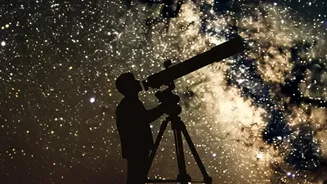
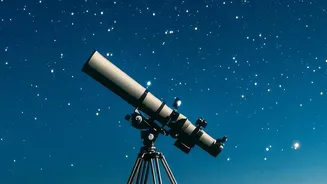
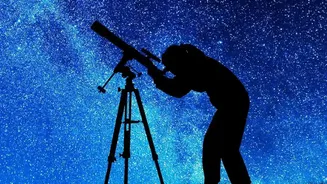
The quest for dark skies has given rise to astro-tourism, a growing travel trend focused on celestial experiences. In India, this movement is gaining momentum, with companies and communities developing experiences for travellers. The Hanle Dark Sky Reserve, for example, has trained local villagers as 'Astronomy Ambassadors' who guide visitors using telescopes. Destinations like Coorg in Karnataka offer accessible dark skies amidst coffee plantations, away from the extreme altitudes of the Himalayas. Various organisations now host stargazing camps and workshops in places like Uttarakhand and Maharashtra, making astronomy accessible to beginners. These initiatives not only provide unforgettable experiences but also raise awareness about the importance of preserving our natural nightscapes.