





The First Hint of Light
The experience begins in the pre-dawn cool. Long before the sun asserts its authority, the sky shifts from inky black to a soft, bruised purple. A delicate mist, the breath of the Western Ghats, clings to the valleys, weaving through the sculpted contours
of the tea bushes. In these quiet hours, Munnar is not just a place; it's a feeling. The air, heavy with moisture from the night's downpour, carries a profound stillness. You stand at a viewpoint, perhaps near Top Station or Pothamedu, and watch as the world holds its breath, waiting for the day to begin. It's a meditative state, where the chaos of modern life feels a million miles away, replaced by the simple, profound beauty of nature's rhythm.
An Emerald Ocean Unveiled
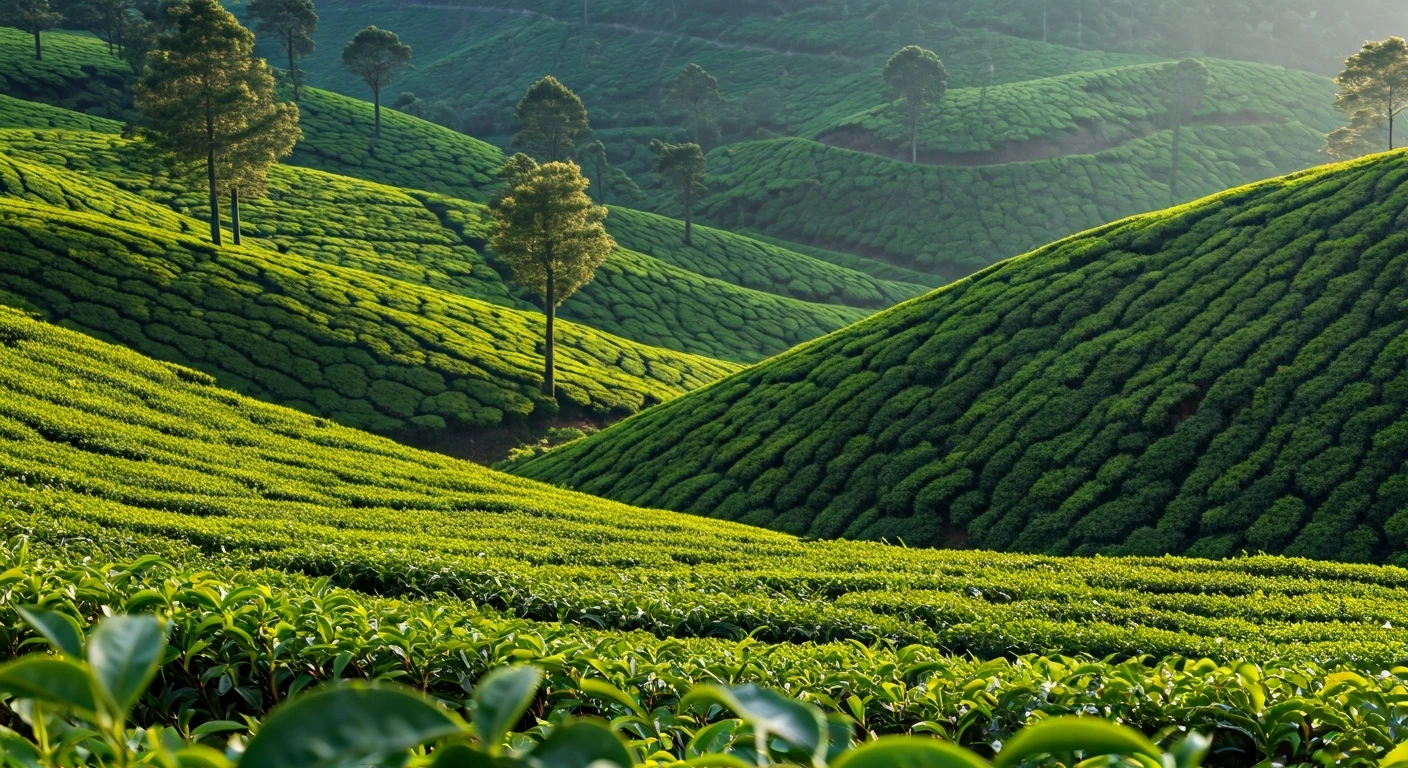
Then, it happens. The first rays of sunlight slice through the clouds, striking the hillsides. The effect is instantaneous and breathtaking. What was a landscape of deep shadows transforms into a glittering sea of emerald. Every single tea leaf, washed clean by the rain, holds a tiny droplet of water that catches the morning light like a diamond. The colour is not just green; it's a living, breathing spectrum. There are the bright, almost neon greens of new shoots, the deep, rich greens of mature leaves, and the dark, mysterious greens of the shaded valleys. The neatly pruned bushes create mesmerising patterns that ripple across the rolling hills, looking less like a plantation and more like a masterfully crafted green velvet tapestry draped over the earth.
The Scent of Wet Earth and Tea
A Munnar morning is an assault on the senses, and smell is perhaps the most evocative. The primary scent is petrichor—the rich, loamy aroma of rain-soaked soil. It’s a clean, grounding fragrance that speaks of life and renewal. Woven into this is the subtle, fresh scent of the tea leaves themselves. It’s not the strong aroma of a brewed cup but something far more delicate: a green, slightly floral perfume that hangs in the air. As you breathe it in, you can almost taste the freshness. This combination of wet earth, dew-kissed flora, and the clean mountain air creates a unique olfactory signature, a smell that will forever be linked in your memory to the magic of this specific time and place.
A Living, Breathing Landscape
The sheer scale of Munnar’s tea estates is difficult to comprehend until you are standing amidst them. From a high vantage point, the plantations stretch as far as the eye can see, flowing over hills and dipping into valleys like a vast, green ocean. The winding roads that cut through them appear as mere ribbons. You might spot the occasional colourful homes of plantation workers nestled in the green, or a silver-roofed factory sending a gentle plume of steam into the sky. It's a landscape that feels both wild and meticulously managed. This duality is part of its charm. While man has shaped these hills for cultivation, nature is still firmly in charge, dictating the mood with its mist, rain, and glorious morning light.
The Human Touch on the Hills
As the morning progresses, the landscape begins to stir with life. You may see the first tea pluckers, often women, making their way into the fields with baskets on their backs. Their vibrant saris provide a striking splash of colour against the endless green. Their presence is a quiet reminder that this beautiful scenery is also a place of work, heritage, and livelihood. The history of these plantations, stretching back to the British colonial era, adds another layer of depth to the view. These are not just pretty hills; they are a testament to generations of human toil and expertise, a living museum of Kerala's history that continues to produce one of the world's most beloved beverages. Watching them work with practiced ease is a humbling and integral part of the Munnar experience.