






Kicking off your shoes and feeling the earth beneath your feet is a simple pleasure. But when you take that feeling to the trail, it becomes a complex conversation between your body and the ground, challenging your feet in surprising ways.
The Brain in Your Feet
To understand
barefoot hiking, you first need to appreciate proprioception. Often called our 'sixth sense', it's the body’s awareness of its own position in space. Your feet are packed with over 200,000 nerve endings that constantly send feedback to your brain about pressure, texture, and shifts in balance. Traditional hiking boots, with their thick, cushioned soles, muffle this conversation, essentially blindfolding your feet. When you go barefoot, you turn this sensory volume all the way up. Every step provides rich, detailed information that allows for immediate, unconscious adjustments, which is the foundation of balance and control.
Smooth Paths vs. Rugged Trails
Walking barefoot on a predictable surface, like a packed dirt path or a grassy field, is the entry point. Your foot still receives more sensory data than it would in a shoe, but the movements are relatively consistent. It’s a great way to start strengthening the small, intrinsic muscles within the foot that often become dormant in supportive footwear. These muscles are crucial for maintaining your arches and providing a stable base. However, it's on uneven surfaces where the real challenge—and the most significant benefits—begin. A smooth path is a monologue; a rocky trail is a dynamic dialogue.
The Symphony of Uneven Ground
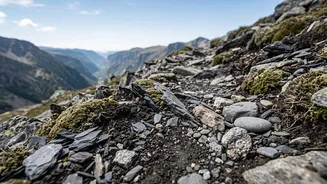
When you step onto a trail littered with roots, rocks, and changing inclines, your foot can no longer be a passive plank. It must become a supple, adaptable tool. Your foot and ankle are forced to make constant micro-adjustments to conform to the ground. This process dramatically increases the activation of those intrinsic foot muscles. Your toes learn to grip and spread for stability, your arch acts like a responsive spring, and your ankle stabilisers fire constantly to prevent a roll. This heightened engagement doesn't just stay in the foot; it travels up the kinetic chain, improving the stability of your knees, hips, and even your core.
Building a Stronger Foundation
This constant challenge is a form of natural strength training. By forcing the muscles in your feet and lower legs to work harder and more dynamically, barefoot hiking on varied terrain can lead to stronger arches, improved foot flexibility, and enhanced balance. Studies have shown that this heightened proprioceptive feedback can improve coordination and may even help prevent falls by making your balance system more responsive. Over time, this can also encourage a more natural gait pattern, potentially reducing the impact on your joints by promoting a midfoot strike instead of a harsh heel strike.
Navigating the Inevitable Risks
Of course, going without protection isn't without risk. The most obvious dangers are cuts, scrapes, and bruises from sharp rocks, thorns, or glass. Beyond surface injuries, there's the risk of overuse. Your feet have likely spent years cushioned and supported; suddenly asking them to perform this intense work can lead to strain if you do too much, too soon. The key is a gradual transition. Think of it less like flipping a switch and more like slowly waking up muscles that have been asleep for years.
How to Start on the Right Foot
The best approach is to start small and listen to your body. Begin by walking barefoot in safe, forgiving environments like your backyard, a sandy beach, or a clean park. When you try a trail, pick an easy one and keep your initial hikes short. Carry a pair of minimalist shoes or sandals as a backup. Always watch the path ahead and step straight down, avoiding shuffling or dragging your feet, which increases the risk of cuts. The initial sensitivity can be intense, but many find that after the first ten minutes, the feet begin to adjust as the brain learns to interpret the new flood of sensations.