




The Endless Search for the Perfect Shade
Anyone who wears makeup knows the story well: a drawer full of foundation bottles, each one just slightly off. The traditional process of finding the right shade is fraught with guesswork. You might swatch a colour on your wrist under the unflattering
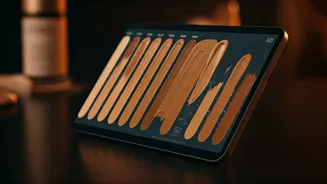
glare of department store lights, only to find it looks completely different in natural daylight. This trial-and-error method is not only frustrating for consumers but also leads to wasted money and products. For years, the alternative was a simple online quiz, asking you to self-diagnose your skin's undertones by looking at your veins—a method that is unreliable for most people. This gap between seeing a product online and knowing how it will look in real life has been one of the biggest challenges in the beauty industry.
How AI Enters the Picture
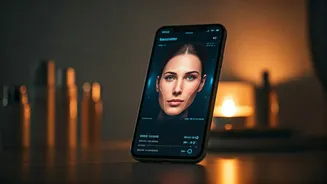
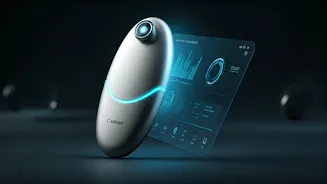
Artificial intelligence is systematically dismantling this problem. Using your smartphone's camera, new AI-powered tools analyse your skin with a level of detail the human eye can't match. These advanced algorithms combine facial recognition, image processing, and deep learning to assess not just your skin tone, but also your unique undertones—the subtle cool, warm, or neutral hues beneath the surface. Some technologies, like Clarins' Shade Finder AI, even use spectroscopy, modulating the light from your phone's screen to measure how it reflects off your skin for an even more precise reading. The AI is trained on vast datasets of tens of thousands of diverse skin tones, allowing it to make recommendations that go far beyond the simplistic categories of 'light, medium, and dark'.
The Virtual Try-On Revolution
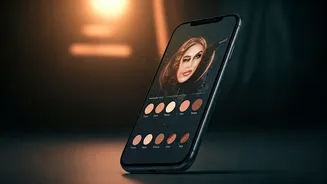
The most visible application of this technology is the virtual try-on experience. Major beauty brands have been quick to adopt this innovation. L'Oréal's ModiFace technology, for example, powers virtual try-on tools for its own brands and for retailers like Amazon. Similarly, Estée Lauder's iMatch Virtual Shade Expert allows customers to find their precise match for its popular foundations. The process is simple: you open the tool on a website or app, use your camera to take a short video or selfie, and within seconds, the AI analyses your complexion and presents you with your ideal shade. You can then virtually 'wear' the recommended foundation to see how it looks in real time, bridging the gap between online browsing and confident purchasing.
More Than Just a Match
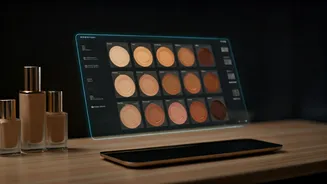
Beyond convenience, AI is a powerful force for inclusivity in the beauty industry. For decades, many consumers, particularly those with deeper skin tones, have struggled to find products that cater to them. AI-driven tools, trained on more comprehensive and diverse skin tone data, are helping to solve this problem. By leveraging frameworks like the Monk Skin Tone Scale, which offers a more inclusive spectrum than older models, AI can provide accurate recommendations for every individual. This technology empowers brands to better understand and serve a wider range of customers, moving the industry toward a future where everyone can find their perfect match. This shift not only meets growing consumer demand for representation but also makes good business sense.
Is It Truly Foolproof?
While impressive, the technology is not yet perfect. The accuracy of at-home shade matching can still be affected by variables like your phone's camera quality and, most importantly, the lighting in your room. An algorithm's recommendation is only as good as the data it receives. To counter this, some brands are introducing in-store tools that use calibrated lighting for a more controlled and accurate analysis. There are also valid questions about data privacy, though most platforms state that selfies and scan data are not stored. Despite these hurdles, the technology is continuously improving, with machine learning helping the algorithms get more accurate over time.