
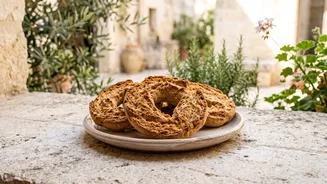
What Exactly is Friselle?
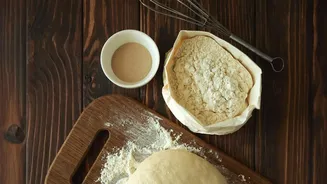
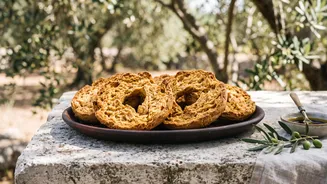
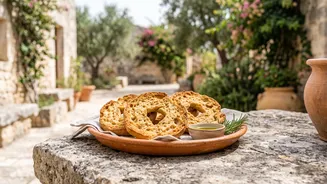
At first glance, a frisella (the singular form) looks like a rough, bagel-shaped rusk. Made from simple ingredients like durum wheat or barley flour, water, yeast, and salt, its true genius lies in its texture. The bread is famously hard—so hard, in fact,
that attempting to bite into one dry is a serious challenge to your dental health. It has a smooth bottom and a rough, porous top, designed to absorb liquid. This isn't just bread; it's a culinary artifact, most closely associated with Puglia, the heel of Italy's boot, but also found in regions like Campania and Calabria.
A History Born of Necessity
Friselle's origins are not in gourmet kitchens but in the practical needs of people on the move. For centuries, it was the staple food for sailors, farmers, and soldiers in Southern Italy. Dating back to at least the 10th century, and with some food historians pointing to ancient Roman provisions called 'panis nauticus' or sailor's bread, these durable rings were perfect for long journeys. Their shape made them easy to string onto a rope and hang for storage on crowded ships. Because they were completely dry, they wouldn't spoil, providing vital sustenance for weeks or months at sea. Historically, barley friselle were for everyday people, while those made from more expensive durum wheat were for special occasions.
The Magic of Twice-Baking
The secret to friselle's incredible shelf life is a process that is right there in the name of its more famous cousin, biscotti: 'bis-cotto', meaning twice-cooked or twice-baked. First, the dough is shaped into rings and baked until cooked but still soft. Then, while still warm, the rings are cut horizontally and placed back in the oven for a second, slow bake. This second step is crucial. It drives out almost all the residual moisture from the bread, turning it bone-dry and hard as a rock. Without moisture, the microorganisms like mold and bacteria that cause food to spoil simply cannot grow. This ancient technique is one of the oldest and most effective forms of food preservation.
From Survival Food to Summer Staple
What was once a food of necessity is now a beloved part of southern Italian culinary culture. The ritual of preparing friselle is part of its charm. The rock-hard ring is briefly dipped in cold water—seawater, in ancient times—to soften it. This rehydrates the bread, making it pleasantly chewy but still firm. The porous top surface is the perfect canvas for toppings. The classic preparation, especially in summer, is simple and vibrant: chopped ripe tomatoes, a generous glug of high-quality extra virgin olive oil, a sprinkle of salt, and a pinch of dried oregano. The bread soaks up the tomato juices and olive oil, creating a meal that is far more delicious than the sum of its simple parts. While tomatoes are traditional, modern variations include everything from bean salads to roasted vegetables.