



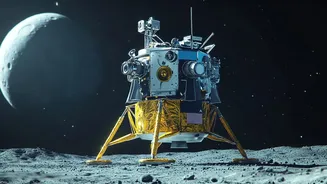
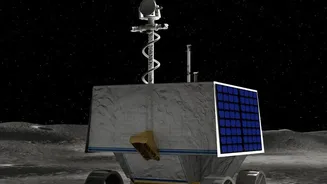
Fresh off the historic success of Chandrayaan-3, ISRO is setting its sights on an even bolder objective: a lunar sample return. Chandrayaan-4 is not just another landing; it’s India’s most complex robotic space mission to date.
A Mission of Unprecedented Complexity
The primary goal of Chandrayaan-4
is to soft-land on the Moon, collect samples of lunar regolith (soil) and subsurface material, and return them safely to Earth for scientific analysis. This makes India only the fourth nation to even attempt such a feat, after the US, the former Soviet Union, and China. Unlike its predecessors, this mission requires technologies India has never before demonstrated in deep space, including launching a vehicle off another celestial body, performing autonomous docking in lunar orbit, and safely re-entering Earth's atmosphere with a precious payload. The mission, approved by the Union Cabinet in September 2024 with a budget of over ₹2,100 crore, is currently planned for a 2028 launch.
The Five-Module Spacecraft
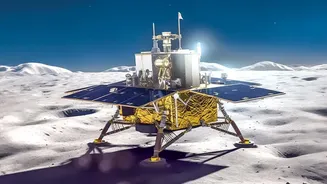
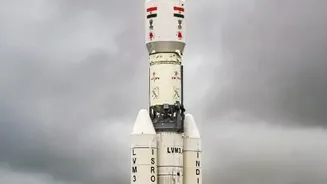
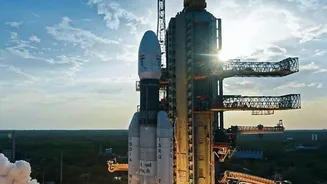
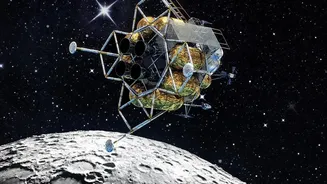
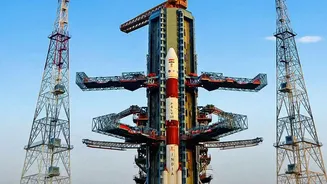
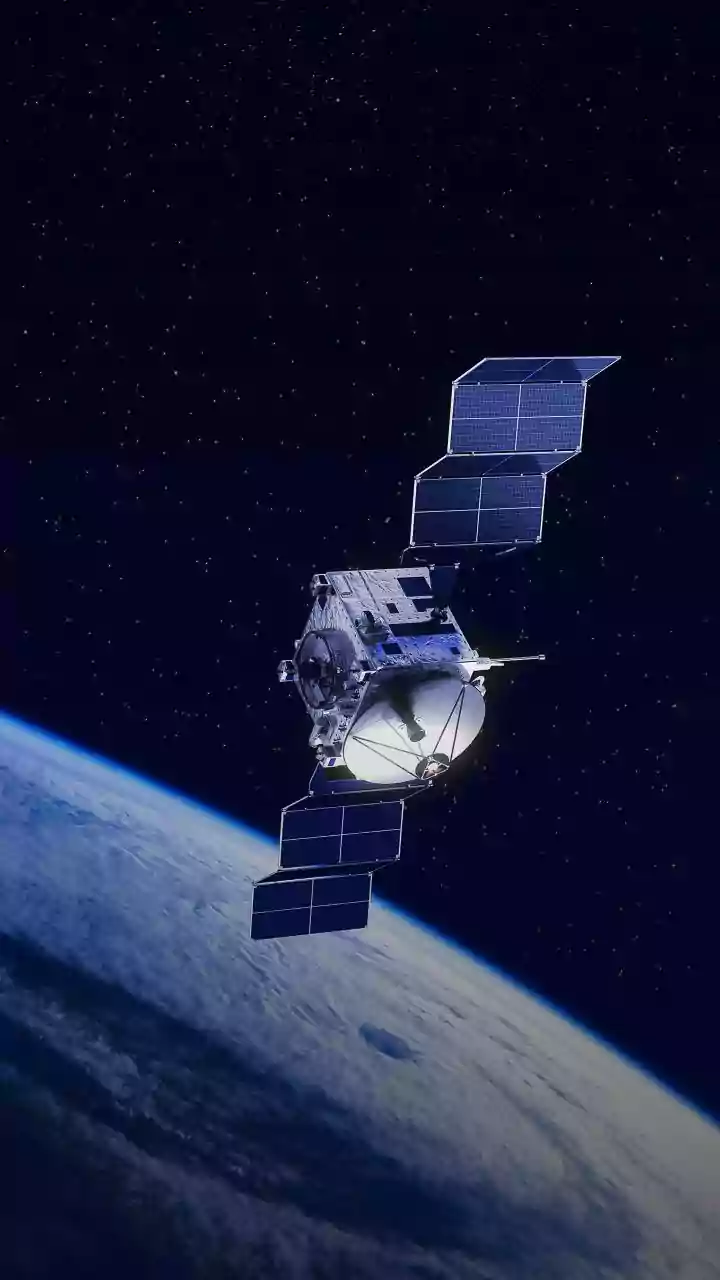
To achieve its ambitious goals, Chandrayaan-4 will use a highly complex, five-module spacecraft. Because the combined weight of around 9,200 kg is too heavy for a single launch, ISRO will use two separate LVM3 rockets. The modules include: a Propulsion Module to travel to the Moon, a Descender Module for the landing, an Ascender Module to lift off from the lunar surface, a Transfer Module to carry the sample back, and a Re-entry Module to protect it during its return to Earth. These components will be launched in two stacks which will then meet and dock in Earth's orbit—a critical manoeuvre in itself—before beginning the journey to the Moon.
The Intricate Dance of Landing and Return
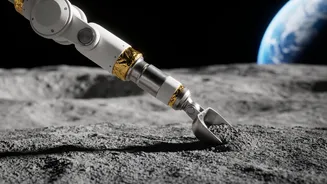
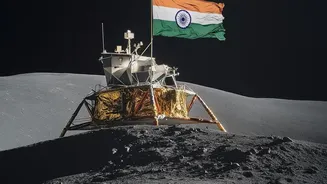
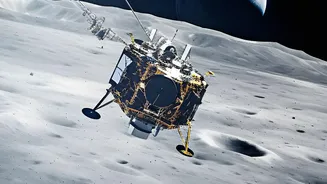
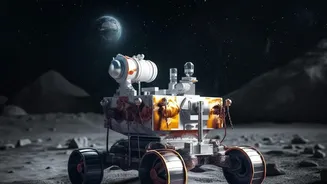
The mission sequence is a carefully choreographed series of high-stakes operations. After reaching lunar orbit, the Descender and Ascender modules will separate and land near the Moon's south pole. Once on the surface, a robotic arm will scoop up to 3 kg of soil, while a drilling mechanism will collect subsurface samples. These will be sealed in containers within the Ascender Module. The Ascender will then launch from the Moon, using the Descender as a launchpad, and rendezvous with the Transfer and Re-entry modules waiting in orbit. The sample container will be robotically transferred to the Re-entry module, which will then be guided back to Earth for a final splashdown landing.
Why Lunar Soil Is Worth the Trip
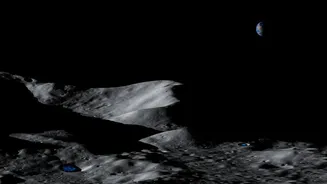
Bringing lunar samples back is considered a holy grail of space exploration because it allows for far more detailed analysis than any robotic instrument can perform on-site. Scientists on Earth can use massive, state-of-the-art equipment to study the samples' composition, age, and structure. Samples from the Moon's south polar region are particularly valuable. This area is believed to hold water ice in its permanently shadowed craters. Water is the most critical resource for future space exploration; it can provide drinking water for astronauts and be split into hydrogen and oxygen to create breathable air and rocket fuel. Analyzing this ice could unlock secrets about the early solar system and pave the way for sustainable human habitation on the Moon.
Securing India's Place in the Lunar Economy
Chandrayaan-4 is more than a scientific mission; it's a strategic investment in India's future in space. Demonstrating the capability for a sample return mission is a crucial stepping stone towards more advanced exploration, including the long-term goal of sending Indian astronauts to the Moon. Mastering technologies like in-orbit docking, robotic sample transfer, and lunar ascent positions ISRO as a key player in the emerging lunar economy. As nations and private companies look towards the Moon for resources like water ice and Helium-3 for future energy, the ability to not just reach the Moon but to bring materials back is a powerful capability that underscores India's status as a major spacefaring nation.