



The head of a leading AI company has made a stunning prediction: diseases like cancer could be relics of the past in under a decade. The claim offers immense hope, but how realistic is it? Let's unpack the promise and the profound challenges.
An Audacious Promise
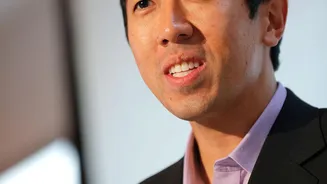
Dario Amodei,
the CEO of AI firm Anthropic, recently suggested that artificial intelligence could accelerate medical progress so dramatically that diseases like cancer might be cured in less than ten years. This isn't just a stray comment; it's part of a broader vision shared by several tech leaders who believe AI can compress decades of biological research into a fraction of the time. Amodei argues that if applied correctly at every stage of the pipeline, AI could create an 'age of miracles'. The statement comes as Anthropic deepens its push into healthcare, partnering with pharmaceutical companies to use its AI, Claude, for drug discovery and research. The company is already involved in projects aiming to improve cancer therapies, lending some weight to its ambitious vision.
The Case for Optimism: How AI Can Help
So, what's the basis for this incredible optimism? It lies in AI's ability to process massive datasets at superhuman speeds. In the fight against cancer, this could be revolutionary. AI models can analyze genomic data, medical images, and scientific literature to identify new drug targets that humans might miss. For example, Google's AlphaFold has already predicted the structure of over 200 million proteins, a breakthrough that can significantly accelerate understanding of disease mechanisms. AI is also being used to design more effective treatments. In one collaboration, Anthropic's AI helped scientists redesign a part of a CAR T-cell therapy, a type of immunotherapy. The new version enabled immune cells to kill tumour cells more effectively in lab tests. From identifying subtle signs of cancer on scans years before a human radiologist could spot them to personalising vaccines for specific tumours, AI is already making a tangible impact.
A Necessary Reality Check
However, many oncologists and medical researchers urge caution. They point out a fundamental issue: cancer is not one disease. It is a collection of hundreds of complex diseases, each with its own genetic drivers and behaviours. The idea of a single 'cure' is seen as a misunderstanding of this complexity. Experts like Dr. Sherene Loi from the Peter MacCallum Cancer Centre in Melbourne argue that while AI will bring efficiencies, a universal cure within a decade is unlikely. Furthermore, technology is only one part of the equation. Even if an AI discovers a promising new drug candidate, that drug must still go through years of rigorous and expensive clinical trials to prove it is safe and effective in humans. Regulatory approvals and the biological realities of testing cannot be fast-tracked by computation alone.
More Tool Than Miracle Worker
The most balanced view is that AI will function as an incredibly powerful collaborator for human scientists, not a magical cure all. Researchers are already using AI as a 'co scientist' to generate hypotheses and design experiments. AI can sift through a million possibilities, but humans are still needed to run the experiments and interpret the results. The immediate, proven benefits of AI are in improving diagnostics and making care more efficient. For example, a large Swedish trial found that AI assisted mammography detected more cancers than standard screening without increasing false alarms. AI is also helping match patients to clinical trials more effectively, a significant bottleneck in cancer research. These are not cures, but they are meaningful, life saving advances that are happening right now.