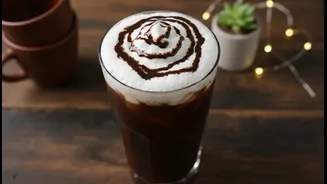









Know Your Brew: Cold Brew vs. Iced Coffee
Before you start, it’s helpful to know the key differences between the two main types of cold coffee. Iced coffee is simply regular coffee, brewed hot and then cooled down over ice. This makes it quick, but it can sometimes taste acidic or watered down.
Cold brew, on the other hand, is made by steeping coarse coffee grounds in cold or room-temperature water for an extended period—typically 12 to 24 hours. This slow, heat-free process results in a coffee concentrate that is smoother, less acidic, and often perceived as naturally sweeter. Because it’s a concentrate, it’s also stronger, packing more caffeine, making it a great base for a week's worth of coffee.
The Make-Ahead Method for Busy Lives
For students and young professionals, time and budget are everything. This is where cold brew concentrate shines. Making a large batch on a Sunday can provide your caffeine fix for the entire week, saving you from expensive daily coffee runs. The process is simple: combine coarsely ground coffee with water in a large jar or pitcher and let it steep. A common ratio is one part coffee to four parts water. After steeping for 12 to 24 hours at room temperature, you strain the grounds out. You can use a fine-mesh sieve lined with cheesecloth or even a French press. The resulting concentrate is robust and can be stored in an airtight glass container in the fridge for up to two weeks, though its peak flavor is within the first week. When you’re ready for a cup, just dilute the concentrate with water or milk in a 1:1 ratio and add ice.
The Instant Gratification Brew
Sometimes you need great iced coffee right now. That’s where the Japanese iced coffee method comes in. Perfect for a rainy-day home cook or anyone with an impromptu craving, this technique, also known as flash-chilling, involves brewing hot coffee directly over ice. By brewing a stronger-than-usual hot coffee (using less water) over a measured amount of ice, the coffee is cooled instantly as it drips. This process locks in the delicate, aromatic flavours that can be lost in slower methods, resulting in a vibrant and complex cup that’s ready in minutes. You can use any pour-over device, like a V60 or Chemex. The key is to treat the ice as part of the total water volume in your recipe to achieve a perfectly balanced, not-watered-down brew.
Budget-Friendly Tools and Tips
You don’t need expensive equipment to make great cold coffee. For cold brew, a large mason jar, a pitcher, or any large container will do. A French press is a great dual-purpose tool, perfect for both making the concentrate and straining it. If you don't own a grinder, you can buy whole beans and ask your local coffee shop or even some grocery stores to grind them for you—just be sure to ask for a coarse grind. To save money, consider buying a store's brand of dark-roast coffee, which often provides great flavor for less. Making your own simple syrups at home with just sugar and water is another easy way to customize your drinks without buying pricey flavoured syrups.
Beyond the Basic Cup
Once you have your cold brew concentrate, the possibilities are endless. Beyond a simple iced coffee with milk and sugar, you can use it to create café-style drinks at home. Blend it with milk, ice, and a scoop of ice cream for a decadent frappe-style drink. Add a splash of vanilla extract, a sprinkle of cinnamon, or a drizzle of chocolate or caramel syrup for an easy flavour boost. For a professional touch, you can even make coffee ice cubes by freezing leftover brewed coffee in an ice tray. Using these instead of regular ice cubes ensures your drink never gets diluted.