




More Than Just Dust
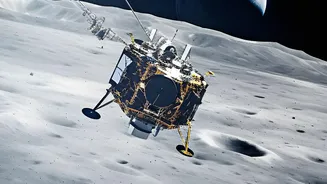
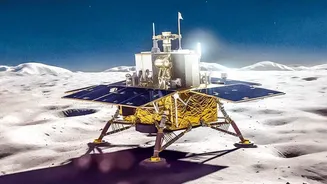
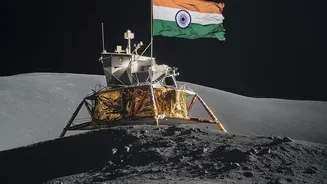
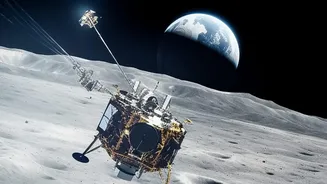
For decades, scientists largely assumed the Moon's surface soil, or regolith, was a relatively uniform blanket of pulverised rock and dust. But data from an instrument on the Vikram lander, called the Chandra’s Surface Thermophysical Experiment (ChaSTE),
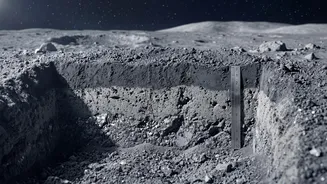
has turned that assumption on its head. In a paper published in 'npj Space Exploration', scientists from the Physical Research Laboratory in Ahmedabad detailed a surprising discovery at the Shiv Shakti Point landing site. Instead of one homogenous layer, the top 10 centimetres of the lunar ground are composed of three distinct layers, each with its own properties.
A Three-Layer Lunar Cake
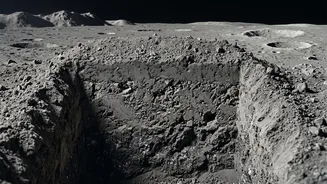
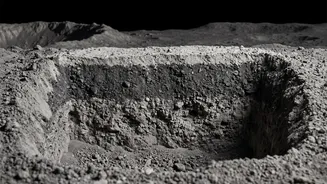
The ChaSTE probe, which penetrated the surface, revealed the intricate structure. The very top layer, extending down about 3 cm, is an extremely porous and fluffy material, with a porosity of around 80%. Beneath that, from 3 to 6 cm deep, lies a second layer that is different, notably having a higher thermal conductivity. The third layer, between 6 and 10 cm, is denser and more compact again, with its own intermediate thermal properties. Scientists noted that the soil's cohesiveness and density increase significantly with just a few centimetres of depth, changing from a material like 'dry flour' on top to something more like 'stiff clay' just below. This kind of fine-scale layering was not observed by previous missions and was entirely unexpected.
A Tale Told by an Engine Blast
This new, detailed three-layer model builds on earlier findings from the mission. Initial analysis after the lander performed its famous 'hop' manoeuvre in September 2023 had suggested a two-layer structure. The lander's engine firing blew away the top 2-3 cm of loose soil at the new location, giving ChaSTE a direct look at the compacted layer underneath. However, a fresh analysis of the data from the original, undisturbed landing spot has now provided the complete picture, revealing the full three-layer profile including the very fluffy, porous topsoil that the hop had blasted away.
Why is the Soil Layered?
So, what created this lunar layer cake? The leading theory points to the Moon's violent past. Researchers propose that a sequence of meteorite impacts from different nearby craters over millions of years deposited ejecta—the material thrown out by the impact—with varying properties. Each major impact would have laid down a new blanket of material, creating the distinct strata that Chandrayaan-3 has now measured for the first time. This geological history is written in the soil, and a huge temperature difference of about 73 Kelvin was observed across these thin layers at local noon, showing how differently each one handles the Sun's intense heat.
Rewriting the Manual for Moon Living
This discovery is more than just a geological curiosity; it has major practical implications for the future of lunar exploration. Understanding the soil's properties is critical for any construction, whether it's building habitats, landing pads, or drilling for resources. The finding that the soil is much stronger and more stable just a few centimetres down is crucial information for engineers designing future rovers and landing gear. Furthermore, the thermal properties of these layers could affect how water ice might be stored or lost just below the surface, guiding the search for one of the Moon's most valuable resources. This 'ground truth' data from Chandrayaan-3 provides an invaluable reference point for all future lunar missions.