





The Myth of a Barren Monsoon
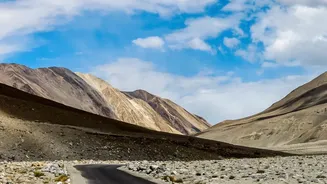
Ladakh is famously a high-altitude cold desert, defined by its minimal rainfall. It sits in the rain shadow of the Himalayas, which blocks the heavy monsoon clouds that drench much of India from July to September. This is why, while other mountain regions
face landslides and downpours, Ladakh remains relatively dry. However, it doesn't escape the monsoon's influence entirely. The tail-end of the monsoon brings just enough moisture—often in the form of light drizzles—to awaken the landscape. This subtle shift is the key to the region's unique August appearance, creating a brief but magical window where the desert blooms.
A Fleeting Touch of Green
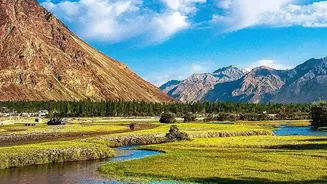
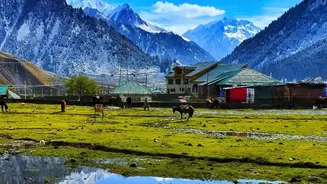
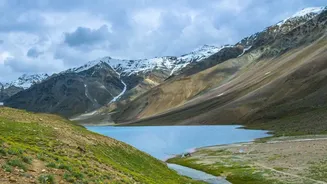
The most dramatic change in August is the appearance of green. After months of stark, brown terrain, the valleys near rivers and streams suddenly flush with life. This isn't the deep, uniform green of a forest, but a more delicate, painterly effect. Patches of lush grass and hardy vegetation sprout along the valley floors, creating a stunning contrast against the bare, mineral-rich mountains. Villages like Likir and those in the Nubra Valley become vibrant oases, their fields of barley and wheat reaching their peak before the harvest season begins. This temporary greening, fed by both snowmelt and light monsoon showers, is a sight exclusive to this late-summer period.
Wildflowers in Unexpected Places
Beyond the green, August adds brilliant splashes of color to the landscape in the form of wildflowers. The short summer season from June to August is the peak blooming period for Ladakh’s hardy alpine flora. High-altitude meadows and even rocky slopes become dotted with vibrant hues of yellow, purple, blue, and pink. Species like the iconic Himalayan Blue Poppy, Edelweiss, Primula, and Meadow Saxifrage can be found by those who look closely. This explosion of color turns vast, seemingly empty landscapes into intricate natural gardens, offering a completely different visual texture than the starkness of early summer.
Rivers at Their Fullest
August is when Ladakh’s mighty rivers, the Indus and the Zanskar, are at their most powerful. The combination of peak glacier melt from the summer heat and runoff from the occasional monsoon shower swells their volume. The water levels are at their highest between mid-July and mid-August, making the rivers appear fuller and more formidable. At the famous Sangam confluence near Nimmu, the visual contrast between the clearer Indus and the silt-heavy Zanskar is often at its most distinct, creating a striking swirl of colors. This peak flow also makes August a prime month for adventure sports like river rafting.
Unmatched Clarity and Color
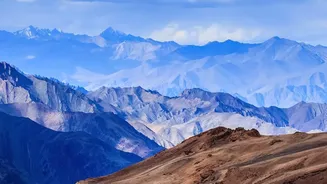
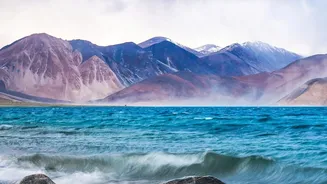
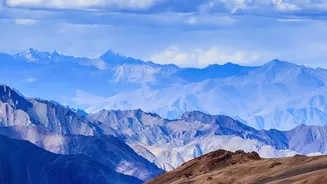
While there can be occasional overcast skies, the light rain in August helps wash the dust from the atmosphere. The result is often exceptionally clear, deep blue skies that make the landscape's colors pop with incredible intensity. This is particularly noticeable at high-altitude lakes like Pangong Tso. With the sun hitting the mineral-rich water from different angles through the clear air, the lake's famous color-changing properties are on full display, shifting between shades of turquoise, emerald, and deep indigo. This post-rain clarity, combined with the green valleys and colorful mountains, creates a photographer’s paradise.