


The Quintessential Winter Delight
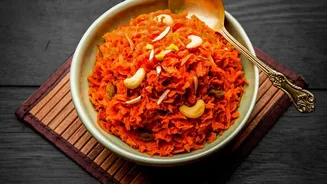
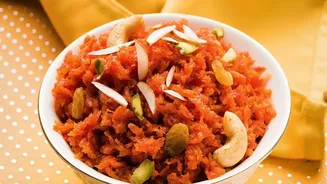
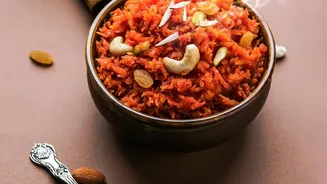
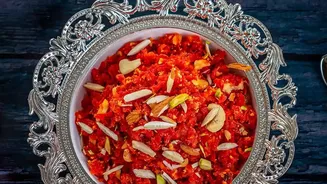
Gajar Halwa, also known as gajrela in Punjab, is a traditional sweet pudding made from grated carrots, milk, sugar, and ghee. Served warm, it is a staple during the winter months and a highlight at festivals like Diwali and Holi, as well as family gatherings
and weddings. Its rich texture and comforting flavour make it synonymous with the winter season in India, a culinary tradition that brings warmth and joy.
A Celebration of Seasonal Carrots
The magic of winter Gajar Halwa lies in its star ingredient: the seasonal red carrots, often called 'Delhi carrots'. These carrots, available only during the colder months, are naturally sweeter, juicier, and more vibrant than their orange counterparts available year-round. This seasonality is the primary reason why Gajar Halwa is a winter specialty. Cooking with these carrots yields a halwa with an unparalleled depth of flavour, colour, and natural sweetness that simply cannot be replicated at other times of the year.
The Art of Slow-Cooked Perfection
Authentic Gajar Halwa is a testament to the rewards of patience. The traditional method involves slow-cooking freshly grated carrots in milk, allowing the carrots to soften and absorb the liquid until it reduces completely. This process, which cannot be rushed, is crucial for developing the dessert's signature creamy and fudgy texture. The final stage involves sautéing the mixture in ghee, which adds a rich, nutty aroma and a beautiful gloss to the halwa. While quicker methods using pressure cookers or condensed milk exist, many purists believe that slow-cooking is essential to honour the dish.
A Symphony of Rich Flavours
Beyond the carrots, a few key ingredients work in harmony to create the halwa's decadent profile. Full-fat milk is essential for achieving the rich, creamy consistency. Ghee, or clarified butter, is non-negotiable; it lends a distinct richness and nutty flavour that defines the dessert. Sugar provides sweetness, while a pinch of ground cardamom adds a warm, fragrant aroma that cuts through the richness. Finally, a generous garnish of chopped nuts like almonds, pistachios, and cashews adds a delightful crunch and texture to every spoonful.
From Mughal Kitchens to Modern Homes
The word 'halwa' has Arabic roots, meaning 'sweet', and the concept made its way to India via Persia, likely during the Mughal era. While the general concept of halwa is ancient, the specific creation of Gajar Ka Halwa is more recent, tied to the introduction of carrots to the subcontinent. It is strongly associated with the Punjab region, where cooks experimented with the newly available root vegetable, creating a winter classic. Over time, it has become deeply ingrained in Indian culinary culture, a symbol of celebration and hospitality.
Make It Your Own
While the classic recipe is revered, Gajar Halwa is wonderfully adaptable. One of the most popular variations involves adding khoya (milk solids) towards the end of the cooking process, which results in an even richer and more decadent, fudge-like texture. Some recipes use condensed milk for a quicker cooking time and a different kind of sweetness. You can also experiment with the garnish, adding raisins, a pinch of saffron for colour and aroma, or even serving it with a scoop of vanilla ice cream for a modern twist.