




A Sanctuary for the Stars
For most urban dwellers, the Milky Way is a thing of legend, a sight confined to textbooks and films. The culprit is light pollution—the excessive and misdirected artificial light from buildings, streetlights, and homes that creates a perpetual twilight,
obscuring the heavens. A Dark Sky Reserve is a designated area where light pollution is strictly controlled to preserve the natural darkness of the night sky. Certified by organisations like the International Dark-Sky Association, these sanctuaries are created to protect exceptional starry nights for scientific research, public enjoyment, and ecological balance. The goal is to create a core area of pristine darkness, surrounded by a periphery where communities have adopted smart lighting policies to prevent light from spilling upwards. Hanle is India's first such designated reserve, a pioneering step in reclaiming our celestial heritage.
The Perfect Cosmic Vantage Point
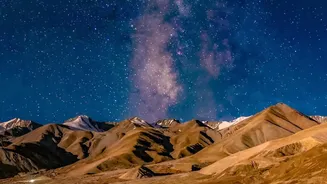
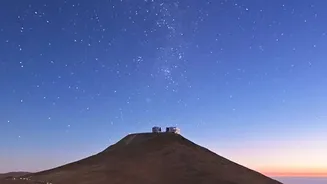
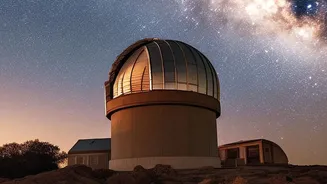
The choice of Hanle was no accident. Located in Ladakh's cold desert region within the Changthang Wildlife Sanctuary, it is one of the best places on Earth for observing the universe. Perched at an altitude of 4,500 metres (around 14,800 feet), the site benefits from thin, dry air and over 250 clear nights a year. This high-altitude location places it above much of the atmospheric haze and water vapour that distort astronomical images. Its remoteness means it has a sparse population and minimal existing light pollution, offering a naturally dark canvas. These ideal conditions are precisely why the Indian Institute of Astrophysics (IIA) established its premier Indian Astronomical Observatory (IAO) here, which has been operational since 2001 and houses world-class telescopes like the Himalayan Chandra Telescope.
More Than Just a Pretty View
While the view is breathtaking, the Hanle Dark Sky Reserve is fundamentally a science-driven project. The IAO is home to several major telescopes, including optical, infrared, and gamma-ray instruments used for deep-space research. Protecting the darkness is not just about aesthetics; it is critical for the continued progress of astronomical research in the country. The reserve, which covers a 22-kilometre radius around the observatory, ensures that scientists can study faint celestial objects without interference from artificial light. This protected zone allows the powerful telescopes at Hanle, like the Major Atmospheric Cherenkov Experiment Telescope (MACE), to perform at their peak capability, unlocking secrets of distant galaxies and cosmic phenomena.
A Community-Powered Initiative
The success of the Hanle Dark Sky Reserve is rooted in its partnership with the local community. This isn't just a top-down scientific project; it's a model for sustainable development. A tripartite agreement between the UT administration, the Ladakh Autonomous Hill Development Council, and the IIA ensures that the benefits flow back to the people of Hanle. Local villagers are being trained as 'astronomy ambassadors', learning to operate telescopes and guide visitors through the wonders of the night sky. This has spurred a new wave of astro-tourism, providing an alternative and sustainable source of income. Families are encouraged to run homestays, or 'Astrostays', offering tourists an authentic experience that blends Ladakhi culture with cosmic exploration, empowering the community to become the guardians of their dark skies.
Keeping the Darkness Dark
Maintaining Hanle's pristine skies requires a conscious effort from everyone. Strict guidelines are in place to manage light. This includes regulations on vehicle headlights, which must be kept on low beam within the reserve. Villagers and homestay owners have been provided with equipment like blackout curtains and shielded, warm-toned light bulbs to prevent light from escaping upwards. The rules are simple but effective: respect the darkness, use red-filtered lights when necessary to preserve night vision, and engage in quiet activities that don't disturb the serene environment or local wildlife. By embracing these practices, the community and visitors alike are actively participating in the conservation effort, ensuring Hanle remains a celestial jewel for generations to come.