






The Quest for Stability
In an era of economic uncertainty and a volatile job market, the idea of a tangible asset provides a powerful sense of security. For many young professionals, owning a home has transformed from a lifestyle choice into a primary financial goal. Unlike
previous generations who often waited until their late 30s or 40s, today's young buyers are entering the market in their mid-to-late 20s. This change is driven by a desire to build long-term wealth and create a hedge against inflation. Data shows that millennials and Gen Z now account for the vast majority of home purchases in India, treating property as a foundational investment. The decision is less about settling down in one place forever and more about securing a financial future.
The Pandemic’s Lasting Impact
The COVID-19 pandemic fundamentally altered the meaning of 'home'. As living spaces became offices, gyms, and social hubs, the limitations of rental accommodations became clear. This experience accelerated a desire for larger, better-equipped homes with more privacy and dedicated workspaces. Surveys now show a clear preference for more spacious configurations, with nearly half of all homebuyers favouring 3BHKs. The rise of hybrid and remote work has also untethered professionals from expensive city centres, making spacious homes in peripheral areas and Tier-II cities more attractive and accessible. This shift is not just about comfort; it reflects a new priority placed on quality of life, which many now equate with having a home that supports both work and well-being.
An Evolving Affordability Landscape
While property prices in major metros remain a challenge, a combination of factors has improved the affordability equation for some. The growth of dual-income households, particularly among millennials, has increased purchasing power and savings capacity. Furthermore, the accessibility of home loans has played a crucial role. Recent data from a major private bank showed an 86% jump in home loan borrowers aged between 25 and 30 over two years, indicating that younger buyers are more confident and financially prepared to take on long-term commitments. This is aided by the digital-first approach of lenders, with a majority of buyers under 40 now preferring to apply for loans online. Though affordability remains a significant hurdle, especially for single-income buyers in top-tier cities, the financial landscape has made ownership a viable option for a growing number of young Indians.
New Aspirations and Lifestyle Choices
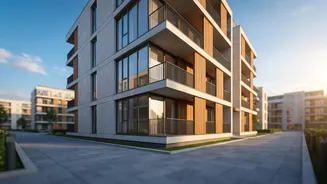
Today’s young homebuyers are not just looking for a roof over their heads; they are seeking a lifestyle. Their preferences are reshaping how properties are designed and marketed. There is a strong demand for integrated townships and gated communities that offer amenities like coworking spaces, fitness centres, green areas, and community hubs. Sustainability has also become a non-negotiable factor for many, who actively look for features like solar panels, rainwater harvesting, and energy-efficient systems. This generation views a home as an extension of their personal values and a place for community and connection, not just a physical structure. Developers are taking note, increasingly focusing on creating holistic living experiences rather than just selling square footage.