




The High Cost of Lunar Logistics
Before astronauts can live and work on the Moon for extended periods, they need infrastructure. This includes landing pads to prevent catastrophic dust clouds during take-off and landing, roads to travel across the surface, and shelters for radiation
protection. The primary obstacle is cost. Launching materials from Earth is prohibitively expensive, with every kilogram adding an enormous financial burden to a mission. Relying solely on Earth-based supplies for a lunar base would be unsustainable. This logistical challenge has forced space agencies like NASA and the European Space Agency (ESA) to embrace a different strategy: In-Situ Resource Utilisation, or ISRU. The principle is simple: live off the land.
The Moon's Abundant Building Material
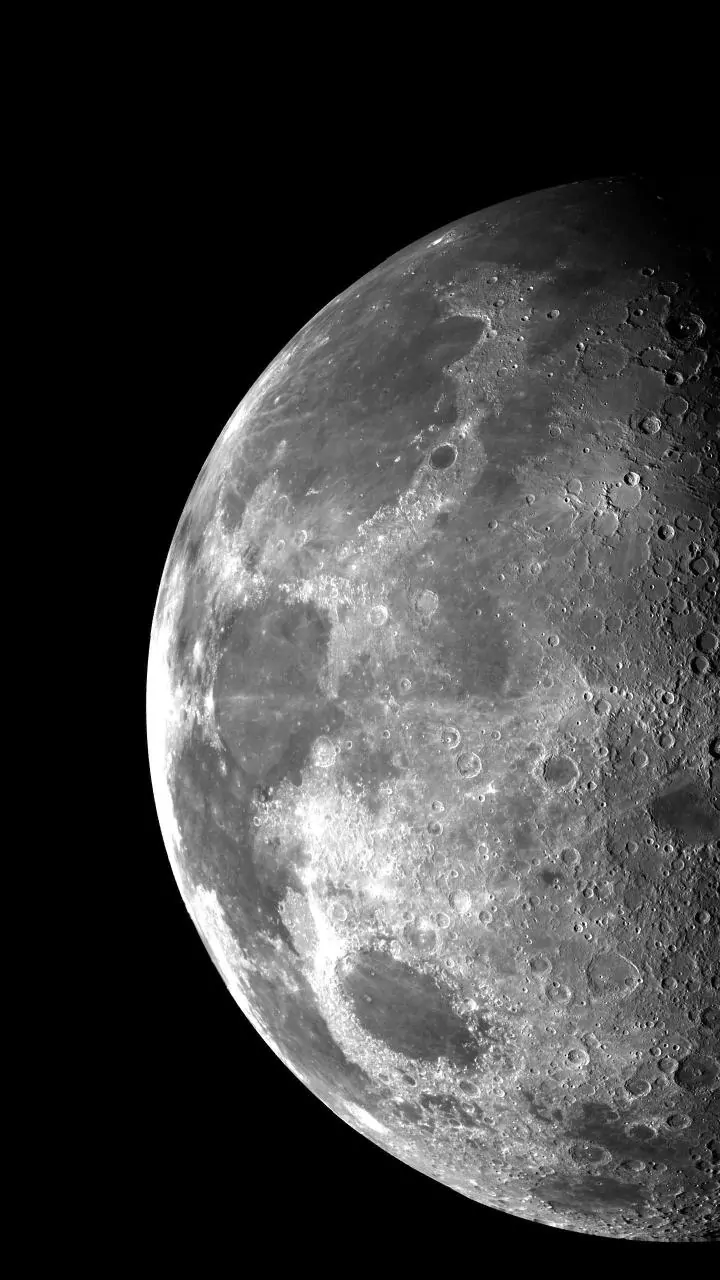
The Moon's surface is covered in a layer of fine, grey dust and fragmented rock called regolith. Created by billions of years of micrometeorite impacts, this material is everywhere. While it poses a significant hazard to astronauts and equipment—being as fine as powder but as abrasive as tiny shards of glass—it is also a valuable resource. Lunar regolith is rich in silicon and metals, and its top layer can be fused together to create solid, durable structures. This realisation has shifted the focus of lunar construction from importing materials to developing technologies that can process regolith on-site.
From Dust to Driveways with Lasers
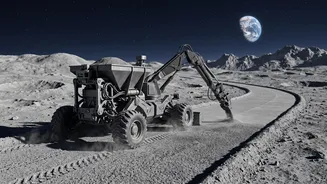
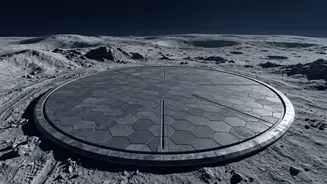
The leading concept for paving lunar surfaces involves a process called sintering. This technique uses a concentrated heat source to melt the top layer of regolith, which then cools and solidifies into a glass-like solid. Several methods are being tested, including using powerful lasers or microwave beams. The ESA's 'PAVER' project, for instance, has demonstrated that a high-power laser can melt simulated moondust to create interlocking, road-worthy tiles. A robotic rover equipped with a laser could crawl across the lunar surface, methodically melting the dust in its path to forge a stable road. This not only solves the dust problem for rovers but also creates vital infrastructure without launching a single brick from Earth.
The Autonomous Robotic Construction Crew
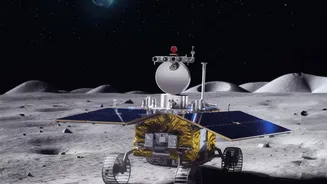
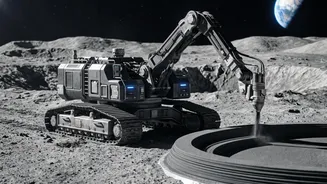
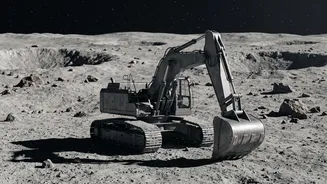
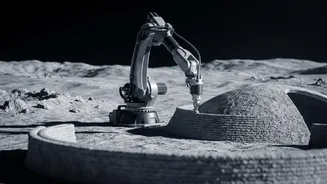
Humans won't be the ones operating this machinery, at least not directly. The communication delay between Earth and the Moon makes real-time control impractical and dangerous. Therefore, the construction will be handled by autonomous robots. Companies like ICON and Lunar Outpost are developing robotic systems and software designed for these harsh environments. Future missions envision teams of specialised robots working together. Some would be responsible for excavating and preparing the regolith, while others, armed with laser or sintering heads, would perform the actual construction. These robotic crews could work around the clock, slowly but surely building the landing pads, roads, and blast walls needed for a future lunar base long before the first human inhabitants arrive.
Beyond Roads: Landing Pads and Habitats
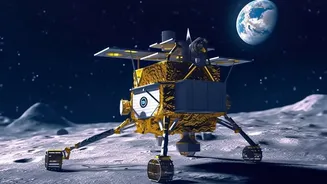
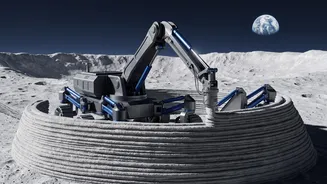
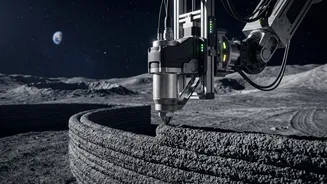
The same technology used to create roads is critical for other structures. A key priority is building landing pads. When a lander touches down, its thrusters can kick up tonnes of high-velocity dust, sandblasting everything in the vicinity. Sintering the regolith at a landing site would create a solid, stable pad that mitigates this dangerous effect. Furthermore, the regolith can be used to build habitats. Instead of melting a flat surface, 3D-printing techniques can be used to build up walls layer by layer. These structures, built from the Moon's own soil, would provide excellent protection against the extreme temperature swings and harmful cosmic radiation on the lunar surface. Some concepts even involve robots creating bricks from regolith, which can then be assembled into larger structures.